
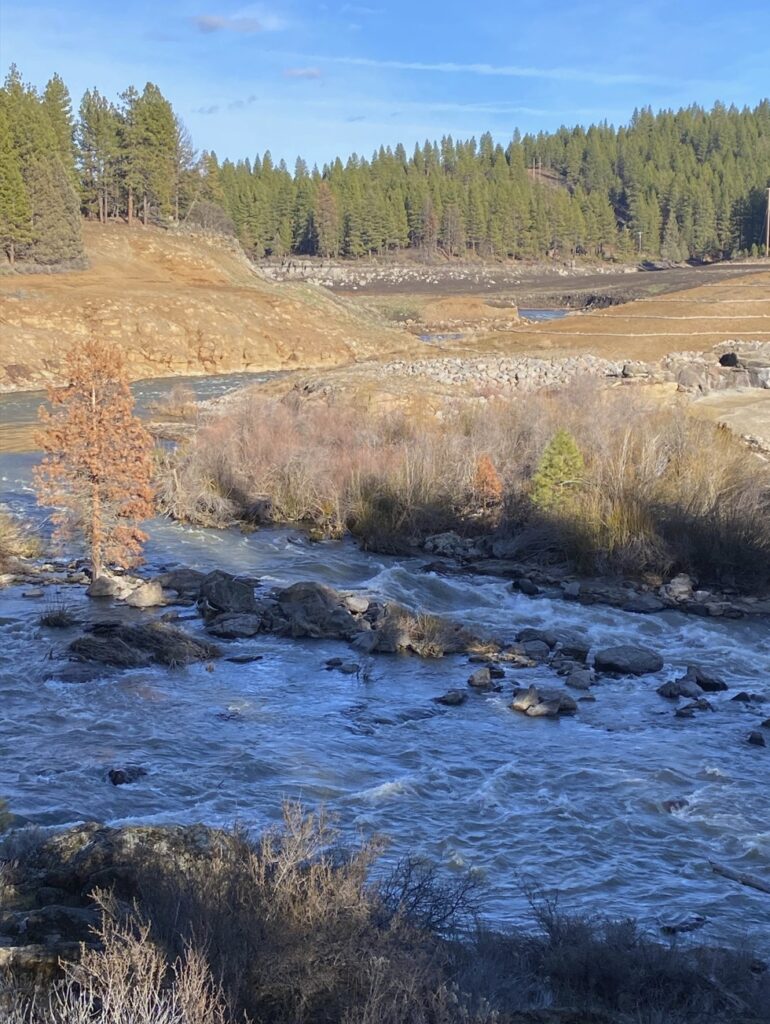
The free-flowing Klamath River, where the J.C. Boyle dam once stood. Image: Angelina Cook
The federal government is formalizing a process to weaken the Endangered Species Act (ESA) in the upper Klamath River basin. The process seeks to prioritize irrigation deliveries in the upper Klamath basin over the protection of threatened and endangered species.
In February 2026, the U.S. Bureau of Reclamation released a Reassessment of Discretion Report which argues that Reclamation’s obligation to fulfill water contracts overrides its duty to protect the Public Trust and the Tribal Trust.
The Report maintains that Reclamation does not have discretion to ensure flows needed for fish and cultural purposes if those uses would constrain deliveries to Klamath Project water users.
If the Trump Administration’s interpretation holds in the upper Klamath, it would reduce the ESA’s function of ensuring instream flows for beneficial environmental and cultural purposes nationwide.
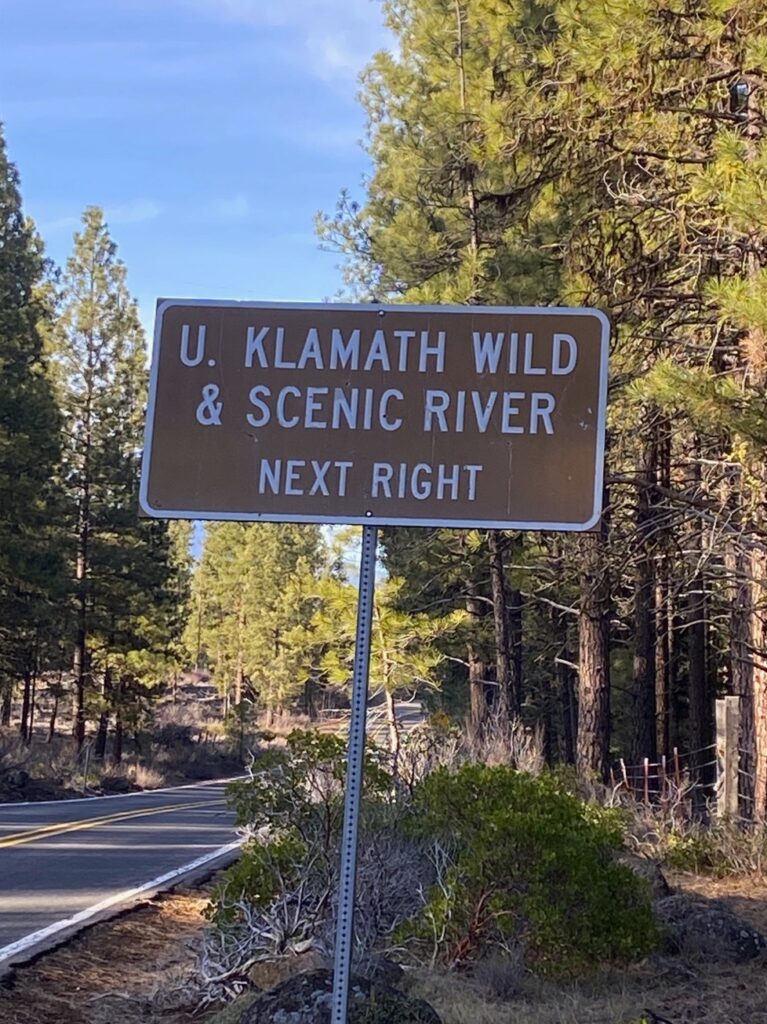
Upper Klamath Wild & Scenic River signpost, newly installed and recently designated since the removal of four dams: J.C. Boyle, Copco 1, Copco 2 and Irongate. Image: Angelina Cook
The Report follows a Briefing Memorandum for the Secretary of Interior from Acting Solicitor Gregory Zerzan, dated May 14, 2025. This Memo updates an analysis performed in January 2021 by then-Secretary David Bernhardt, at the end of the first Trump administration. One of the Biden administration’s first actions in 2021 was to rescind Bernhardt’s analysis. The Memo restores Bernhardt’s conclusions.
The Memo also invokes Congressional developments and recent conservative legal precedents that undermine federal agencies’ jurisdiction to enforce environmental laws. It points to provisions of the Klamath Basin Water Agreement to explain why Reclamation lacks discretionary authority to enforce the Endangered Species Act when doing so would conflict with prior commitments with private water contracts.
The Memo was Reclamation’s second step in a four-stage process that could end in a new Record of Decision or other similar federal decision document. If completed, this process would change the operations of the Klamath Irrigation District (KID) and other local water districts.
Congressional developments
The Klamath Basin Water Agreement Support Act (H.R. 7938) passed in 2025 to amend the Klamath Basin Water Supply Enhancement Act of 2000. The Act was amended to include “Restoration Activities,” outline operational protocol for Keno and Link River dams, and reaffirm commitments to contractual agreements managed by KID. The amended Act also directs management to comply with the “2016 Klamath Power and Facilities Agreement.”
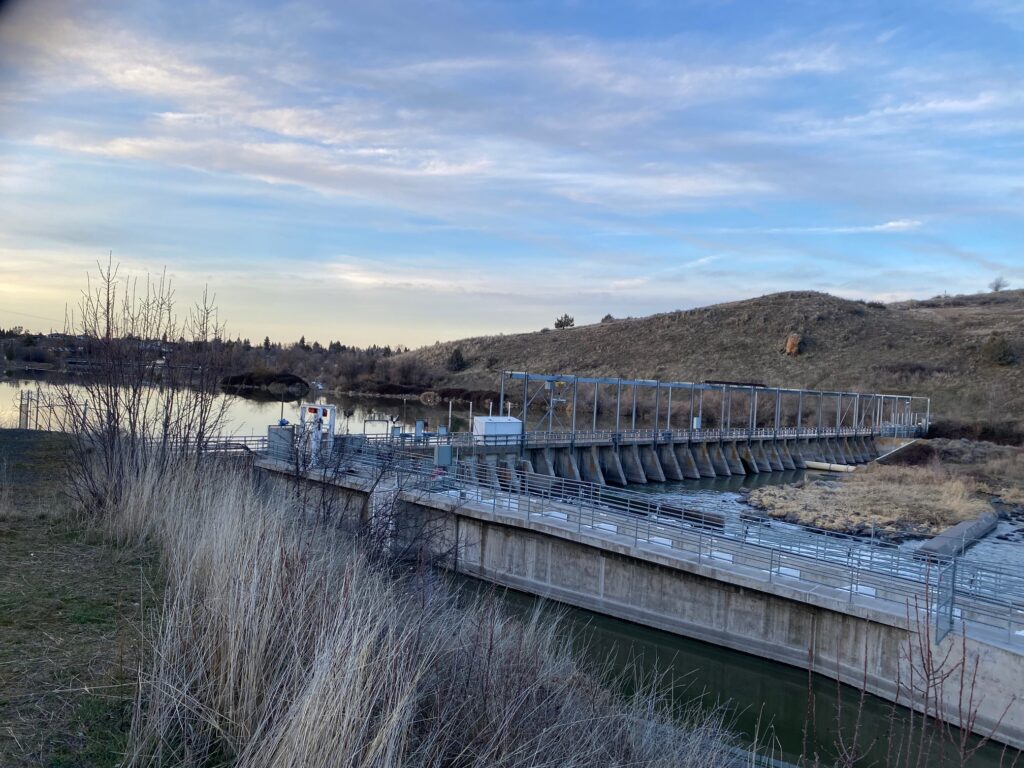
Link River Dam, the uppermost dam in the Klamath system, remains in place to divert water from the Upper Klamath Lake for irrigation. Image: Angelina Cook
The 2025 legislation empowers the U.S. Secretary of the Interior to plan, design, construct, operate, and maintain restoration projects in the Klamath Basin. Projects are defined as facilities to reduce fish entrainment, projects that reduce or avoid impacts on aquatic resources of facilities involved with the diversion or storage water for irrigation, and projects that restore habitat for Tribal fishery resources held in trust.
The Act also identifies operation and maintenance of Pumping Plant D, and indicates availability of reimbursements of no more than 69% of costs incurred by Tulelake Irrigation District. All projects authorized by the Act must conduct National Environmental Policy Act (NEPA) and ESA consultation on new operating criteria. These new criteria are scheduled for implementation in Spring 2027.
The 2025 Memo seeks to establish the dominance of agriculture over other beneficial users, emphasizing that the 2025 Act uses the term “may” in authorizing Restoration Activities. The Memo claims that this term suggests that restoration activities are permissive, not mandatory. The other primary provision in the Act outlines operation of Keno and Link River dams, using the term “shall” instead of “may.” The Memo thus interprets the Act to say that full delivery of water stored behind these dams to irrigation contractors is paramount to competing environmental uses.
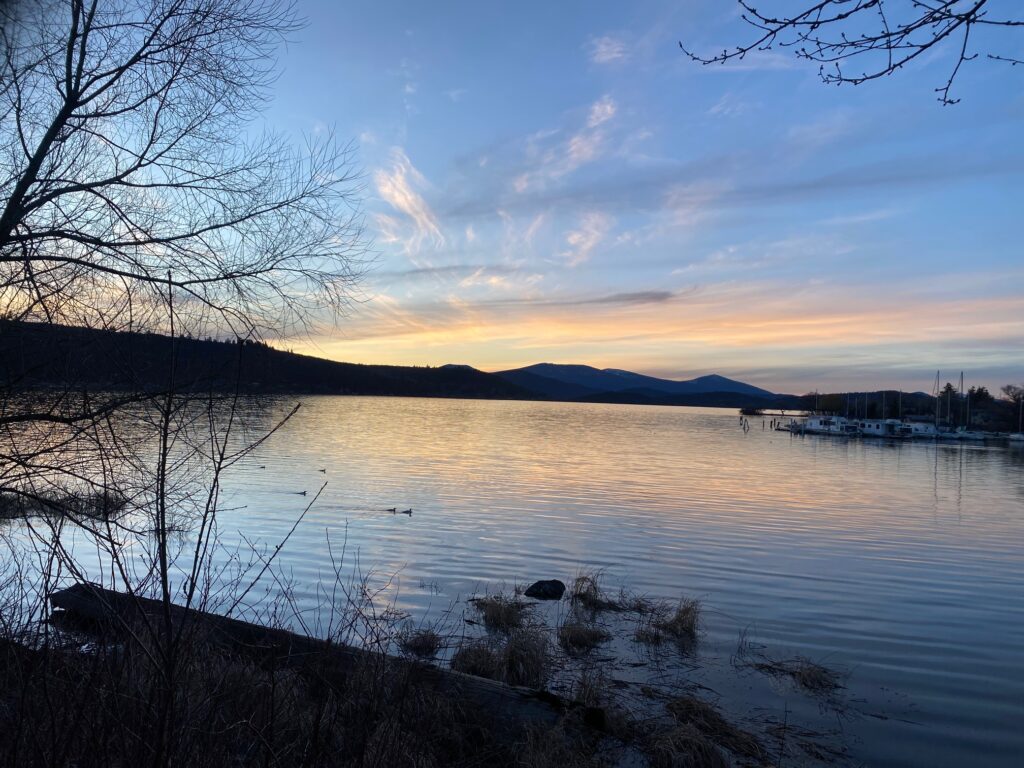
Though shallow, the Upper Klamath Lake is vast. Its immense surface area is difficult to convey or imagine until one drives north on Hwy 97 from Klamath Falls toward Crater Lake and Bend, Oregon. This is a view of Upper Klamath Lake from its terminus near the Link River Dam. Image: Angelina Cook
The federal effort is financing well-paid attorneys with U.S. taxpayer dollars. Its goal is to leverage ambiguities in existing law to reestablish supremacy of corporate over community interests in the Klamath basin. The move undermines recent public investments in river restoration. It will broaden economic disparity in the region and deepen developmental legacies in a land that was once a thriving hub of natural and cultural diversity.