
Many fly fishing clubs play important roles in advocacy and conservation. Clubs connect hundreds of people beyond their own members with local streams and lakes. The clubs assist local and visiting fishermen by providing up-to-date reporting on fisheries and river conditions. Anglers often have a deep understanding of the quality of a fishery. Stepping into a run, casting, and covering a ton of water provides great insight to the overall health of a riverine ecosystem.
Fly fishing culture is rooted in ethics and stewardship. Clubs are embedded in conservation through codes of conduct, club charters, and educational programs. In 2014, I joined the Golden Gate Angling and Casting Club (GGACC) in San Francisco. Through the GGACC’s fly fishing school, I was introduced to fisheries and watershed protection programs. My short but enriching experience with the GGACC was a major inspiration to study and work in the field of environmental policy.
Much of the conservation work of clubs occurs at local levels. For example, fly fishing clubs often clean up local streams. They remove invasive vegetation, restore riparian corridors, and monitor water quality. In many parts of California, club volunteers provide valuable labor that government agencies and water districts cannot afford or choose not to do.
Many clubs have programs that bring salmon or steelhead into classrooms. Thousands of students who have never seen a salmon in the wild see them grow first-hand. The students release the fish into streams they’ve often never seen before. These hands-on experiences give a taste for the joys and wonders of the places and processes that cause anglers to return to their home waters.
Clubs build communities around conservation by fostering a responsibility to maintain healthy aquatic ecosystems. This helps create an angler’s personal investment in the future of a fishery. Conservation then becomes a social norm as opposed to an obligation.
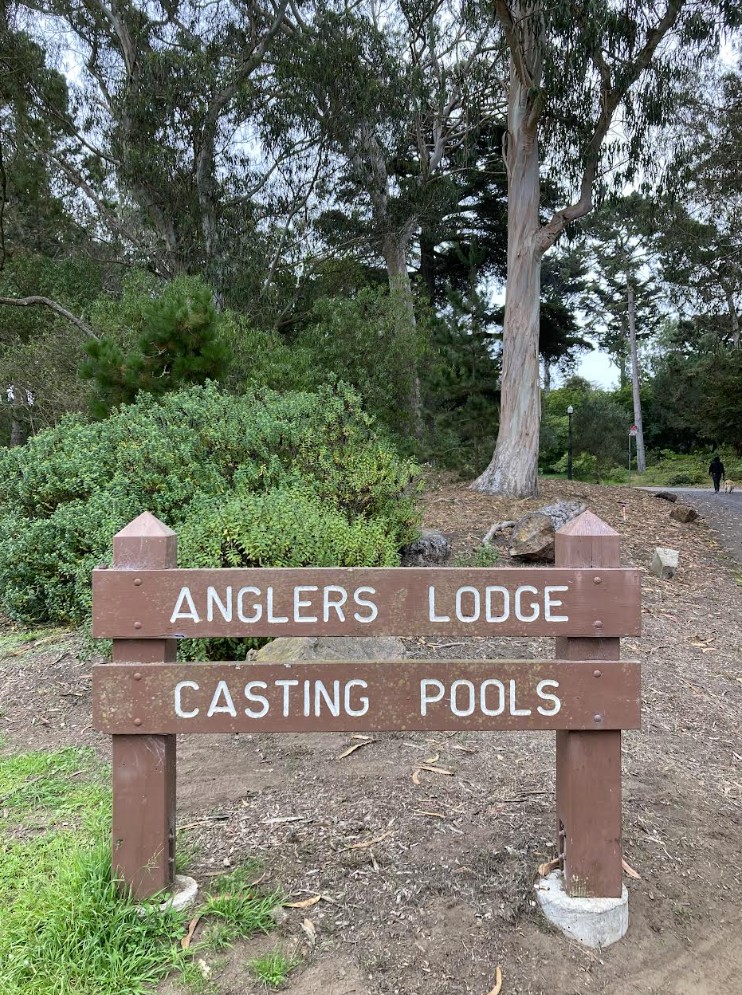
The sign for the Anglers Lodge and Casting Pools of the Golden Gate Angling and Casting Club, in Golden Gate Park in San Francisco. Image: Eric Woodruff
CSPA is an example of how a group of anglers evolved into conservation advocates. Anglers founded CSPA in 1983 to give an organized voice to California’s fly fishing clubs. CSPA developed a core set of activists who took advocacy several steps further. This included peppering decisionmakers like the State Water Board with protests and complaints when fish weren’t protected or when new water right applications offered the chance to require better flows. CSPA established a water quality enforcement program that has cleaned up hundreds of industrial sources of pollution. CSPA now has one of the most effective and well-known hydropower advocacy programs in the country.
Unlike much of the projects that fishing clubs undertake, most of CSPA’s work takes place on a protracted timeline. Water rights and hydropower proceedings often take a decade or more. Litigation generally takes years. It is hard for interested fishing club members to jump into CSPA program work because it takes so long to achieve objectives.
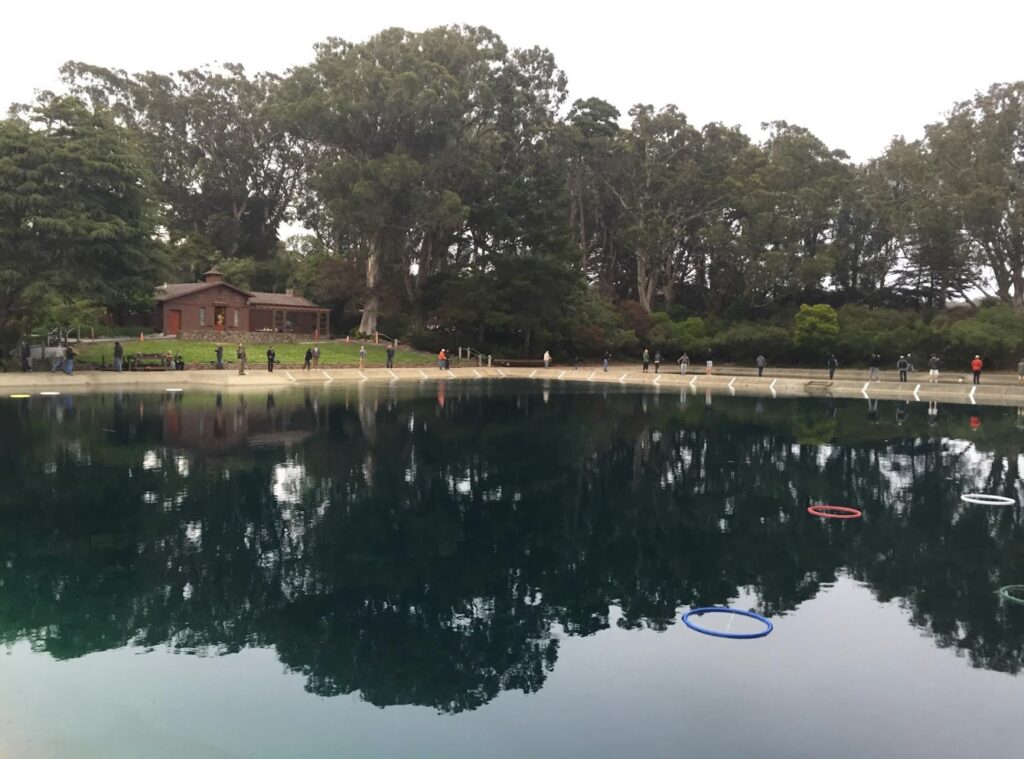
Golden Gate Angling and Casting Club holds a casting clinic at the club’s casting pools in Golden Gate Park. Image: Eric Woodruff
On behalf of CSPA, Chris Shutes and I recently had the opportunity to give a presentation to the California Fly Fishers Unlimited (CFFU) club in Sacramento. Someone asked us, “What makes CSPA different from other fishing organizations?”
CSPA’s geographic coverage is a factor. CSPA is statewide, yet most of our focus is on the Bay-Delta watershed. Many groups avoid working on Delta issues because they are very contentious and take a long time. But the watershed’s fish need more water, and there are a lot of powerful and wealthy interests that actively oppose devoting more water to the fish. That means there’s a lot of fighting and a lot of litigation.
CSPA has also been willing to defend the striped bass sport fishery when others sought to blame stripers for the decline of salmon.
Then there’s the question of approach. CSPA believes in leverage. We’re happy to work cooperatively and collaboratively with other people. Frankly, we’re good at it. We are also very patient. But if cooperation doesn’t work, we’ll use the law to defend fisheries, habitat, and water quality. We think the fact that people understand our approach makes us more effective in negotiating and working with others.
A lot of funders don’t like the fact that we litigate. They want us to be nice all the time. We’d love to be able to be nice all the time. But companies and people that illegally pollute or divert too much water need limits. That’s why sometimes, you need to use a hammer.
Over the last twenty years, CSPA has had a Watershed Enforcers Program. We research industrial facilities whose stormwater runoff exceeds Clean Water Act standards for things like metals, suspended and dissolved solids, and oxygen demand. Here is one place fishing clubs and their members can really help CSPA’s work without a lot of individual commitment.
When clubs or individuals join CSPA as members, that gives CSPA what’s called “standing” to ask courts to order industries to clean up their properties. It just takes one member who has a connection to a source of pollution. Then CSPA can show that the entire organization is harmed. That provides CSPA with the opportunity to appear in court and try to stop the pollution.
Individuals or clubs that join CSPA are thus part of a team that stops pollution. They join a partnership of researchers, policy makers, technical experts, and (yes) attorneys that keep our water clean. If you are a member of a fly fishing club, or an angler looking to assist, please consider joining CSPA. Your membership supports our efforts to maintain fisheries, habitat, and water quality throughout the state of California. If you have particular skills or experience, including helping to grow an organization, get in touch.
Let’s see what we can do together.
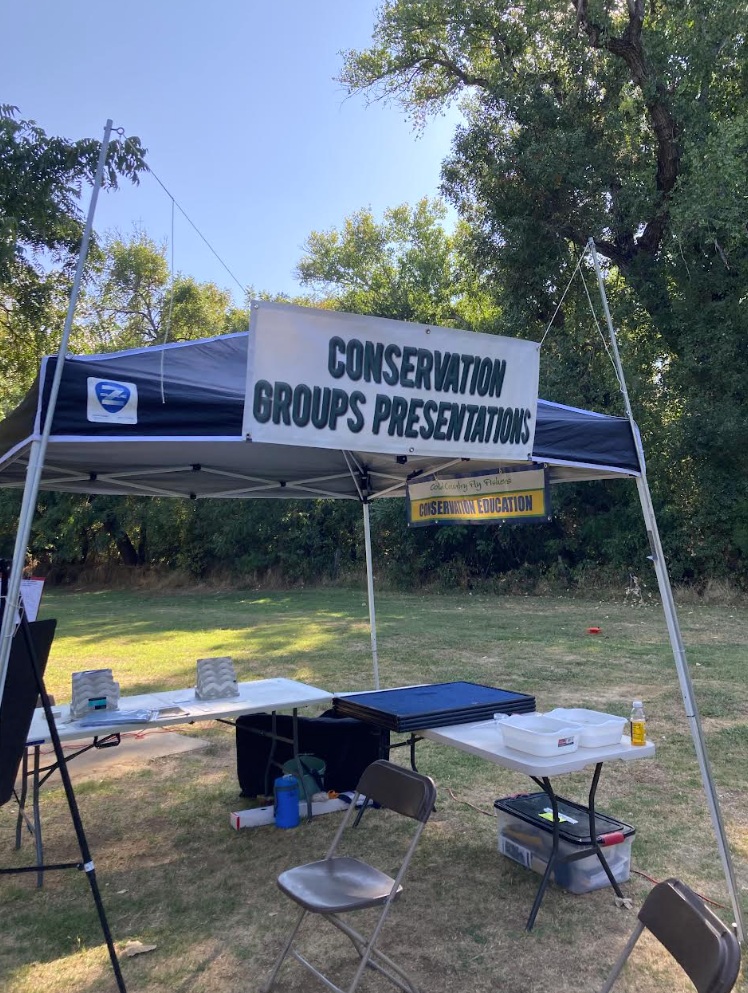
A presentation tent for conservation groups, made possible by the Gold Country Fly Fishers. Photo is from the 2025 Yuba Fest in Sycamore Ranch County Park in Browns Valley. Image: Eric Woodruff
References:
https://donorbox.org/california-sportfishing-protection-alliance-membership