
It’s the time of year when I constantly daydream about swinging up a beautiful Winter steelhead. I’ve been obsessed with these incredible creatures ever since I landed my first one under Wohler Bridge on the Russian River 15 years ago. It was an exhilarating and unforgettable experience. The acrobatics, runs, and aerial maneuvers that occur once a steelhead realizes it’s hooked are like no other. Yes, the “steelhead shakes” are a real phenomenon. They shake an angler’s entire body once a steelhead is on the hook.
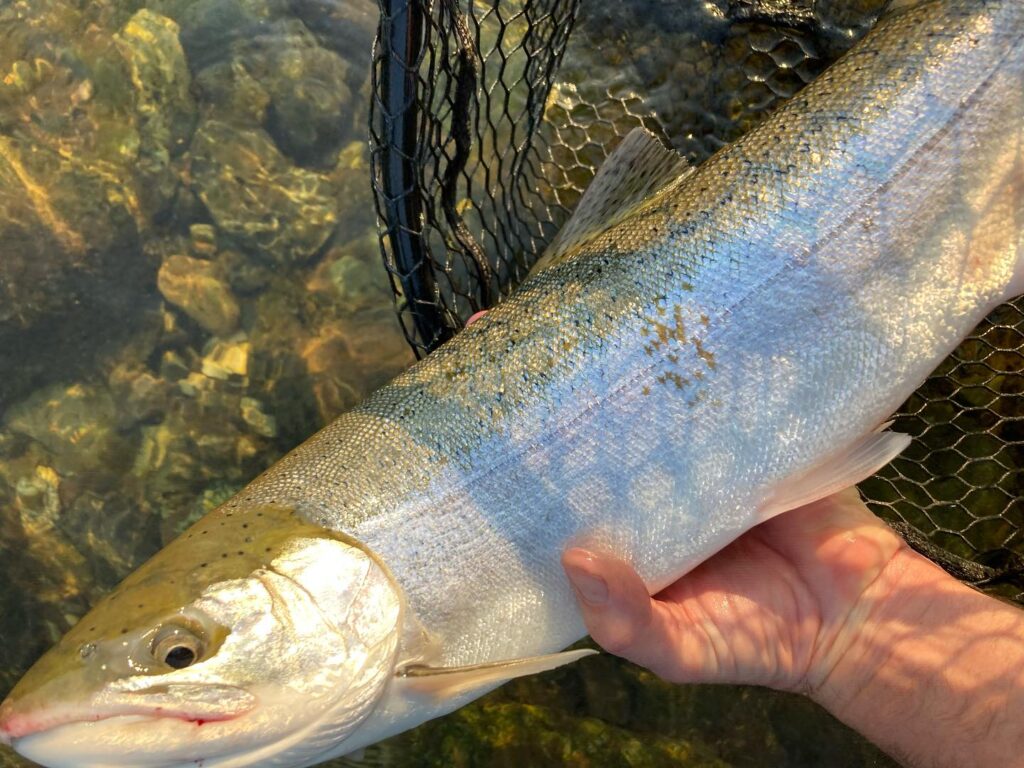
Winter steelhead. Image: Eric Woodruff
That said, winter steelhead runs along California’s North Coast are not what they used to be. The odds of catching one on the fly are low. As a consultant for California Sportfishing Protection Alliance, I think about this harsh reality often. I constantly advocate to improve steelhead populations in California’s remaining rivers that connect to the ocean.
Which brings me to CSPA’s current focus on steelhead populations in the Eel River. As stated here before, PG&E is planning the removal of its Scott and Cape Horn dams on the mainstem of the Eel River. I am working on this process for CSPA. It’s an exciting turnaround.
Historically, the watershed once provided rearing and spawning habitat for over a million salmon and steelhead annually (Yoshiyama and Moyle, 2010). During the winter run of 2024/25, only 403 steelhead were counted swimming up the fish ladder at Cape Horn Dam (Friends of the Eel River, 2025). The counts for summer-run steelhead are even bleaker. In 2025, only 61 summer-run steelhead swam up the Van Duzen River, a major tributary of the Eel (Native Fish Society, 2025).
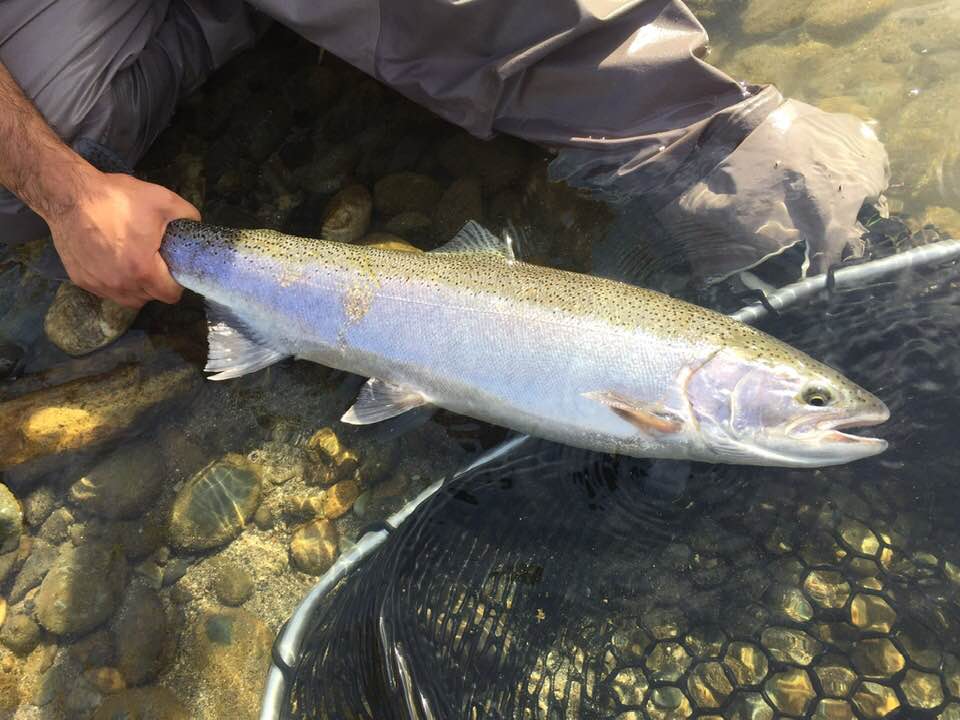
Winter steelhead. Image: Eric Woodruff
The Eel River’s summer and winter steelhead runs are comprised of mostly wild fish, because there are no longer active hatcheries in the watershed.
Overfishing in the late 19th and early 20th centuries led to the construction of Price Creek Hatchery (1897-1916), to which steelhead eggs were imported from the Sacramento River. In 1916, the hatchery moved from Grizzly Bluff to Fort Seward, where it remained in operation until the mid 1940s (Lufkin, 2024). This time period also featured the construction of Cape Horn Dam (1907) and Scott Dam (1921) on the mainstem Eel River.
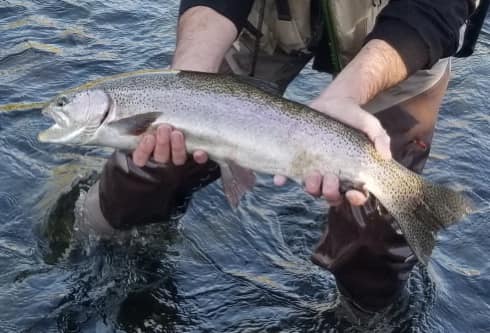
Winter steelhead. Image: Eric Woodruff
Cedar Creek Hatchery began operating in the 1940s. Cedar Creek, a significant tributary to the South Fork Eel River, provided colder water temperatures for hatchery operations. Severe flooding in the 1950s damaged the facility, leading to its decommissioning after the infamous “Christmas Flood” in 1964 (Yoshiyama and Moyle, 2010).
The most recent hatchery on the Eel was the Hollow Tree Creek Hatchery. It operated in the 1980s and 1990s, functioning as an egg-taking and rearing pond facility for Chinook, coho, and steelhead (Yoshiyama and Moyle, 2010). A fish passage project removed a 60-foot concrete barricade located at the old Hollow Tree Creek Hatchery site. The removal of this aging infrastructure opened up 47 miles of Hollow Tree Creek’s excellent rearing and spawning habitat for coho and steelhead (North Coast Coho Project, 2021).
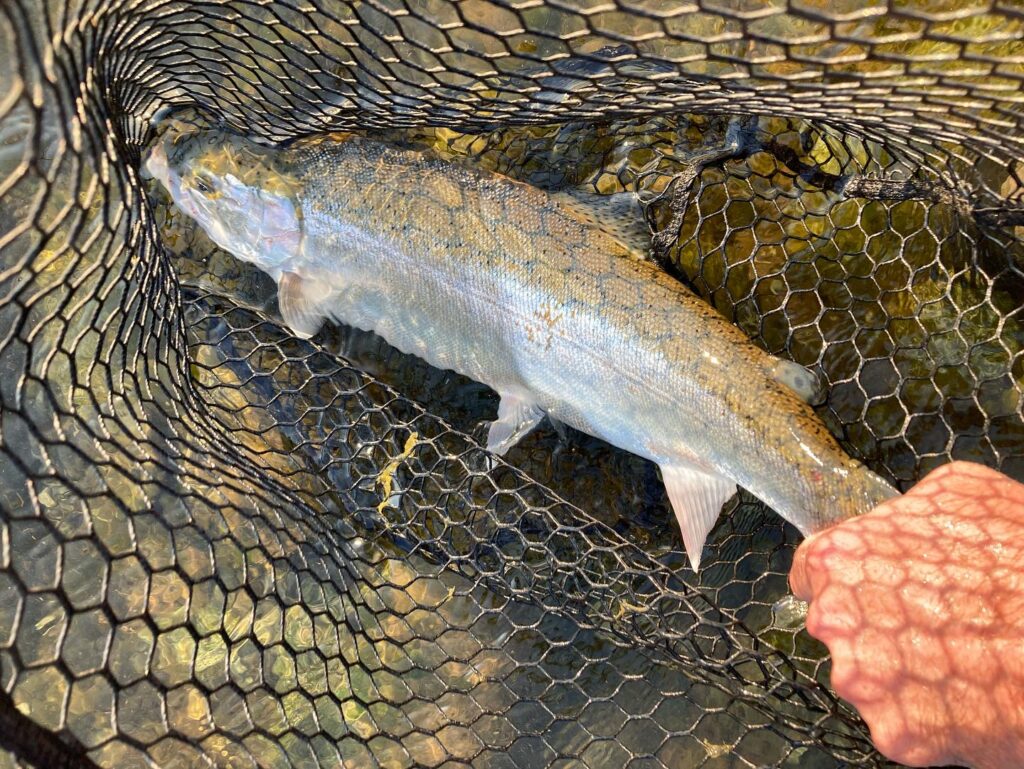
Winter steelhead. Image: Eric Woodruff
Fortunately, the hatchery paradigm ended several decades ago. The process underway to remove Cape Horn and Scott dams is in a different world. Restoration is the best opportunity to save and expand summer and winter steelhead runs, as well as populations of Eel River salmon.
CSPA actively supports PG&E’s ongoing process to surrender its hydropower license and remove Cape Horn and Scott dams. For now, this license-surrender process remains largely on track. Time and a lot of work will tell if the potential dam removals will become real.
CSPA needs your help in advocating for timely dam removals on Battle Creek and the Eel River. We show up at community meetings. We interact with politicians and other nonprofits to specify what action is needed, and on what timeline.
Consider donating and becoming a member of California Sportfishing Protection Alliance. The money and comments you share go a long way toward ensuring that there will continue to be steelhead and salmon in the rivers of the North Coast, and in other parts of California.