
This winter, Friends of the Eel River, a Eureka nonprofit, is launching the Eel River Native Plant Network. The goal of the Network is to increase regional capacity to produce native plant products. The initial focus will be to assist PG&E in its effort to replant native wildflowers, grasses, shrubs, and trees in the project footprint, following removal of the Potter Valley Project dams in Lake and Mendocino counties.
“The revegetation effort will focus on restoring the footprint of the Potter Valley Project. We’re working on the plan ahead of the removal of the Scott Dam and the Cape Horn Dam. Funding will be a significant barrier to increasing regional production of native plants, particularly given the federal landscape right now,” said Alicia Hamann, Executive Director of Friends of the Eel River.
As envisioned, the Network will consist of a coalition of 130 environmental groups, plant nurseries, local Tribes, private landowners, municipalities, resource conservation districts, and government partners who will collect, share, and refine information. There will be an orientation gathering on March 18. The Network will have its first meeting on June 18.
Both the Scott Dam and the Cape Horn Dam are on the upper mainstem of the Eel. The two dams are situated in Lake and Mendocino counties, about 20 miles northeast of Ukiah. The Lake Pillsbury Reservoir, impounded by Scott Dam, is partially located within Mendocino National Forest. This national forest is federal land managed by the U.S. Forest Service.
PG&E is currently in the process of decommissioning the Scott Dam and the Cape Horn Dam. Its original goal was to remove the dams and actively engage in habitat restoration by 2028. The Eel River Native Plant Network will offer its recommendations to assist with this project.
As of winter 2026, PG&E is working to draft a restoration management plan, said Tony Gigliotti, senior license project manager of power generation for PG&E.
“(The plan) will utilize both passive and active revegetation of native species,” said Gigliotti.
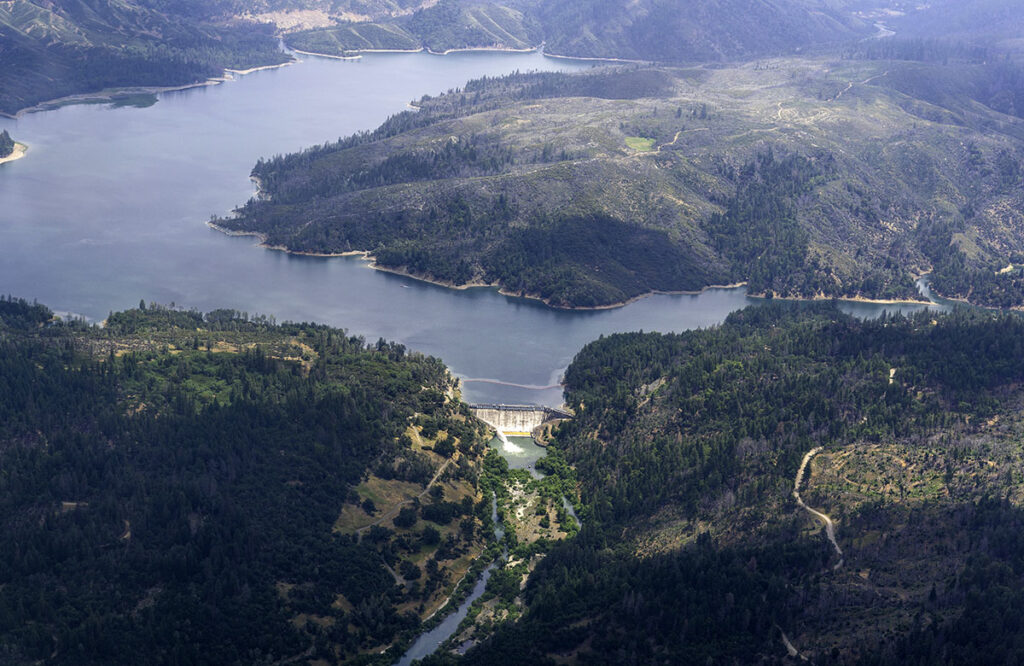
Scott Dam. Image: EcoFlight
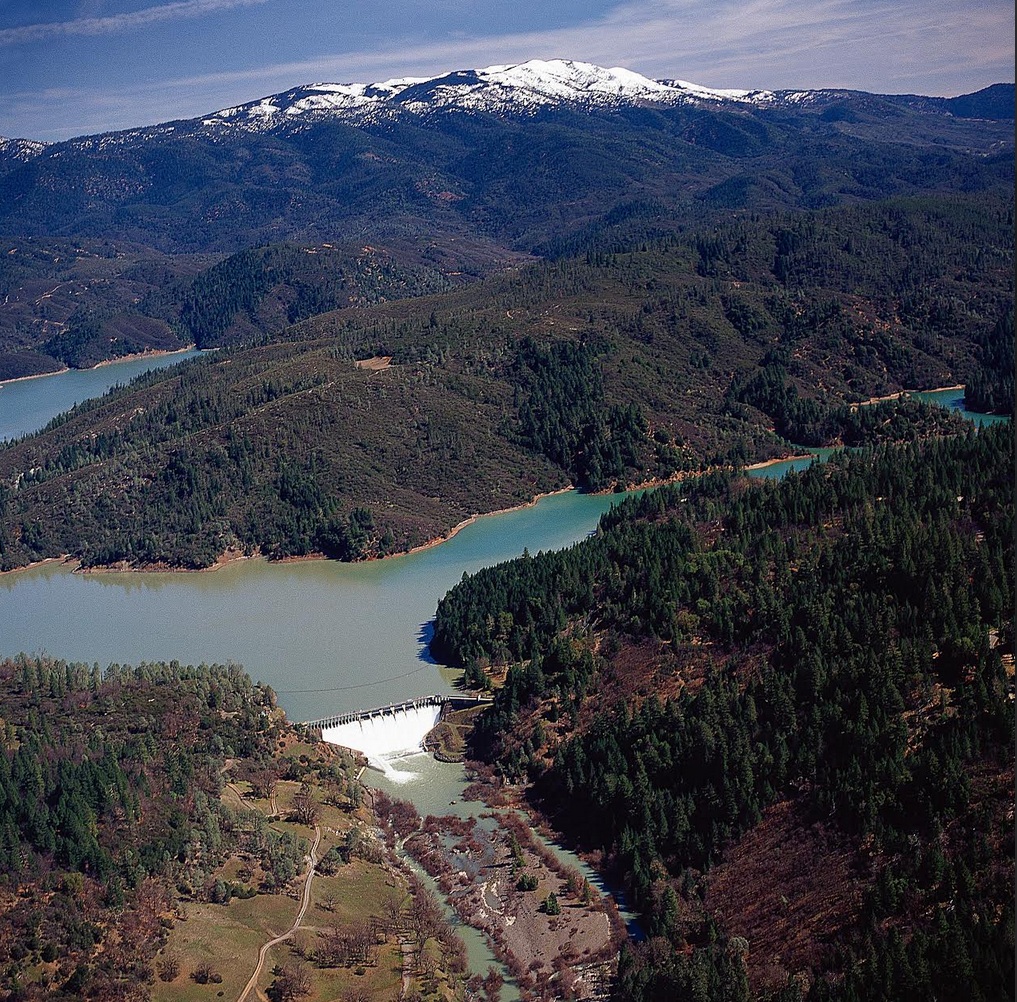
Scott Dam. Image: Friends of the Eel River
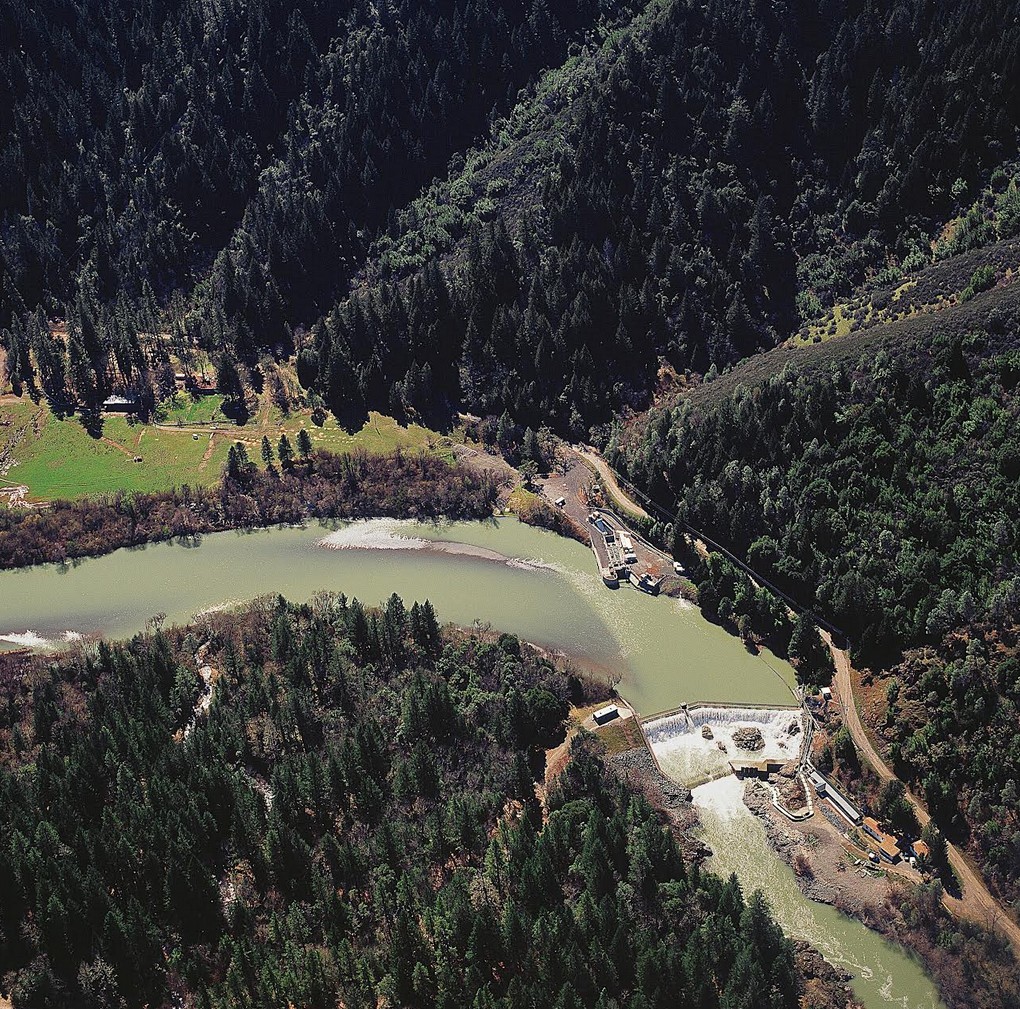
Cape Horn Dam. Image: Friends of the Eel River
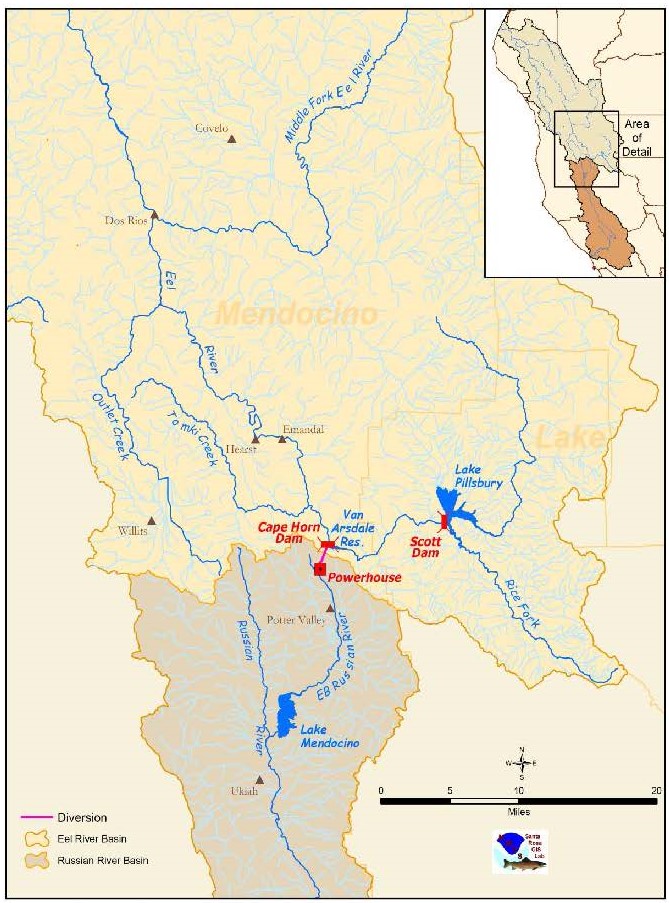
Map showing the locations of Scott Dam and Cape Horn Dam. Image: PG&E
Hundreds of thousands of pounds of native plants
The reseeding effort will likely require hundreds of thousands of pounds of native plants.
“We don’t know for sure yet, but back-of-the-envelope estimates call for about 250,000 pounds of seed if using helicopters for dispersal,” said Hamann.
Many of the plants will be grown at nurseries outside Lake and Mendocino counties.
The range of native plants for the project may include wildflowers, grasses, sedges, brushes, shrubs, and trees. Together, the plants will help slow and minimize soil erosion. They will also form the fabric of environments that support native species of insects, fish, birds, and mammals.
Native plants benefit the environment by reducing the risk of catastrophic wildfires. They also limit the spread of invasive plant species.
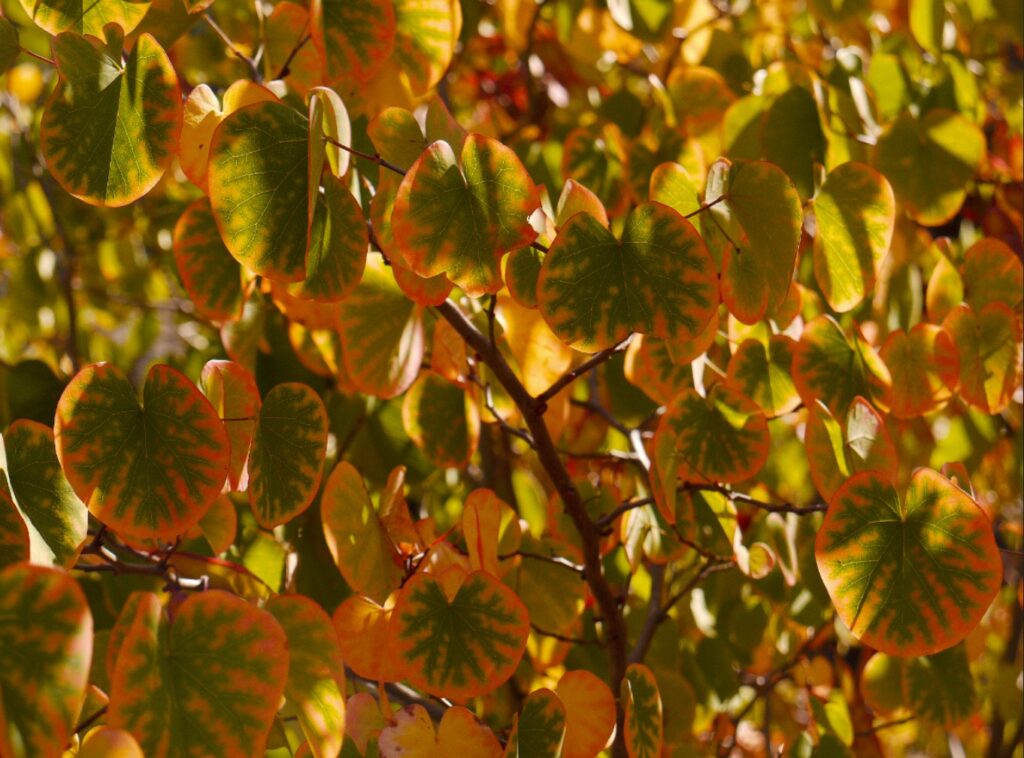
Redbud leaves in the sun along the Eel River. Image: Friends of the Eel River
Certain plants, like salmonberry (Rubus spectabilis) have such direct connections to fish health that it is said that a good year for salmonberry is a good year for salmon. To provide an example of why this is true, salmonberry provides food and shelter for birds, amphibians, insects, and small mammals. It thrives in moist, shaded soil along waterways. Abundant salmonberry flowers indicate the water is clean and flowing well. These are optimal conditions for salmon.
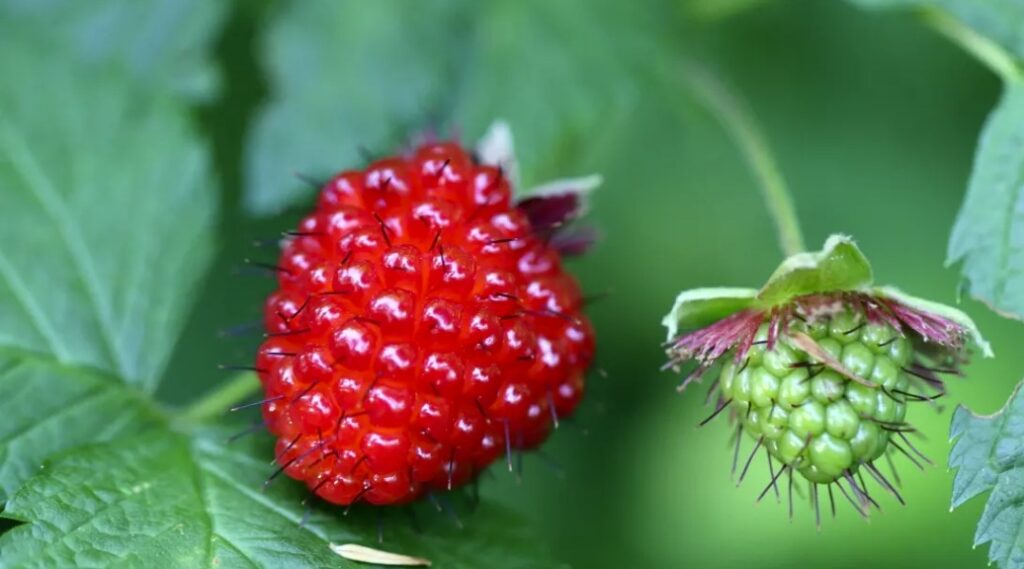
Salmonberry (Rubus spectabilis). Image: Peter Pearsall/U.S. Fish & Wildlife Service
Seeding and planting efforts for the different flora may range from dropping native wildflower seeds onto the ground via helicopter to hand-planting plugs. Plugs are plants grown in 72-cell trays that hold soil. Plugs are more appropriate for larger plants like sedges. It is not easy to grow native plants, especially outside areas that are not their home ground.
“When you grow native plants in areas outside their typical range, that unintentionally selects for specific traits and restricts biodiversity. Other issues with growing native plants elsewhere include the increased carbon footprint to transport them, other costs to manage them, and time and money for transport. That’s why we hope to grow as many native plants as possible locally,” said Hamann.
Members of the Network will participate on different levels. That will depend on what their individual capacity will allow.
“Some organizations will come to all-day meetings on this topic. Others will stay informed by reading emails with updates,” said Hamann.
The California State Coastal Conservancy is a non-regulatory State agency that protects and restores coastal resources. It will provide most of the funding for the Network’s first year of existence.
“We’re looking to identify sources of additional funding to support continued network meetings, seed harvesting trainings, and other priorities identified by the Network participants,” said Hamann.
The scope of the project
For the past 17 years, Samara Restoration, a landscape restoration business in McKinleyville, has been involved in watershed-specific seed collection in Humboldt County. It has engaged in processing, storing, and growing native plants in local watersheds.
According to Troy Perez, Nursery Manager at Samara Restoration, the business joined the Native Plant Network’s Stewardship team when the Network began.
The company is now helping identify regional capacity to harvest, process, store, grow, and magnify native seed.
“As a steward, I hope to help identify what resources and shareholders currently exist within the Eel River Watershed. The goal of revegetating the Lake Pillsbury footprint when the (dams are) removed is lofty. It will take considerable planning to see to its success,” said Perez.
Before this point, Samara has not been directly involved in dam removal projects. The company specializes in growing “pioneer plants” that help jumpstart an impacted site’s ecological function.
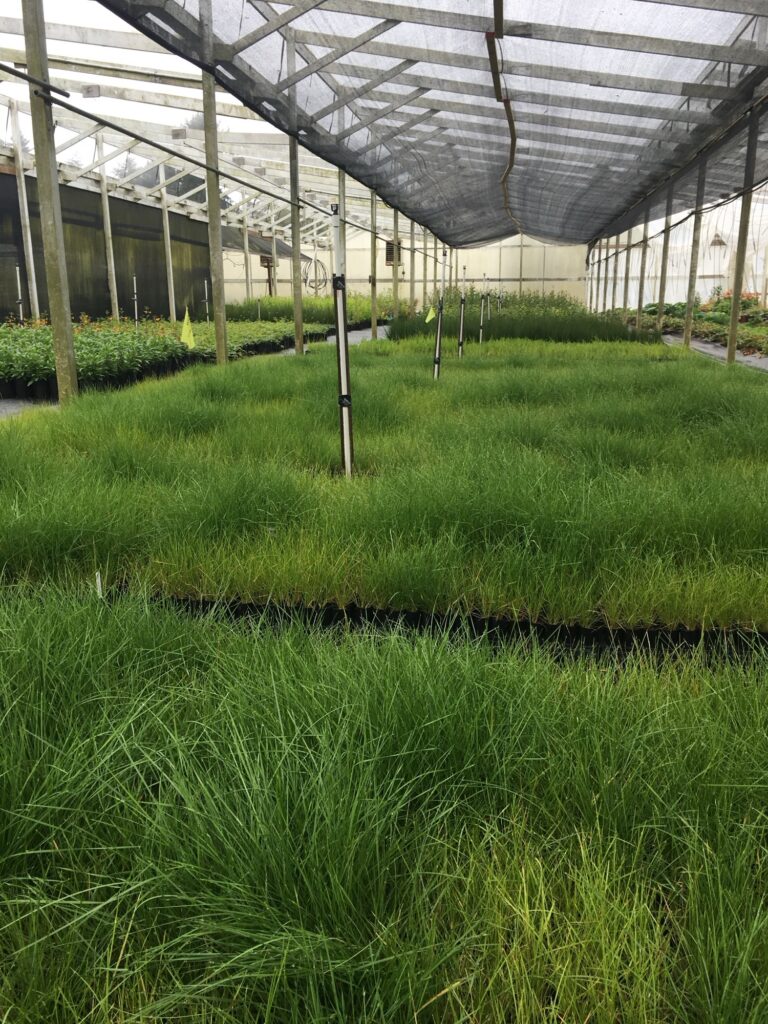
Growing native grasses in a shade house at Samara Restoration in McKinleyville. Image: Samara Restoration
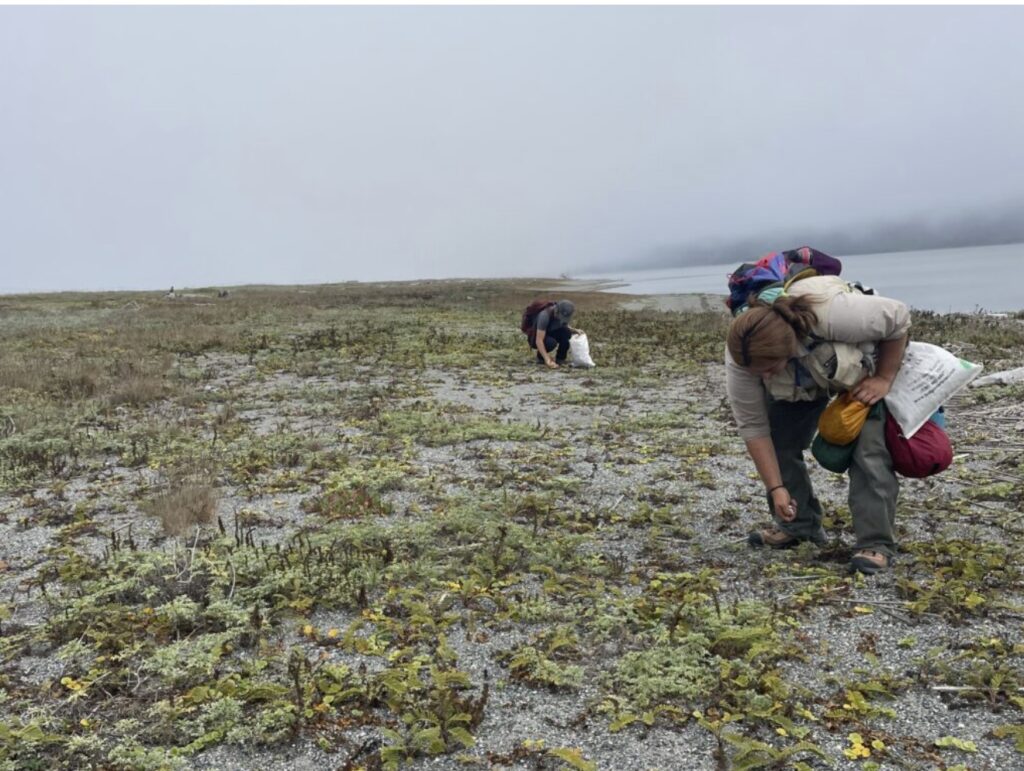
Staff of Samara Restoration collect seeds of native species along the Humboldt County coast. Image: Samara Restoration
“We have played a role in several restoration projects in the Eel River watershed over the years. One that comes to mind is the Salt River (near Ferndale),” said Perez.
Salt River is a hanging tributary of the Eel that hugs the coast. A hanging tributary is a tributary that flows into a river from a higher elevation. The Salt River area was heavily impacted by the 1964 flood. Samara assisted with restoring the land by collecting watershed-specific seed, growing container plants, planting the container plants, broadcasting and hydroseeding seed, and engaging in erosion control.
The term “broadcasting” refers to spreading seeds on soil and then topdressing with a thin layer of straw over them. The term “hydroseeding” refers to mixing seed and water into a mulch. This technique is often used in hard-to-reach areas like hilly slopes.
There are many difficulties with growing larger California native plants in containers.
“Firstly, locating, processing, storing, and germinating the seed all has its species specific nuances. Secondly, cleanliness is critical in every step of the growing process. Pathogens are a significant concern. Thirdly, native plants are not domesticated and do not necessarily grow easily in a container,” said Perez.
It can take between three and 18 months for a plant to fill a container. Native plants are often in a nursery setting for six months to two years.
There are numerous plant pathogens. One of the diseases that causes the most concern is Sudden Oak Death (SOD). Samara takes care through every step of the growing process to prevent SOD.
“Several of the species grown in our nursery are known potential SOD host plants. Our nursery is inspected and tested monthly,” said Perez.
Other issues with native plants include project delays. Project delays are common. This makes delivery and planting a moving target. It is also important to hydrate and protect plants after they are planted. This is the last step to aid in plant establishment.
In contrast, the challenges for broadcasting and hydroseeding are getting germination and plant establishment.
“Timing is critical. Wind, moisture, mulch type, non-native seed competition, birds, and critters all play a role in getting a broadcasted seed to germinate. It is often a combination of broadcasted and planted container plants that facilitate the success of a project’s plant establishment,” said Perez.
As Friends of the Eel River, Samara Restoration, and the other members of the Network head toward spring, Hamann said her nonprofit is learning how much time goes into a project of this size and scope.
“We’re working with a lot of high-quality facilitators. We have detailed meetings in which we decide what we should cover in future meetings, in what order,” said Hamann.
Perez said his past work has taught him that northern California’s “restoration economy” fosters cross-sector collaboration. Such communications occur among historically divided industries and communities.
“The restoration economy is strengthening regional resilience by elevating cultural connection and integrating long-standing place-based ecological knowledge. This benefits economic development, land management, and workforce strategies,” said Perez.
Perez said that from what he has seen already, the Native Plant Network will play a significant role in the region.
“It will further both the Eel River’s restoration and the region’s economic development,” said Perez.
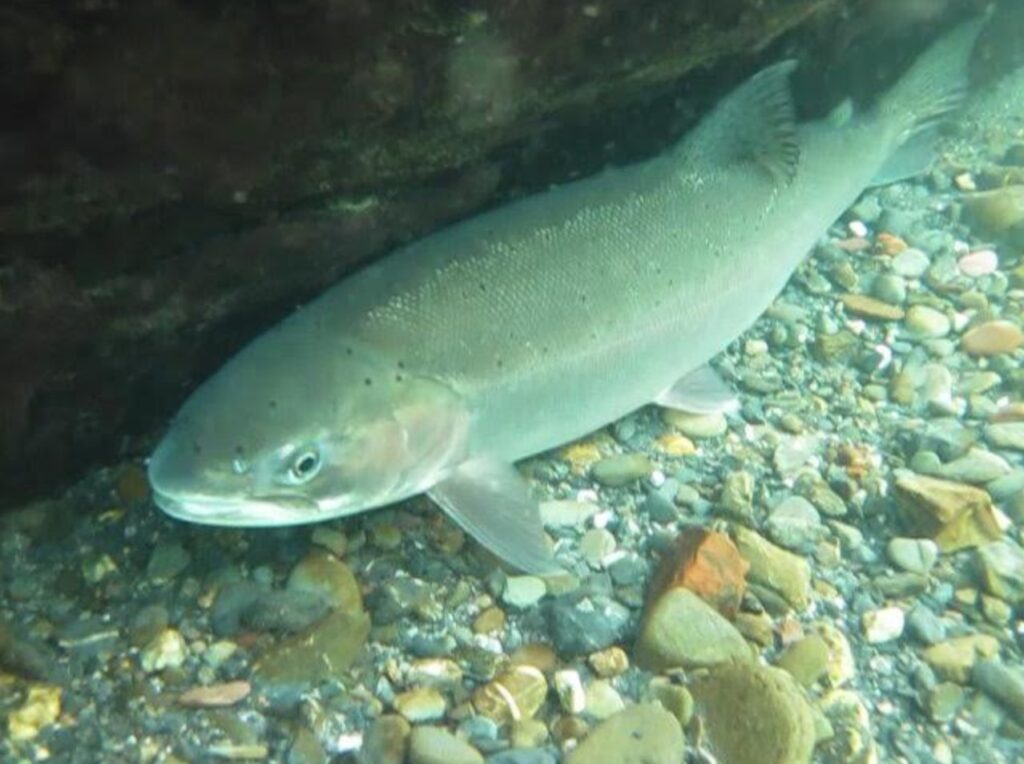
Summer steelhead in the Middle Fork Eel River. Image: Shaun Thompson, California Department of Fish & Wildlife