I sometimes tell fishing clubs when I talk to them that CSPA works in long and difficult regulatory processes so the clubs don’t have to. There is so much regulatory and legal work to do to save and restore California’s fish and the communities that depend on them. On many levels, the effort in California’s Central Valley and Bay-Delta waters is not going particularly well. For me, it’s often hard to get out of the tunnel of the next comment deadline or the next legal action.
To see a little more actual and metaphorical daylight, I’ve gone back to my pre-Covid practice of attending the annual conference of the Salmonid Restoration Federation (SRF). I find, first of all, an impressive number of young people who are really good at making things better for fish, in a wide diversity of ways. I also see a wide variety of strategies to achieve this common goal.
In the diversity of approaches and engagement that SRF brings together, CSPA has a role to play. That role is most often different from what other entities and people at the conference do.
Occasionally, someone asks CSPA to give presentations. This year, I gave a presentation entitled “Restoring Leverage in an Era of Anti-Regulation.”
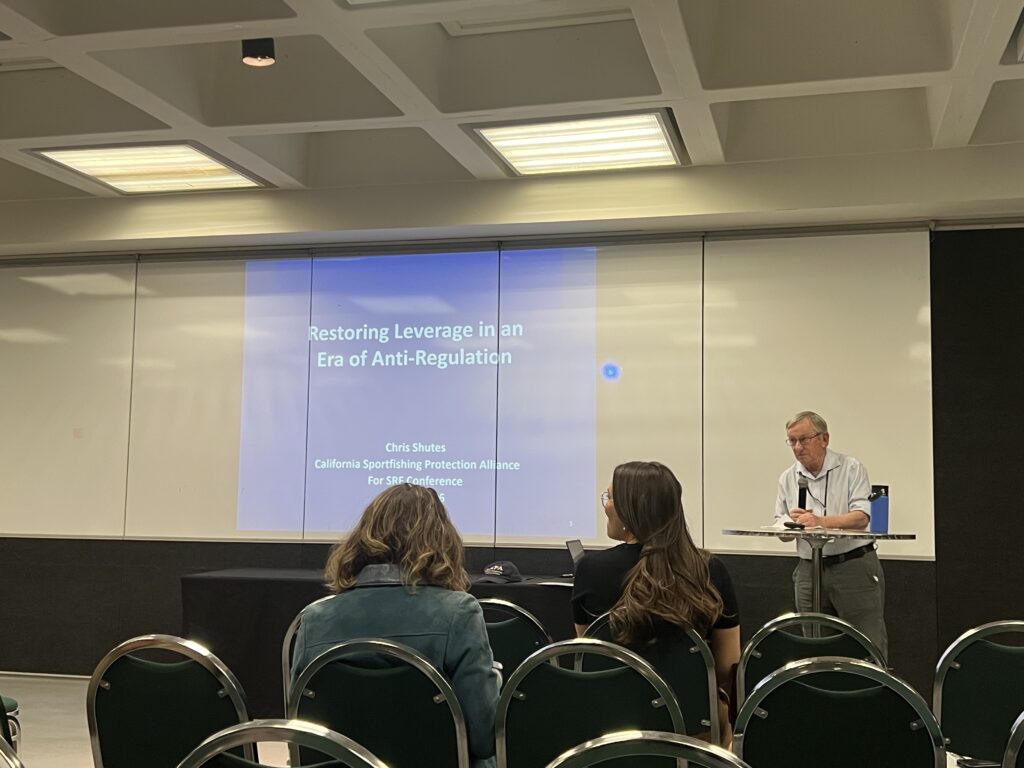
Chris Shutes presents at SRF 2026. Image: Jacob Bernal, Hydropower Reform Coalition
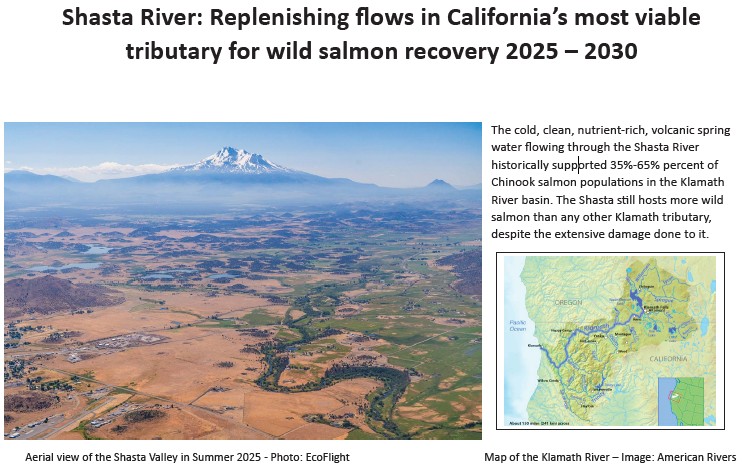
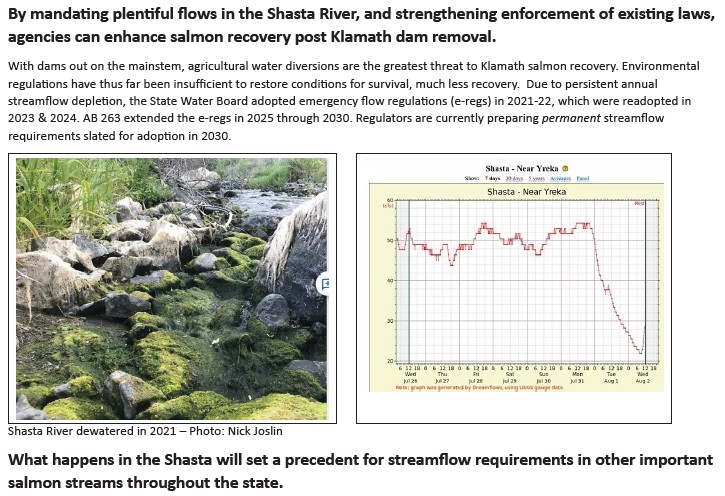
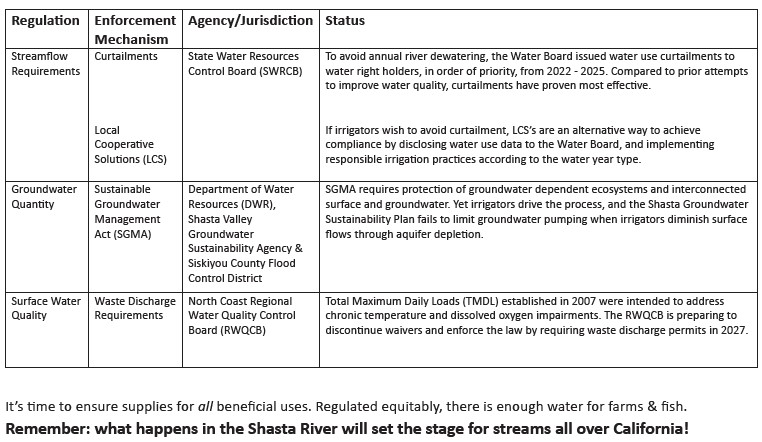
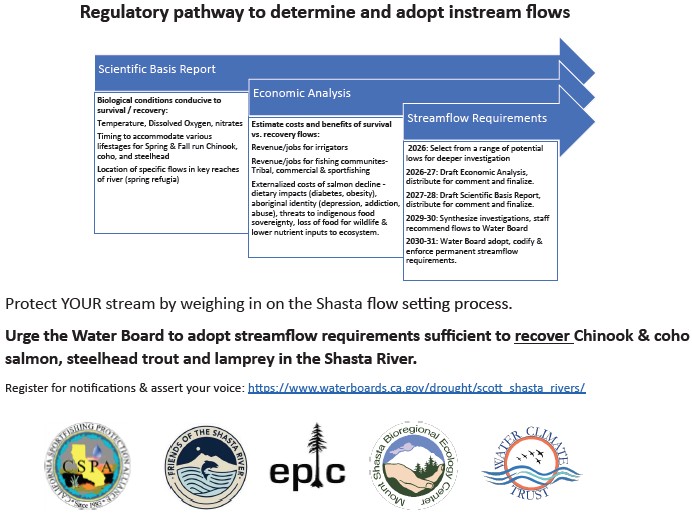
CSPA’s Restoration Associate, Angelina Cook, assembled a poster entitled “Shasta River: Replenishing flows in California’s most viable
tributary for wild salmon recovery 2025 – 2030.” Below is Angelina’s presentation, so you can enjoy what she shared.