
This summer, the Ninth Circuit Court of Appeals denied the Trump Administration’s attempt to subordinate the needs of keystone species to private water contracts. The Court issued a summary judgment on June 17, 2026. Its opinion, authored by Justice Ronald M. Gould, stated that the Klamath Project operator, the U.S. Bureau of Reclamation (BOR), must enforce the Endangered Species Act (ESA) when regulating water deliveries from Upper Klamath Lake (aka Klamath Lake) in Oregon.
For reference, Upper Klamath Lake is the largest freshwater body in Oregon. It is fed by a large watershed that includes the Williamson and Wood Rivers. The outfall from Upper Klamath Lake passes through the Link River and Lake Ewauna before draining into the Klamath River.
The ruling resolved a seven-year legal battle that began during the first Trump administration. In 2019, the Yurok Tribe and the Hoopa Valley Tribe sued the federal government for attempting to obstruct the ESA in the Klamath Basin, a region in California and Oregon that is drained by the Klamath River. Commercial fishermen, represented by the Pacific Coast Federation of Fishermen’s Associations and the Institute for Fisheries Resources (IFR) joined the Tribes as plaintiffs.
The Yurok, Klamath, and Hoopa Valley Tribes rely on the Klamath River for life. In their lawsuit, they asserted their prehistoric water rights to ensure that sufficient water remain in Klamath Lake and the Klamath River to support imperiled species and other Tribal beneficial uses.
River communities can breathe a sigh of relief, at least for the moment, now that irrigators will remain subject to endangered species protections in the biodiverse Klamath Basin.
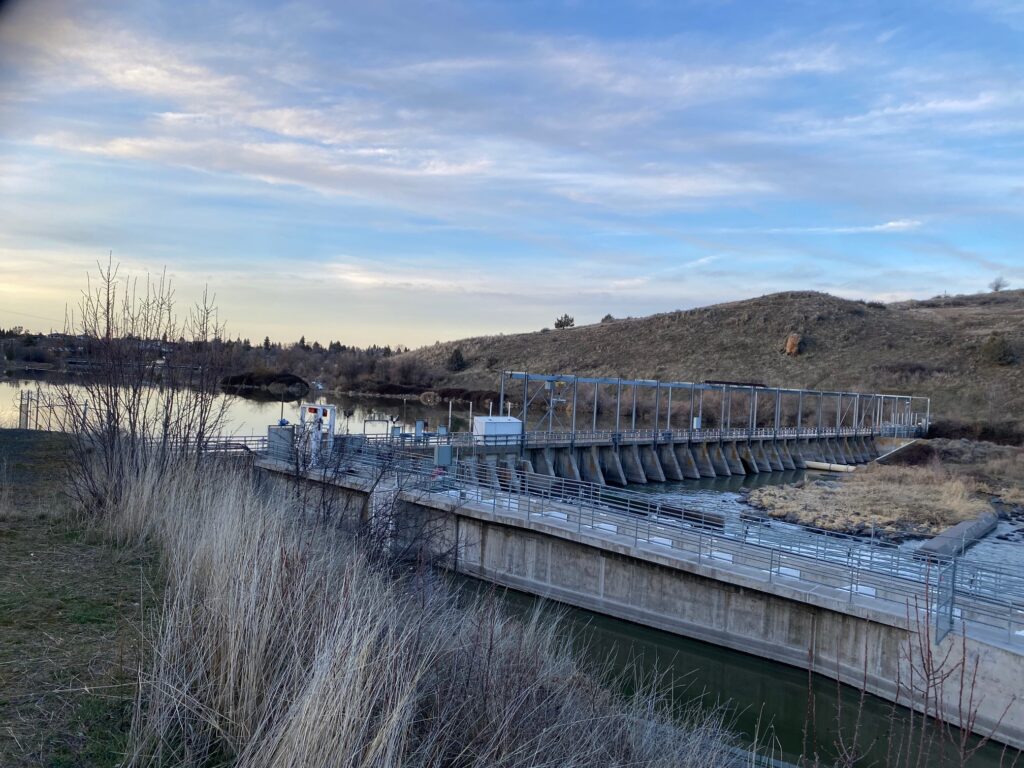
Link River Dam, one of two remaining dams on the Klamath River, at the outlet of Upper Klamath Lake. Image: Angelina Cook