
On July 22, 2026, the State Water Resources Control Board (State Water Board) held a workshop about Draft Guidance on designating Tribal Beneficial Uses (TBUs). The phrase “designating TBUs” means the State will officially identify and recognize specific tribal uses. The State will also call out specific water bodies in which those uses are explicitly recognized and develop implementation plans to protect such uses in those water bodies.
The meeting was an important step for the state, as well as for Tribes recognized by the U.S. government and Tribes recognized by the State of California. The effort to develop TBUs has been decades in the making. The workshop is part of a process now underway. A written request from a Tribe to propose specific uses for specific waterbodies will initiate a TBU designation process.
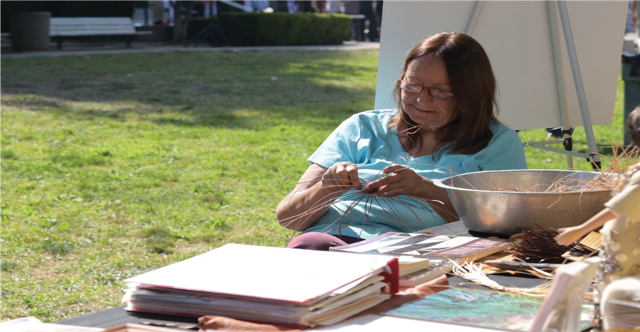
Karuk basketweaver Dixie Rogers demonstrates basketweaving techniques on California Native America Day. Image: Tara Albertoni, State Water Board, from Draft Guidance on Designating Tribal Beneficial Uses, California Water Boards, June 2026
The two general types of uses for which the State Water Board seeks tribal input for designation are Cultural (CUL) and Subsistence Fishing (T-SUB).
Tribal Tradition and Culture (CUL) is defined as: “Uses of water that support the cultural, spiritual, ceremonial, or traditional rights or lifeways of California Native American Tribes, including, but not limited to: navigation, ceremonies, or fishing, gathering, or consumption of natural aquatic resources, including fish, shellfish, vegetation, and materials.”
Tribal Subsistence Fishing (T-SUB) is defined as: “Uses of water involving the non-commercial catching or gathering of natural aquatic resources, including fish and shellfish, for consumption by individuals, households, or communities of California Native American Tribes to meet needs for sustenance.”
During the July meeting, the Water Board examined a draft document titled “Guidance on Designating Tribal Beneficial Uses.” This document outlines a regulatory pathway for Tribes to gain recognition for specific relationships they have with water. Water Board staff and members of multiple Tribes presented on the progress they have achieved and pitfalls they have faced thus far.
After presentations, the Water Board heard verbal comments from members of Tribes, as well as from advocates. Speakers supported efforts to concretize Tribes’ authority in water management. They questioned the complexity and viability of the process. Presenters and public commenters suggested many improvements to the draft Guidance document. Tribes and members of the public can still review the draft Guidance document and submit written comments to the Water Board. Comments are due August 31, 2026.
The TBU process will create new provisions in regulatory documents known as basin plans. Basin plans define specific beneficial uses and water quality objectives regionally and for individual waters.
The State Water Board has nine regional water quality control boards that assist with implementation of water quality laws and policies in every part of the state. These regional boards are responsible for drafting and implementing basin plans that define water quality objectives in each region. The regional boards revise basin plans periodically, soliciting public comments in the process.
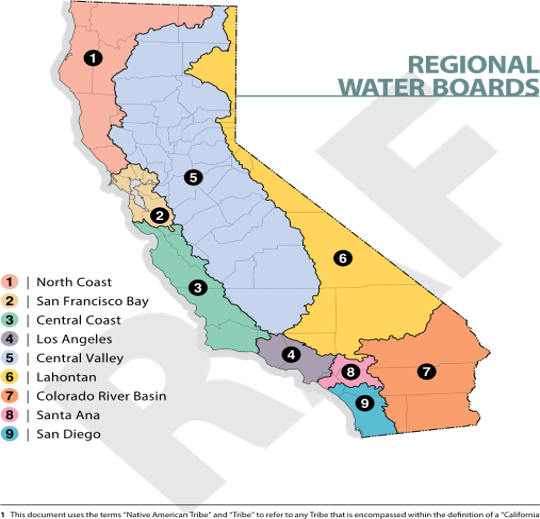
California Regional Water Boards map by The State Water Board Graphics Unit. Image: Draft Guidance on Designating Tribal Beneficial Uses, California Water Boards, June 2026
Through the designation of TBUs, Tribes will strengthen their leverage in the implementation of state law and in some cases federal law. Designation will provide Tribes with a standard with which they can compel agencies to enforce laws that protect Tribes’ rights to water and their relationships with water.
Presenters and commenters were grateful to the State Water Board for creating space to clarify tribal needs for clean water and to recognize and protect tribal relationships with water. Many commenters were concerned about the protracted timelines. They were confused why the process has to be so expensive and complex. Board members were generally sympathetic to the frustration, while executive staff and lawyers explained why the regulatory framework is so extensive.
Some staff and Board members suggested that, in the face of budgetary constraints, the state cannot afford to enforce these types of “innovative” policies. Board member Jared Blumenfeld, former Secretary of the California Environmental Protection Agency, pushed back on that opinion. He informed the audience that the Water Board employs 2,800 staff and has an annual budget of over $1 billion. He spoke at several points during the workshop to suggest that it is not the lack of resources that limits the State from enforcing water laws. Instead, it is the lack of administrative accountability.
The designation of TBUs is significant. However, the water boards have a poor track record of implementing and enforcing existing statutes and regulations that mandate water quality, species recovery, equitable access to fresh water, and protection of designated beneficial uses. The State Water Board and the regional boards are likely to need reminders to stay on track.