
The Smith River, whose mainstem and three forks flow a total of approximately 124 miles, flows from the Klamath Mountains to the Pacific Ocean in Del Norte County, California. This waterway is arguably the most beautiful stream in California. For my money, it’s one of the most beautiful on Earth. The Smith River is a prime example of how a coastal river system remains pristine when left untouched. “The emerald-green Smith River flows freely and naturally, without a single dam for its entire length” (U.S. Fish & Wildlife Service 2026).
Smith River is also the name of an unincorporated area near the mouth of the Smith River. As of 2020, it was home to about 900 people. This area is the headquarters of the Tolowa Dee-ni’ Nation, a federally recognized group of Tolowa people. They have a vested interest in protecting the river and the native species of fish in it.
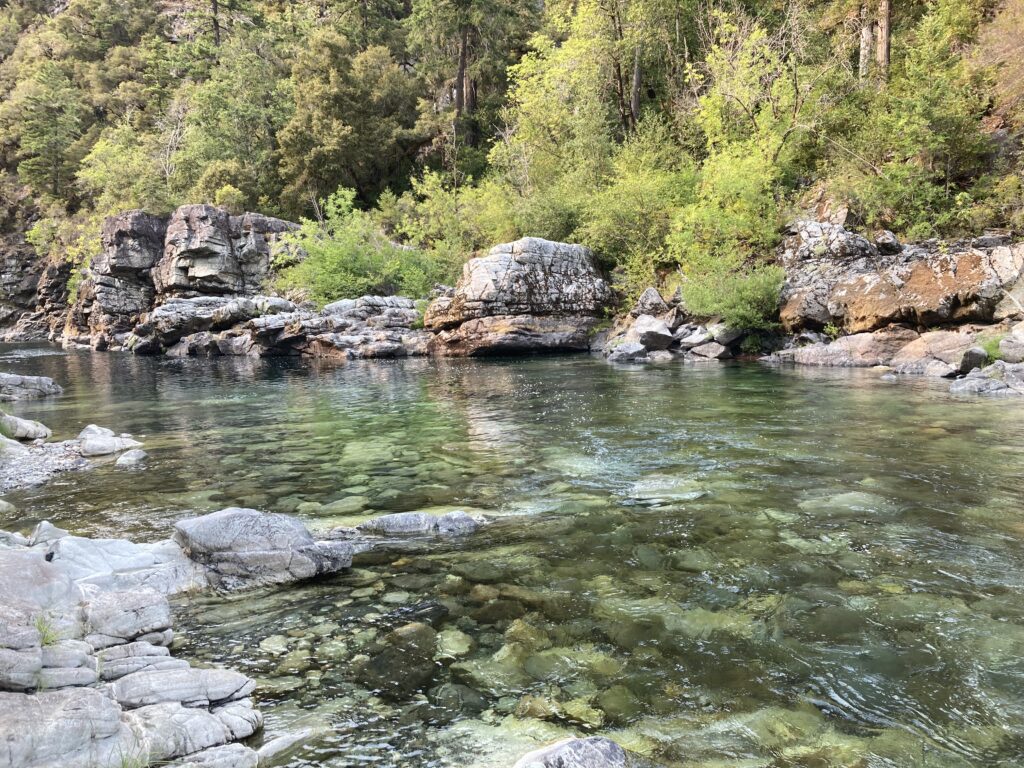
A gin-clear reach on the South Fork Smith River. Photo taken in 2021. Image: Eric Woodruff
Some of my best memories stem from when I volunteered to help do snorkel surveys for coastal cutthroat trout in the Smith River watershed. The Smith River Alliance (SRA) is a Crescent City-based 501(c)(3) non-profit organization dedicated to supporting the river and the natural environment surrounding it. This organization conducts volunteer-based surveys annually. They are a great way to experience the raw beauty of the watershed.
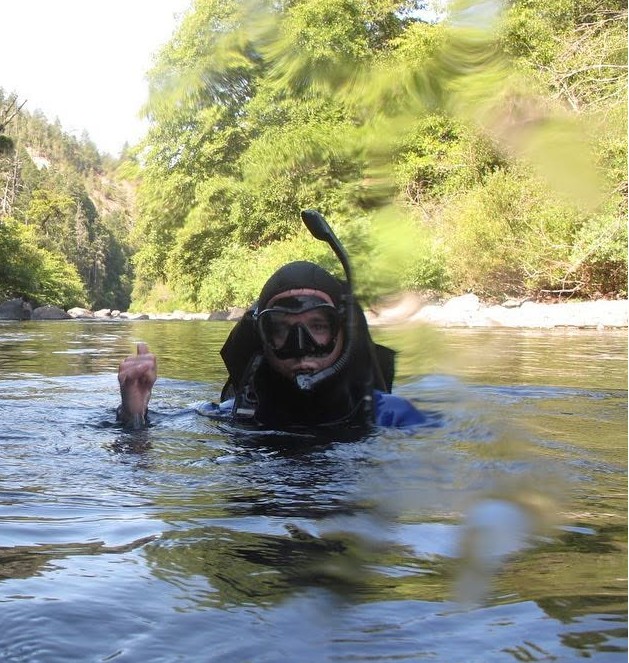
Eric Woodruff conducting a snorkel survey in the Middle Fork Smith River. Photo taken in 2021. Image: Will Boucher
Swimming over giant summer steelhead in holes 30 feet deep is unforgettable. Almost as impressive were the hundreds of juvenile steelhead and adult coastal cutthroat trout that I encountered while snorkeling.
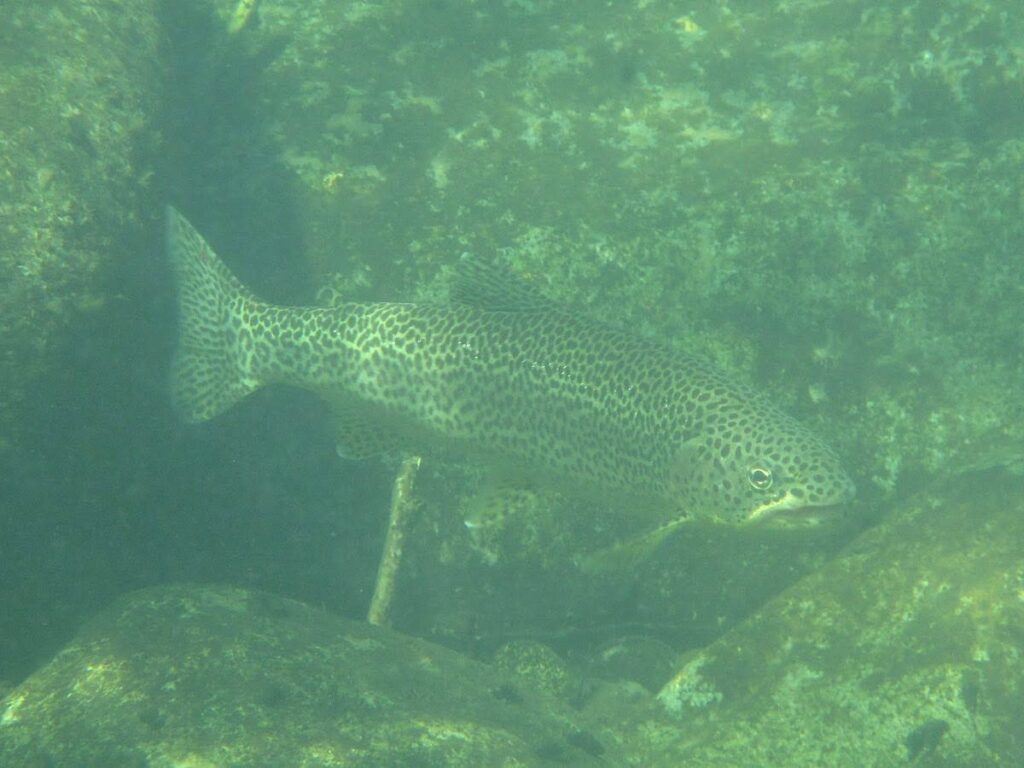
An adult coastal cutthroat in the Middle Fork Smith River. Photo taken in 2021. Image: Will Boucher
The fishing in the Smith River is also incredible! With salmonid runs occurring year-round, it provides opportunities to catch coastal cutthroat trout, salmon, and steelhead throughout the seasons. There’s nothing quite like watching a coastal cutty rise up from the bottom of the channel to take a dry fly, or having a giant winter steelhead tug on a swung intruder pattern.
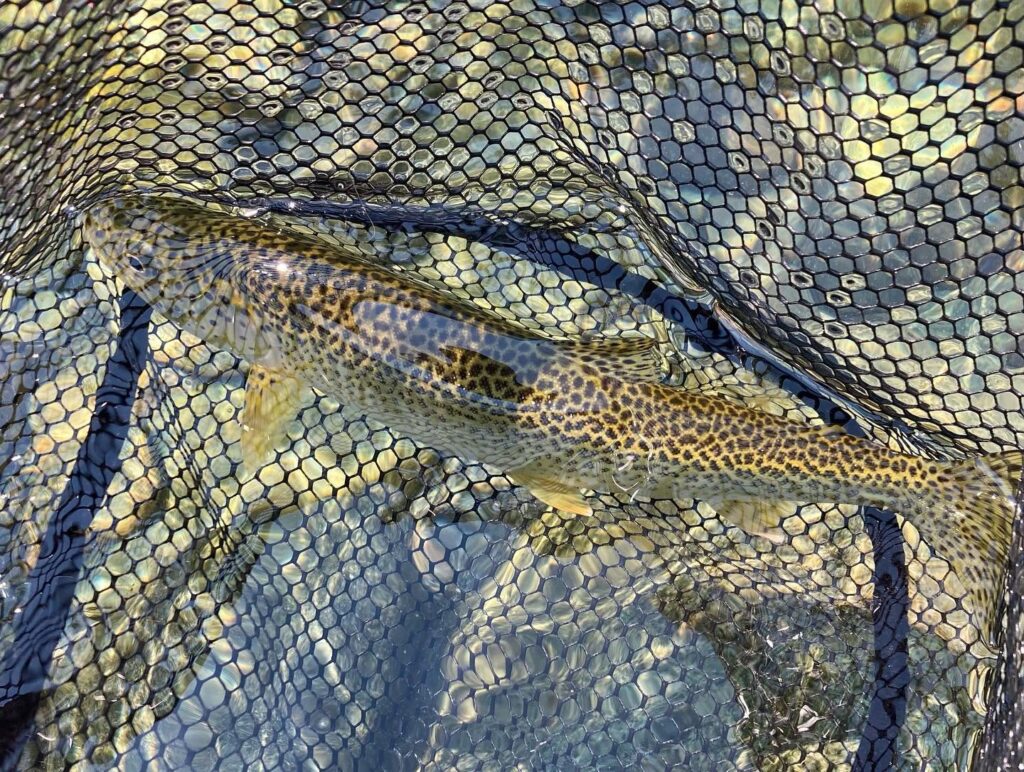
A coastal cutthroat caught on a dry fly. Photo taken in 2022. Image: Eric Woodruff
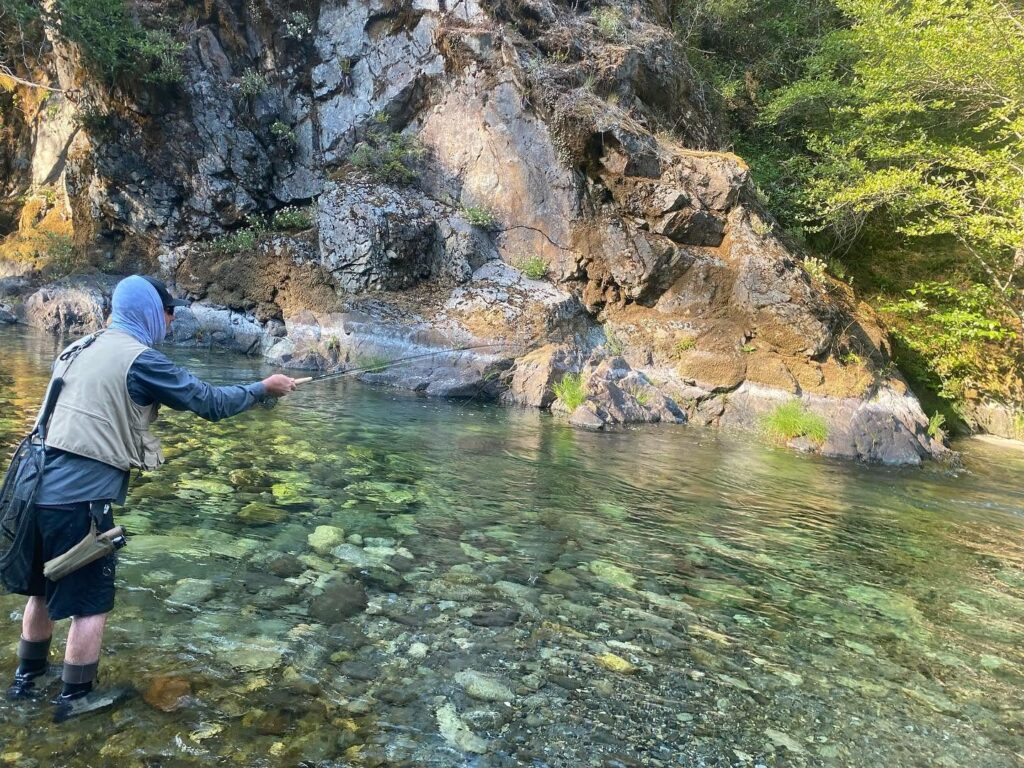
Eric Woodruff fishing on the South Fork Smith River. Photo taken in 2021. Image: Will Boucher
The Smith River flows through two national forests, the Rogue River – Siskiyou National Forest and Six Rivers National Forest, as well as through Jedediah Smith Redwoods State Park. The part of the river that flows through Six Rivers National Forest is a protected area called the Smith River National Recreation Area (Smith River NRA). This area was created by Congress in 1990 to protect the area’s scenic value, natural diversity, cultural and historical attributes. These include the wilderness, wildlife, fisheries, and the Smith River watershed’s clean waters.
The Smith River NRA is managed by the U.S. Forest Service, an agency of the U.S. Department of Agriculture.
The Smith River watershed is not without its share of problems. Approximately 58,000 acres of the natural environment containing most of the Smith River’s North Fork are located in southwestern Oregon. This territory is not part of the Smith River NRA. It does not enjoy the same protections as the parts of the Smith River that lie in California. This part of the Smith River has a different water source, the Siskiyou Mountains in southwestern Oregon.
One of the reasons that the Oregon territory needs to be protected is because companies want to open strip mines there. They plan to engage in hard rock mining, the extraction of valuable metals like copper, nickel, and zinc from solid rock formations. The companies want to accomplish this upstream of Del Norte County water purveyors. This is a great concern to the many agencies and people downstream who depend on the mainstem of the Smith River, in California, for drinking water as well as fishing.
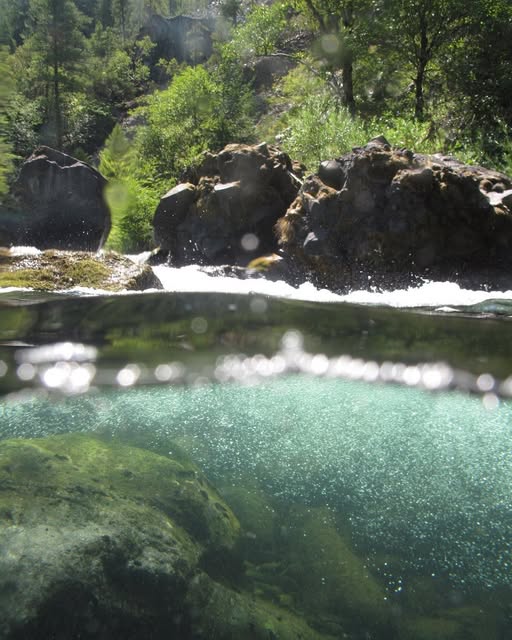
An underwater photo taken while snorkeling through a rapid in the Middle Fork Smith River. Photo taken in 2021. Image: Will Boucher
CSPA has a bit of history in developing legislative protections for the Smith River protections. Jim Crenshaw, former President of CSPA, worked closely with Grant Werschkull, Co-Executive Director of the SRA. Over the years, this led to CSPA’s endorsement of many watershed protection proposals for the river. The SRA received numerous grants and other types of public funding for habitat restoration projects.
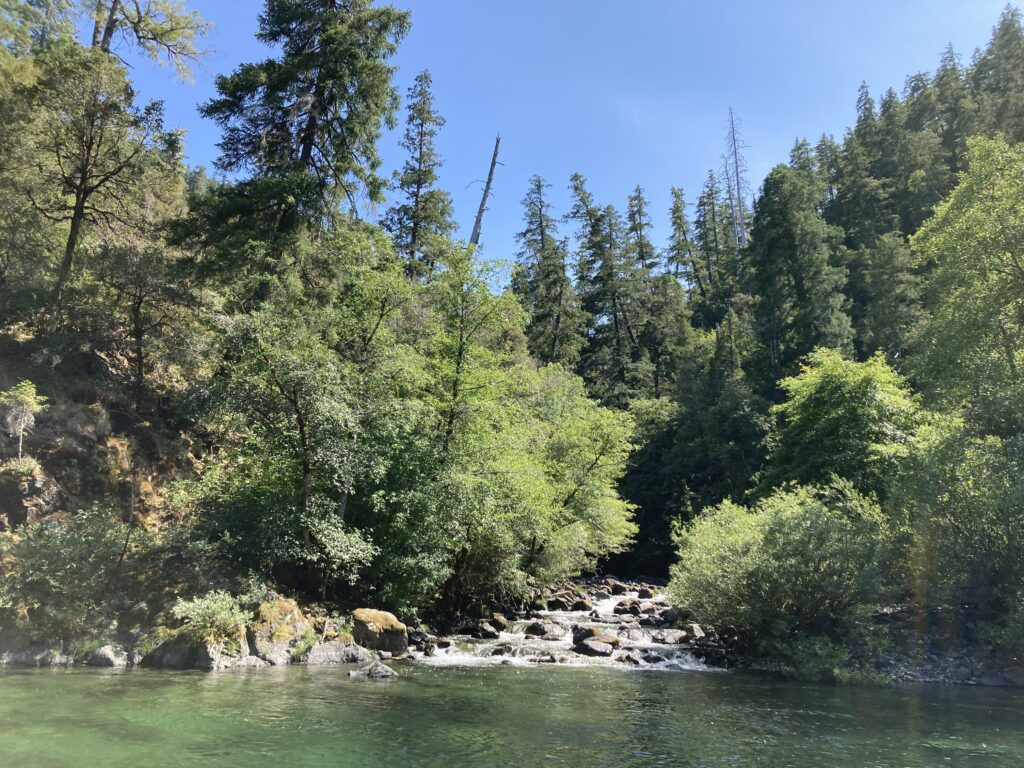
The confluence of Goose Creek and South Fork Smith River. Photo taken in 2022. Image: Eric Woodruff
The SRA has identified a suite of notable actions in the chronology of Smith River threats and protections:
June 2014: Red Flat Nickel Corporation, a Portland, Oregon-based company that mines nickel laterite deposits, submitted an Application to the Oregon Water Resources Department for a water license to support test drilling in the North Fork Smith watershed in Oregon. Appealed. Withdrawn. Every relevant Del Norte County public agency sent a letter of opposition, as did thousands of citizens from multiple states.
January 2017: The Secretary of the U.S. Department of the Interior, Bureau of Land Management, published Public Land Order 7859, withdrawing approximately 5,200 acres of public domain and Revested Oregon and California Railroad lands and 95,800 acres of National Forest System lands from mineral entry for the next 20 years.
July 13, 2017: Oregon Environmental Quality Commission unanimously designated the North Fork Smith River in Oregon as the first Outstanding Resource Water in the Pacific Northwest. The designation helps prevent future degradation of water quality.
November 14, 2019: Smith River National Recreation Area Expansion Act, legislation introduced by U.S. Senators Jeff Merkley (D-Oregon) and Ron Wyden (D-Oregon). This expanded the Smith River NRA to include all Oregon watershed land. It also provided a permanent mineral withdrawal and added 75 miles of the Smith River and its tributaries in Oregon into the National Wild and Scenic Rivers System. Further, it directed the U.S. Forest Service to prepare an updated recreation and action plan for the Smith River NRA to reflect the added lands and streams.
January 20, 2025: Executive Order 14154 “Unleashing American Energy” signed by President Trump. This order directed the Secretaries of the U.S. Department of the Interior and the U.S. Department of Agriculture to reassess any public land withdrawals for potential revision with the aim of ‘Restoring America’s Mineral Dominance.’
March 6, 2025: Senators Merkley and Wyden reintroduced the Southwestern Oregon Watershed and Salmon Protection Act as part of the Oregon Recreation Enhancement Act of 2025 (Senate bill 888).
March 11, 2025: Senators Merkley and Wyden reintroduced the Smith River National Recreation Area Expansion Act (Senate bill 945). U.S. Senators Alex Padilla (D-CA) and Adam Schiff (D-CA) cosponsored this legislation. Representatives Val Hoyle (D-Oregon) and Jared Huffman (D-CA) have co-sponsored companion legislation in the U.S. House of Representatives.
Currently, critical focus remains on advancing the Smith River Expansion Act legislation in the Senate. On March 11, 2025, Senators Merkley and Wyden issued a press release.
“Expanding the Smith River National Recreation Area would protect one of our state’s most iconic treasures and generate both recreation jobs and economic benefits for Southern Oregon from visitors eager to fish, hunt, camp and hike in the area,” said Wyden, in the press release.
How you can get involved
Call or write your U.S. Senators and Representatives, even if you are based in California. Since this is federal legislation, they can get on board with supporting and raising awareness about the Smith River Expansion Act. You can also make a tax-free donation to CSPA and/or the Smith River Alliance. Your contributions go a long way in protecting the Smith River, which is a federal and California Wild and Scenic River. Wild and Scenic Rivers are designated as such to recognize their natural, cultural, and recreational values.
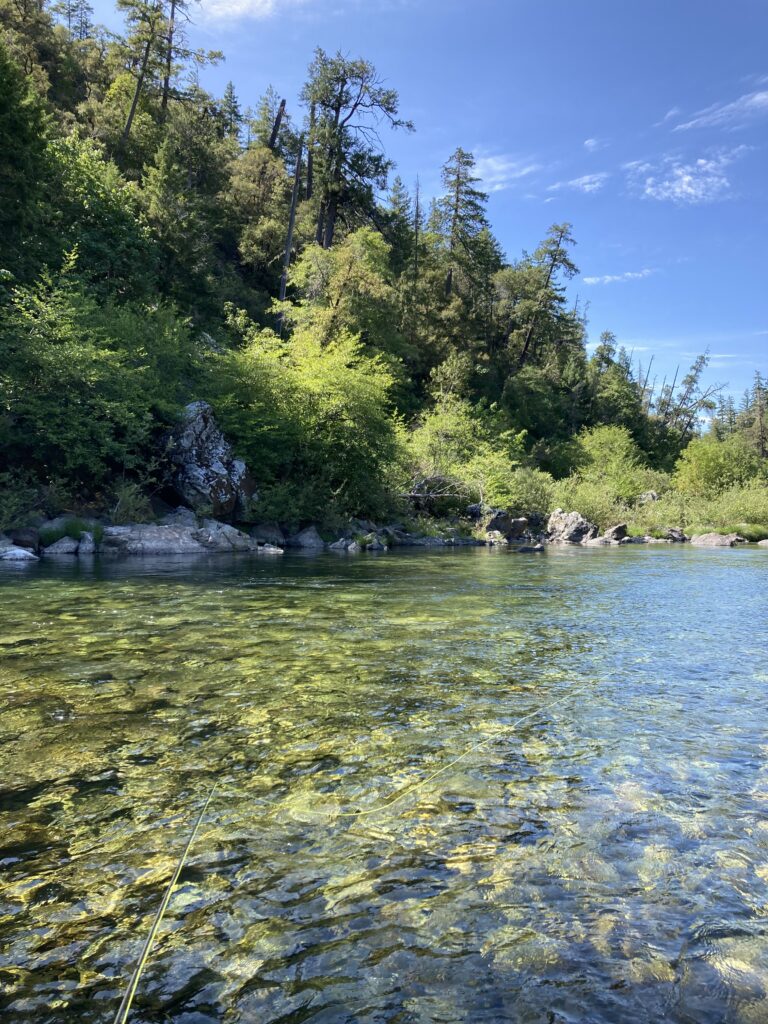
A gorgeous run on the South Fork Smith River. Photo taken in 2022. Image: Eric Woodruff
References and additional information:
A special thank you to Grant Werschkull and the Smith River Alliance for providing an extensive timeline of Smith River protection actions.
`https://smithriveralliance.org/`
https://www.fws.gov/rivers/river/smith
https://www.fs.usda.gov/r05/sixrivers/recreation/smith-river-national-recreation-area-0