
During this month of Thanksgiving, CSPA expresses gratitude for the people and elements that sustain riverine ecosystems. Without ecological processes interacting to maintain specific conditions conducive to life on Earth, Californians could not enjoy such abundant natural diversity and cultural creativity. Agencies, advocates, scientists, and attorneys work on a daily basis to protect public interests by safeguarding California’s magnificent natural endowment.
Vital rivers and their aquatic ecosystems always have been and always will be essential for thriving communities. Since the dawn of time, humans have established their settlements close to sources of fresh water. Riparian ecosystems provide a wide array of essential goods and services free of charge that people rely on every day for subsistence and generating wealth. Storage and delivery of fresh water allow drinking, cooking, cleaning, and bathing. Natural and engineered irrigation grows trees, plants, grass and food. Rivers also perform industrial services such as conveying vessels, generating hydropower, and transporting people and goods.
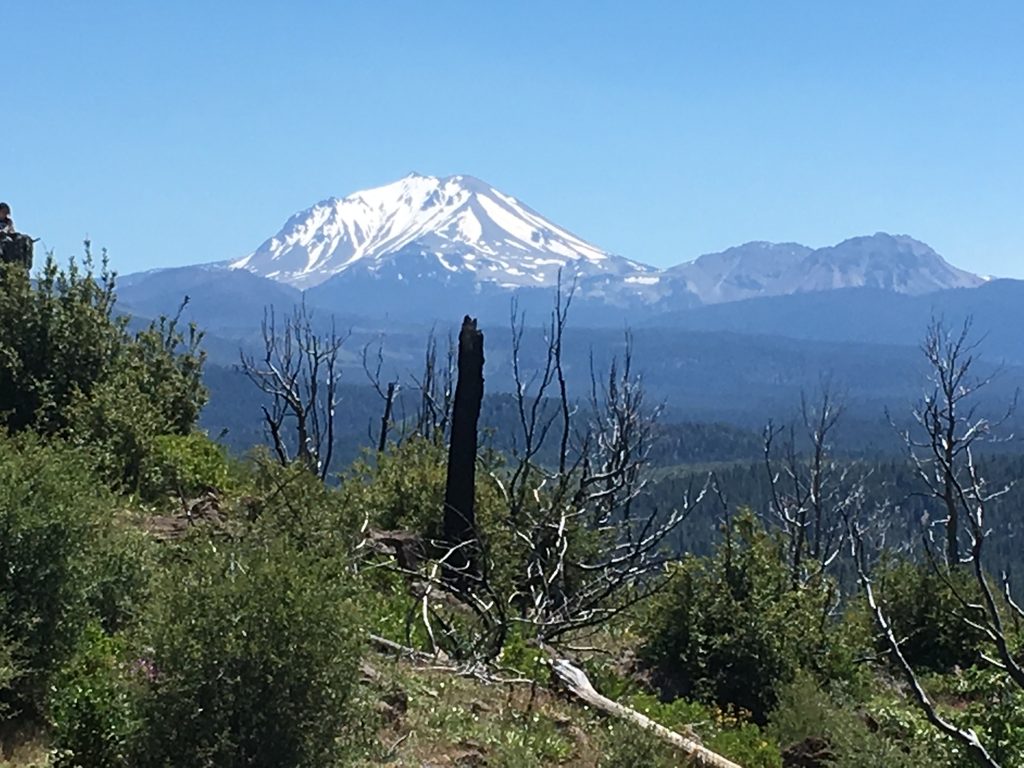
Mount Lassen, which feeds Hat Creek, Battle Creek and Feather River, in late July 2018. Image: Angelina Cook
Functional government and an engaged population are essential for healthy watersheds. Without laws, science, and regulatory agencies responsible for implementing policies, people would not be able to protect, conserve, and restore riparian ecosystems.
Democracy relies on experts to clarify important issues, represent shared interests, and define the Public Trust. But in order for government to prioritize public interests over private interests on a regular basis, ordinary people must also participate in public processes. Participatory democracy asserts community interests in decision-making processes that impact, shape, and determine the fate of the commons. Countless people are needed for this task. Stepping up to participate in governance takes commitment, humility, and courage. Many drawn to this challenge go without recognition or compensation. These are the people for whom CSPA is most grateful.
Rivers and aquatic ecosystems are so central to functioning society that many people take them for granted. Our society tends to externalize natural values from economic transactions, enabling water users to discount ecosystem services. The systematic devaluation of ecosystems has enabled the decimation of America’s rivers and watersheds at scales once considered unfathomable. The resulting physical damage and over-appropriation of water resources, inherited from the 20th century’s industrial legacy, imposes severe costs on society and makes reversing environmental degradation in the 21st century excruciatingly difficult.
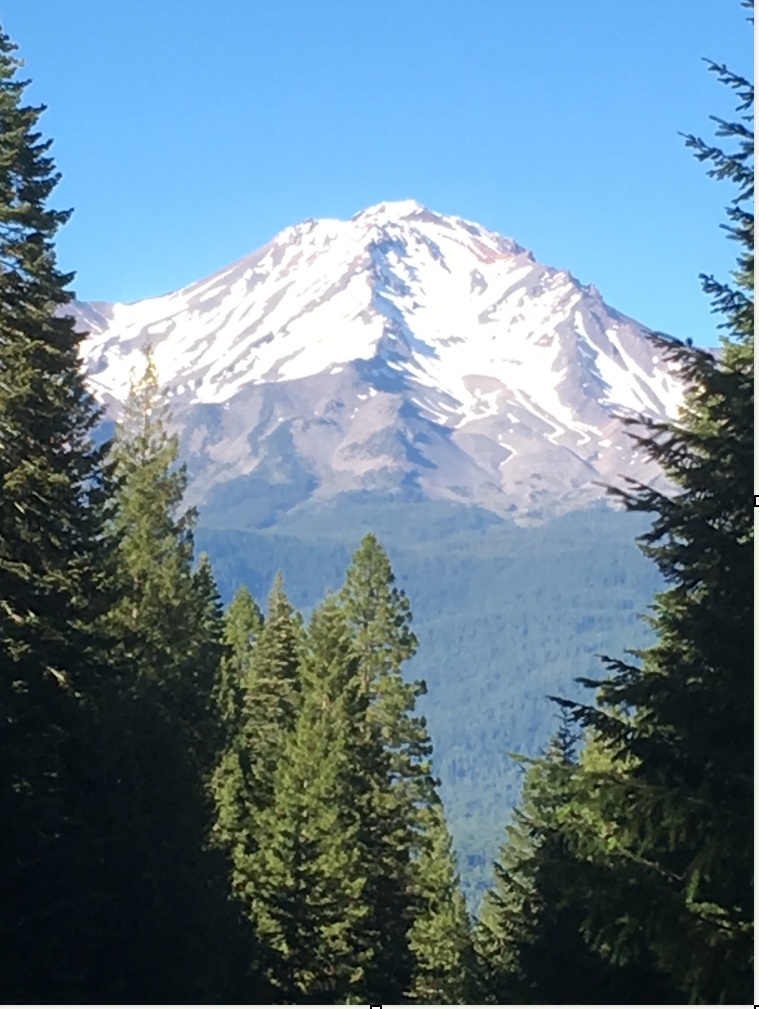
Mount Shasta, which feeds the Shasta, McCloud and Upper Sacramento Rivers, in late July 2018. Image: Angelina Cook
Immense human and financial resources are devoted to restoring intact rivers and healthy watersheds so that current and future generations may enjoy public access to natural resources indefinitely. Yet these resources often get squandered, especially when administrative processes are not held accountable. Because the laws, science and technicalities governing civil engineering are so often convoluted, opaque, expensive, controversial, and complex, the vast majority of people rely on specialists to do the often-grueling work of environmental protection.
Most people are not clear about the role they could play in the process of developing and challenging local, state, and federal regulations. Some people who are aware of the power they have choose to defer to or work with organizations like environmental nonprofits. Such organizations have a wealth of information and engage in frequent contact with State regulatory agencies.
Other people want to participate in the process but face numerous barriers to doing so. Obstacles can include language barriers, lack of adequate financial resources to come to hearings and meetings in person, adequate digital resources to access events and learn information, and the ability to take time away from work, school, or childcare to participate in events.
One wonders, if government officials took their public duty more seriously, and the media and general public fully recognized the dollar value of stewardship, whether people would appreciate nature’s bounty, observe natural limits, and behave as caretakers of the Earth. Perhaps by valuing freshwater ecosystems commensurate with human use, communities can hold industries and agencies accountable. More revenues could be dedicated to restoring intact river ecosystems, financing environmental law enforcement, and improving affordable domestic water supply reliability.
In honor of California’s vibrant natural and cultural heritage, CSPA encourages more people of broad abilities and diverse backgrounds to get outdoors, appreciate nature, and get involved, at least locally. Tracking agency performance, and asserting community interests in public forums, is often as much a matter of effort as specialized expertise.
When we count our blessings this month, may we contemplate the true meaning of Thanksgiving. Whether we are agencies, industries or residents, respecting water and restoring rivers are good ways to begin repairing relations with the indigenous people that flourished in America long before settlers arrived.
About the images: Mount Lassen and Mount Shasta store water naturally for gradual delivery through the dry summer months. High elevation snowpack from these two volcanoes recharge local aquifers and provide clean, cold streamflows for Northern California rivers.