
One of the hats I wear at CSPA involves using the Federal Energy Regulatory Commission’s (FERC) relicensing of hydroelectric projects to improve conditions for some of California’s most cherished rivers and streams. I recently took on the North Fork Stanislaus Hydroelectric Project, FERC Project no. 2409. Last week, I decided to head back into the Sierra to get reacquainted with the watershed.
As a fly fisherman, I have some history with the North Fork Stanislaus River. For starters, it’s the stream where I caught my first fish on a dry fly during a novice-level outing with the Golden Gate Angling and Casting Club. It’s also been a destination for many family camping and fly-fishing trips through the years. Highland Creek, a major tributary of the North Fork Stanislaus River, quickly became a favorite dry-dropper destination in summer time.
One of the greatest things about this watershed is its sheer beauty. I’ve had some of my best lunch breaks there calmly observing the terrain. The lush vegetation of the Sierra Nevada Mountain Range’s Western Slope provides some of the dreamiest views on the planet.
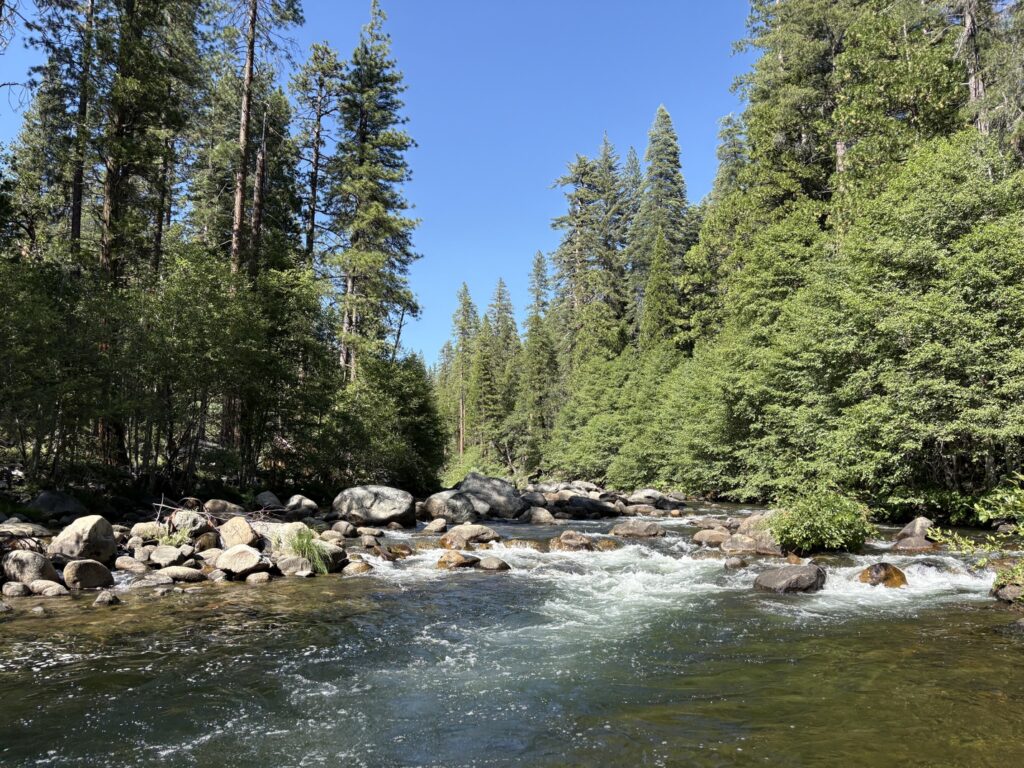
Looking upstream on the North Fork Stanislaus River. Photo taken in 2026. Image: Eric Woodruff
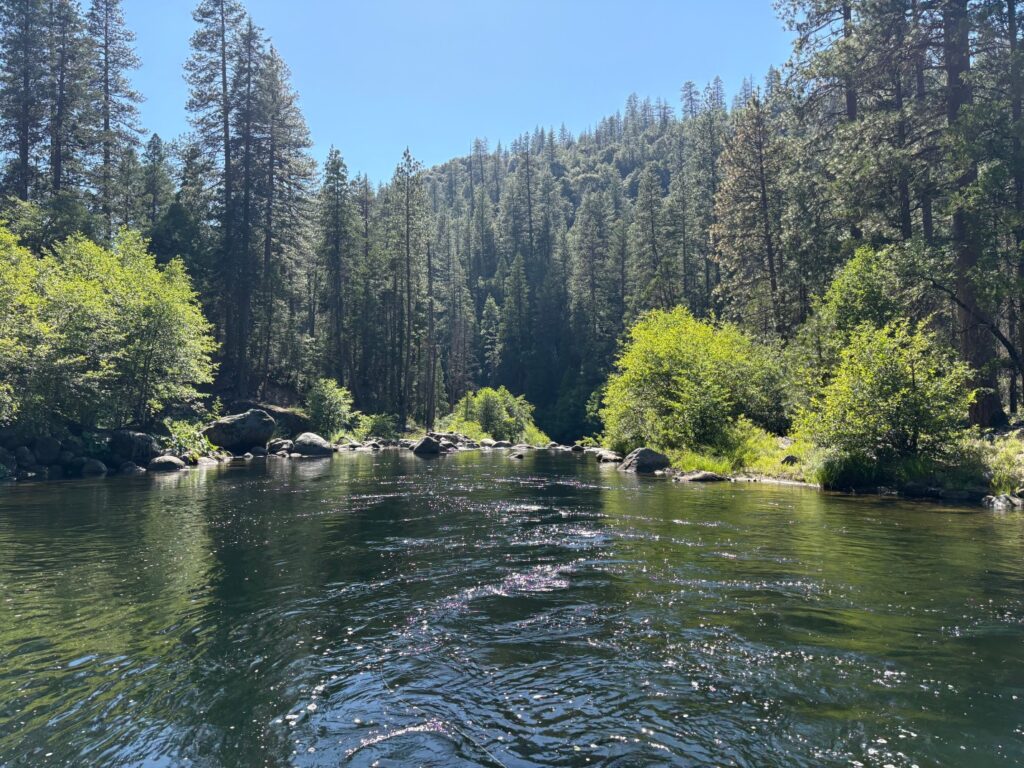
A beautiful hole and tailout on the North Fork Stanislaus River. Photo taken in 2026. Image: Eric Woodruff
On the first day of my most recent trip, I arrived late in the afternoon and headed for a reach near the Sourgrass Day Use Area. I fished into the evening and hooked a majority of small brown trout with a couple of equally small rainbows. I mixed it up with dry-droppers, nymphs under an indicator, and the good old San Juan worm pattern.
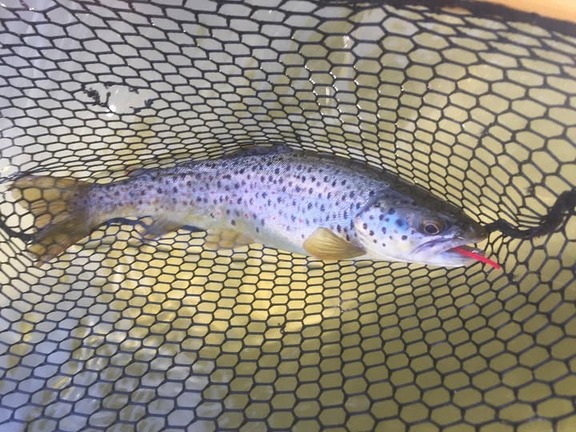
A brown trout caught in the North Fork Stanislaus River. Photo taken in 2026. Image: Eric Woodruff
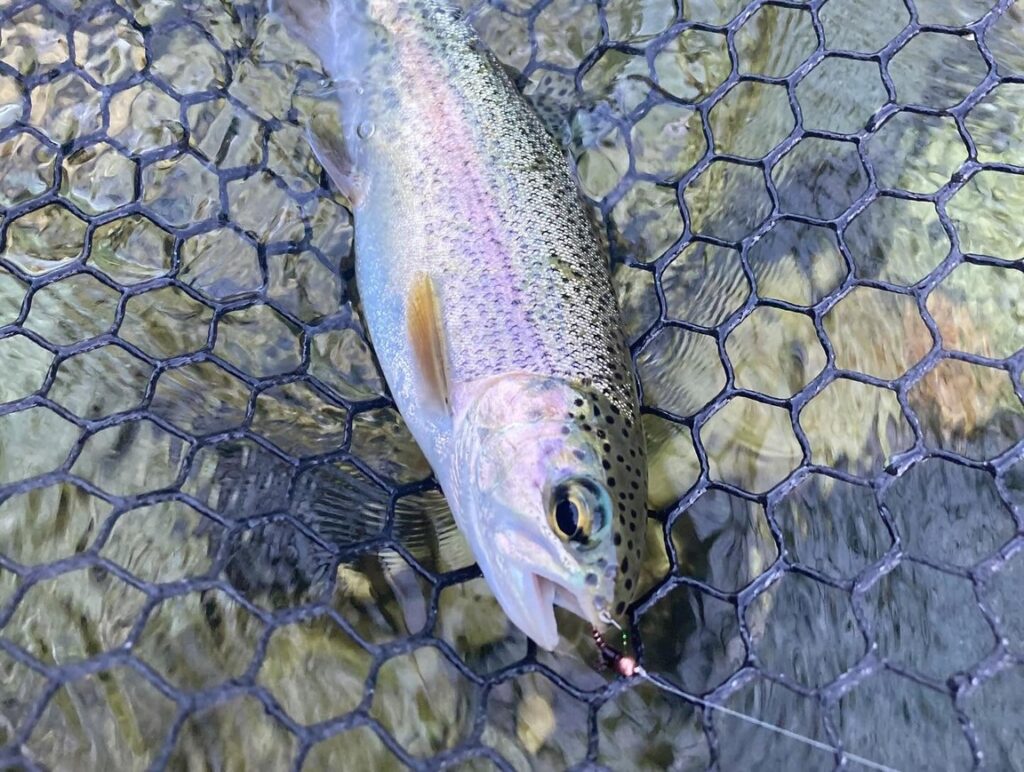
A rainbow trout caught with a nymph in North Fork Stanislaus River. Photo taken in 2026. Image: Eric Woodruff
It dawned on me that I should probably get some water temperature measurements. I was surprised to record consistent readings of about 68-69°F near the river’s surface. That is far too warm! When I tied the water thermometer to my wader boot in chest-high water, I got friendlier readings of about 64-65°F. This explained why all of the fish caught were deep below my indicator as opposed to rising for the dry-dropper rigging.
The next morning, I got up and headed for New Spicer Meadow Reservoir Dam and Powerhouse on Highland Creek. I took several pictures of the infrastructure and took some temperature measurements of the water released from the dam into Highland Creek. I was relieved to get consistent water temperature readings of about 56°F in the high country.
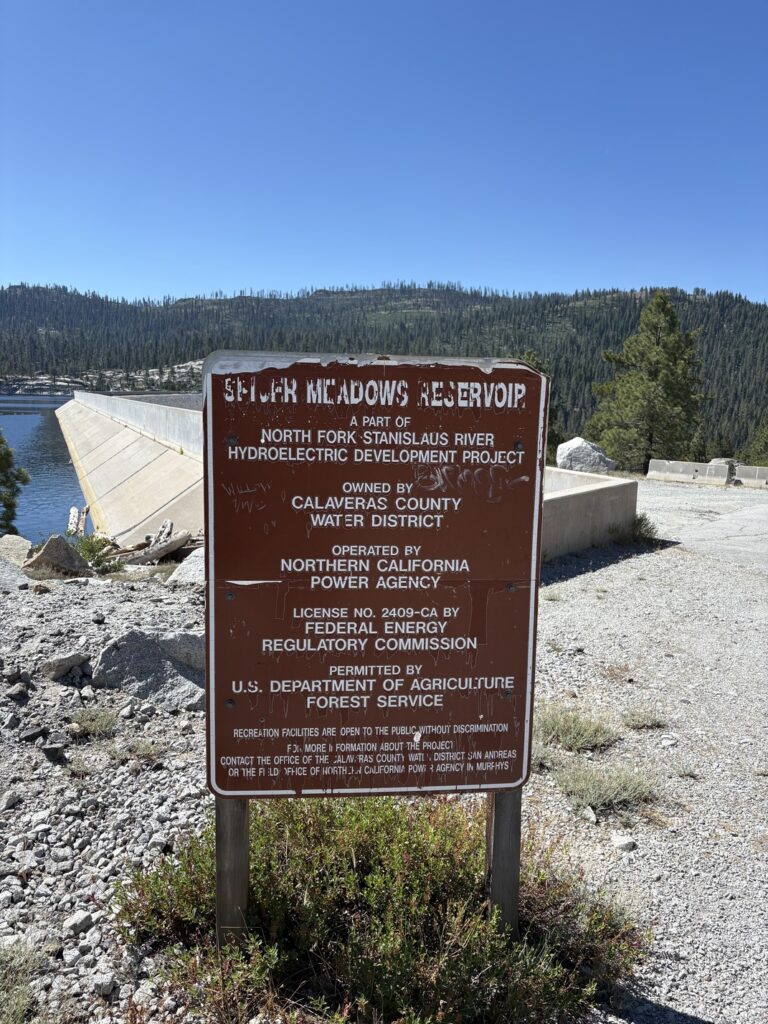
A weathered New Spicer Reservoir sign. Photo taken in 2026. Image: Eric Woodruff
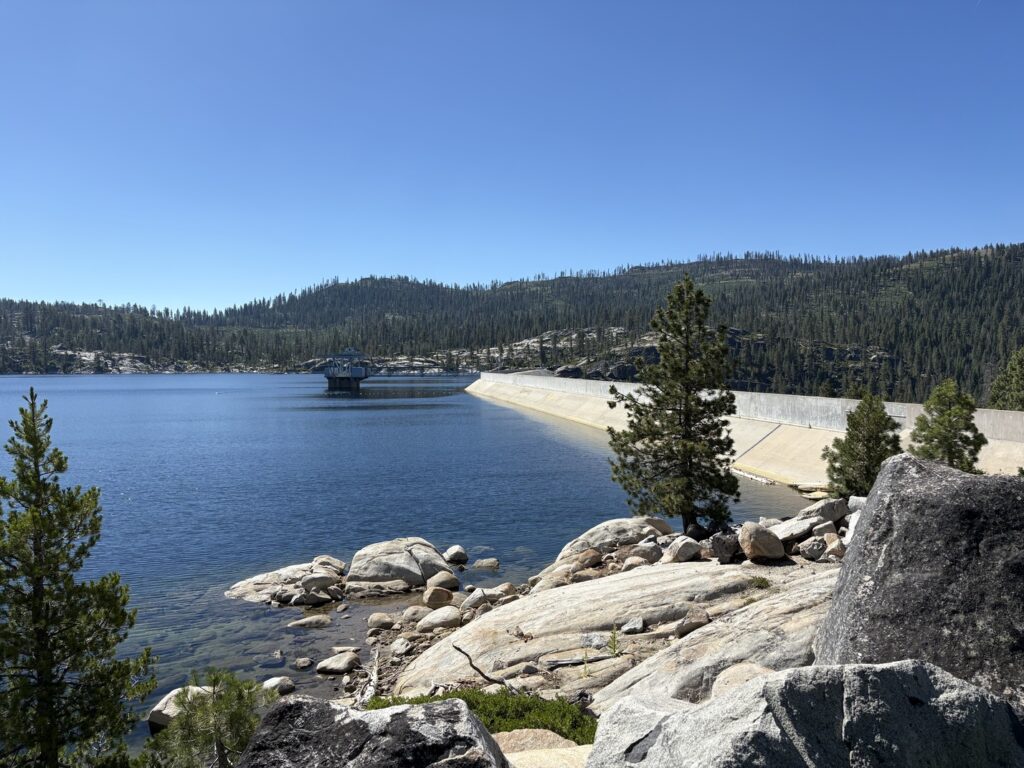
New Spicer Meadow Dam. Photo taken in 2026. Image: Eric Woodruff
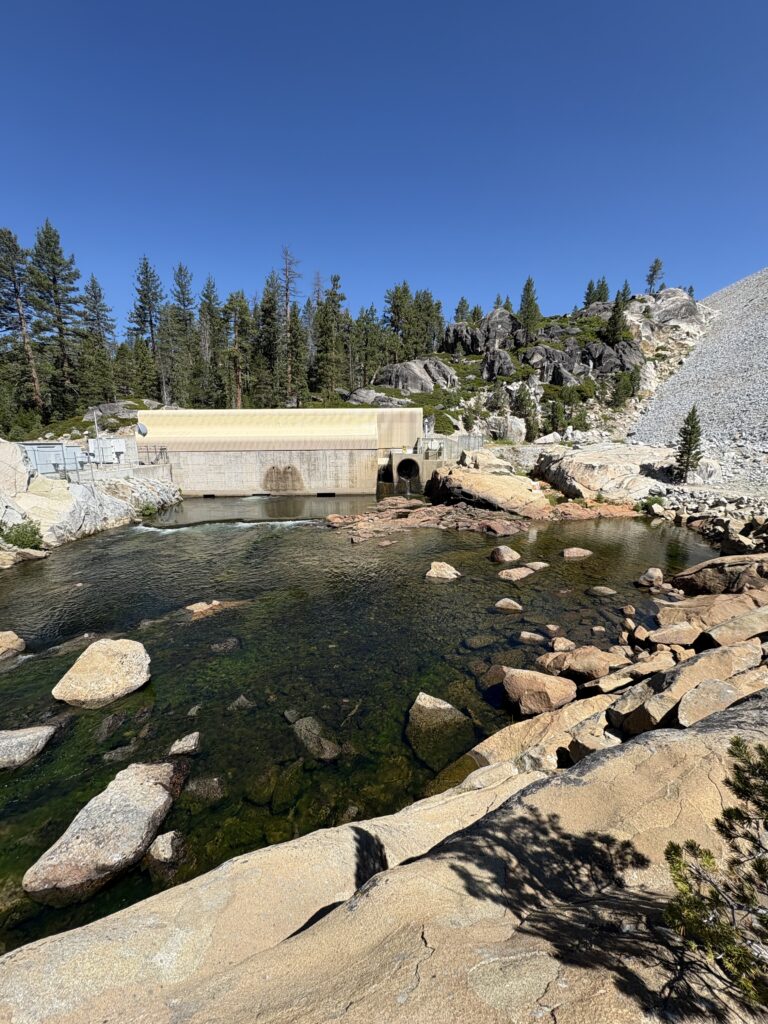
New Spicer Meadow Powerhouse. Photo taken in 2026. Image: Eric Woodruff
Historically, Highland Creek was a stream that provided great sight fishing for bigger browns. However, on this trip I didn’t see a single fish, even after covering a fair amount of water downstream of the dam.
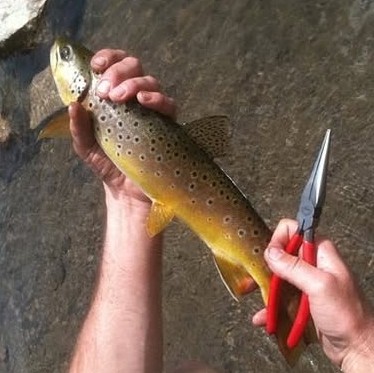
A brown trout caught in Highland Creek. Photo taken in 2020. Image: Eric Woodruff
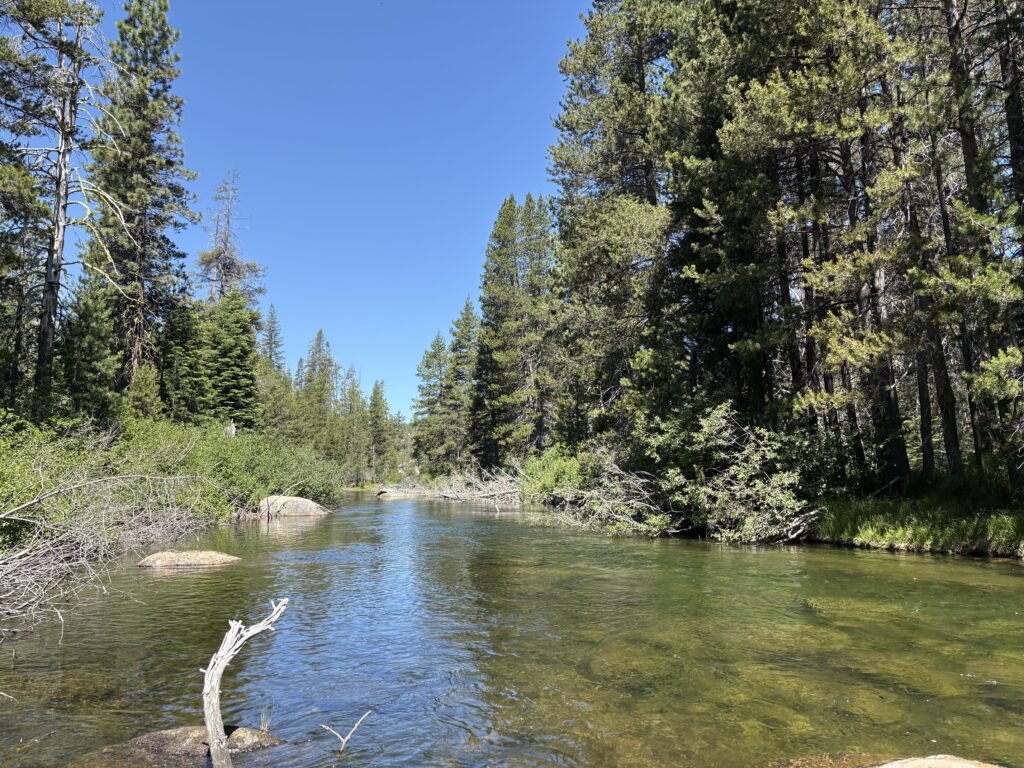
Highland Creek flowing west toward the North Fork Stanislaus. Photo taken in 2026. Image: Eric Woodruff
It confused me not to spot any fish. I asked myself if it had been fished out. Was there an aquatic condition keeping the trout away? Many thoughts raced through my mind after being skunked for the first time in my life on Highland Creek.
Dam releases from hydropower infrastructure affect fisheries in a number of ways. First, there’s supersaturation, where water released from the depths of a reservoir becomes supersaturated with atmospheric gases, but is low in dissolved oxygen. Second, there’s thermal shock due to extreme temperature differences between warmer reaches downstream and colder releases from the dam (Yuan, et al. 2021). Third, high velocity and scour can occur during dam releases, especially uncontrolled releases when a dam is spilling. Fall and winter scour can be a particular problem for brown trout, which are fall spawners. Fourth, rapid flow fluctuations from a dam’s outlet can really stir things up for the fish downstream. Fifth, a lack of canopy cover is common at dam outlets due to the construction and clearcutting conducted to build hydropower infrastructure.
For all that, I’m still not sure why I didn’t find fish in Highland Creek close to the dam.
As Highland Creek flows downstream toward the confluence of the North Fork Stanislaus River, the stream’s water temperature increases to a thermal equilibrium. This occurs when water temperatures adjust to atmospheric exchange, any groundwater or tributary input, and canopy. In this case, the cold 56°F releases from New Spicer Meadow Dam warmed to 68°F just over 10 miles downstream at the Sourgrass Day Use area. It is important to note that FERC has frequently used 68°F (20°C) as a maximum suitable water temperature for trout (Sacramento Municipal Utility District, 2015).
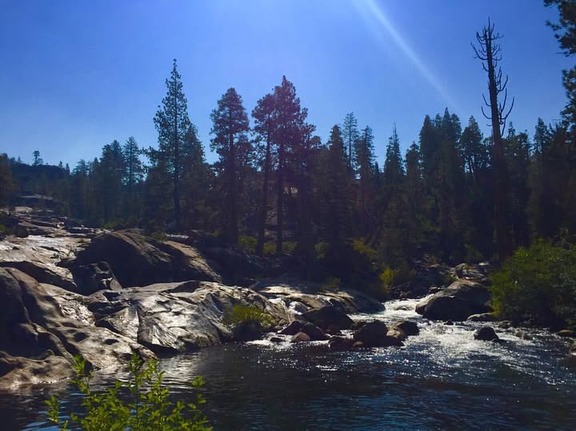
The confluence of Highland Creek and North Fork Stanislaus River. Photo taken in 2020. Image: Eric Woodruff
With the lack of fish in Highland Creek just downstream of New Spicer Meadow Dam and the warmer water temperatures downstream in the North Fork Stanislaus River, I was still pleased to find some trout. However, with summer just starting, I will need to come back and check the stream conditions in hopes that the watershed’s thermal equilibrium will be suitable for our underwater friends.
References and additional information:
https://elibrary.ferc.gov/eLibrary/search [enter P-2409 in the box labeled “enter docket number”]
https://www.fs.usda.gov/r05/stanislaus/recreation/sourgrass-day-use
https://www.sciencedirect.com/science/article/abs/pii/S0166445X21001570?via%3Dihub
https://www.sciencedirect.com/science/article/abs/pii/S0022169418302439