
For two years, I did not fish once. For someone who spends most of his waking life trying to make conditions better for California’s fish, this is not the desired condition.
I had the chance to partially correct this sorry situation this August when I returned to the Bridgeport (Mono County) area to fish a series of east Sierra creeks, most of which I fished as a child and a younger man. To do this, I had to cope with another less-than-desired condition: age.
I am pleased to report that I was able to get to, and get up and down, these streams to fish them. I’ll admit that I was more selective about which runs I tried to fish than I was in my youth. I was glad that I was still able to maneuver a light fly rod and a dry fly around willows and alders without offering too many flies to the river spirits. In this regard, at least, I’ve gotten better with age.
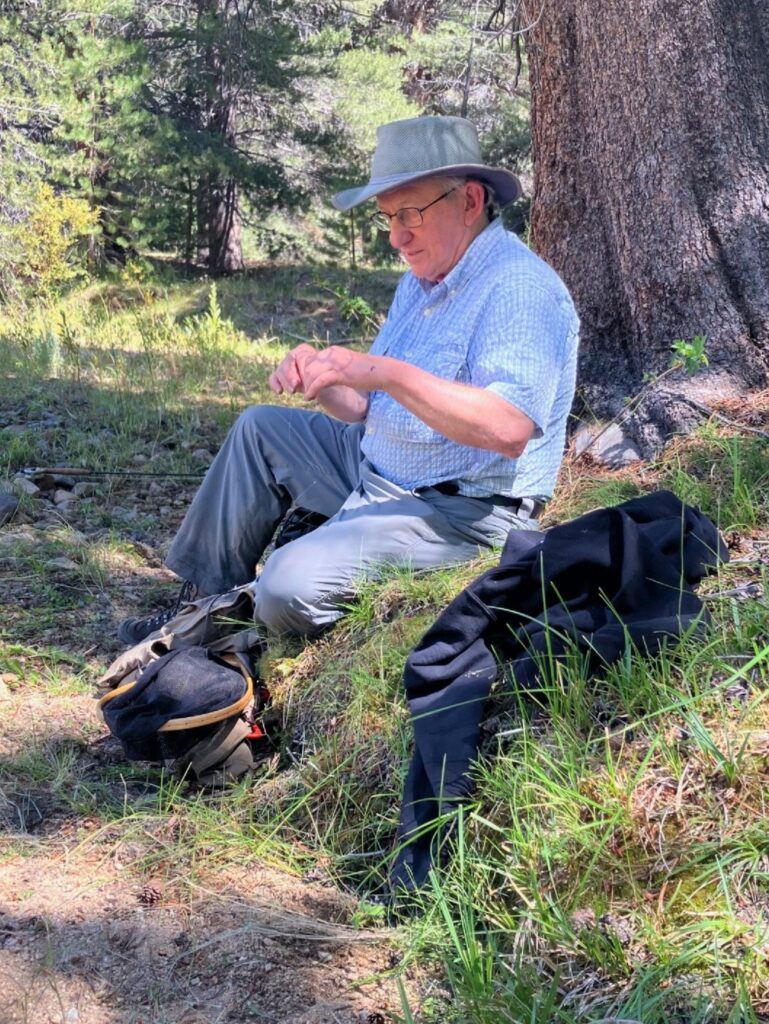
Author ties on a fly. Image: Chris Shutes and Family
However, along the creeks, I was reminded of one of my colleagues from construction days, who once asked me, “Did you ever notice, as you get older, how the ground gets farther and farther away?” Getting over and under brush and downed trees is definitely not getting easier.
There were lots of small fish. This suited me just fine. The creeks were hard enough to fish that I often found fish in the runs and riffles where they were supposed to be. In most of the creeks, they were brook trout, which tend to over-occupy places they inhabit. So, for the first time in a very long time, I took a few brookies back to camp and consumed them.
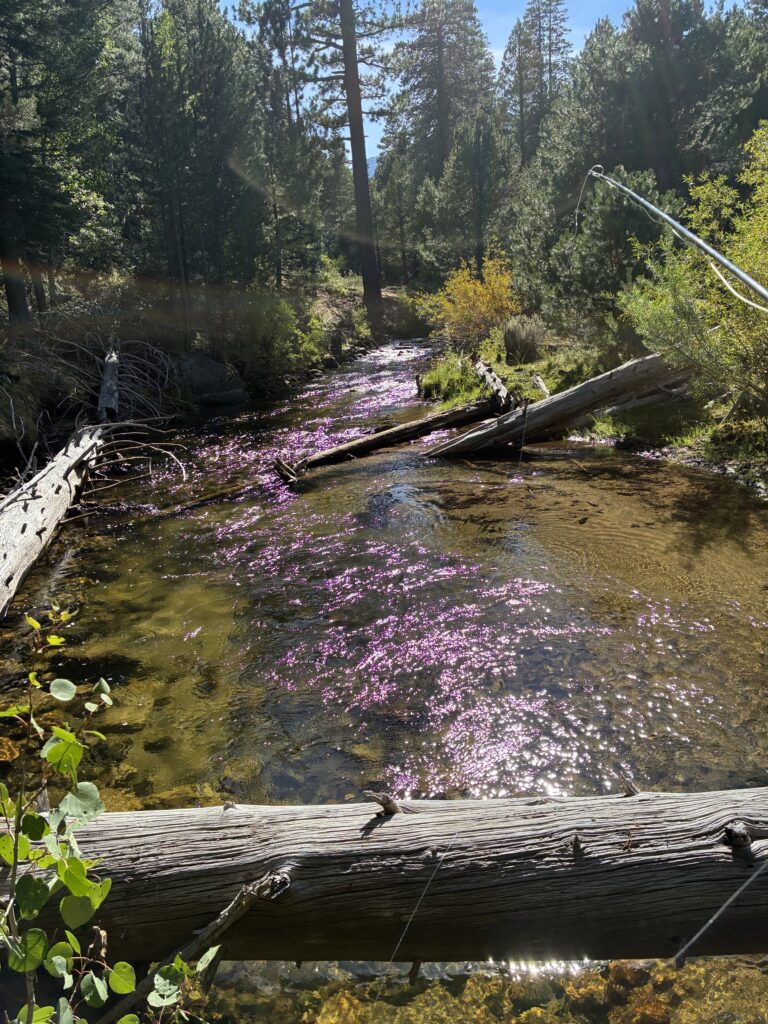
Brook trout stream in Mono County. Image: Chris Shutes and Family
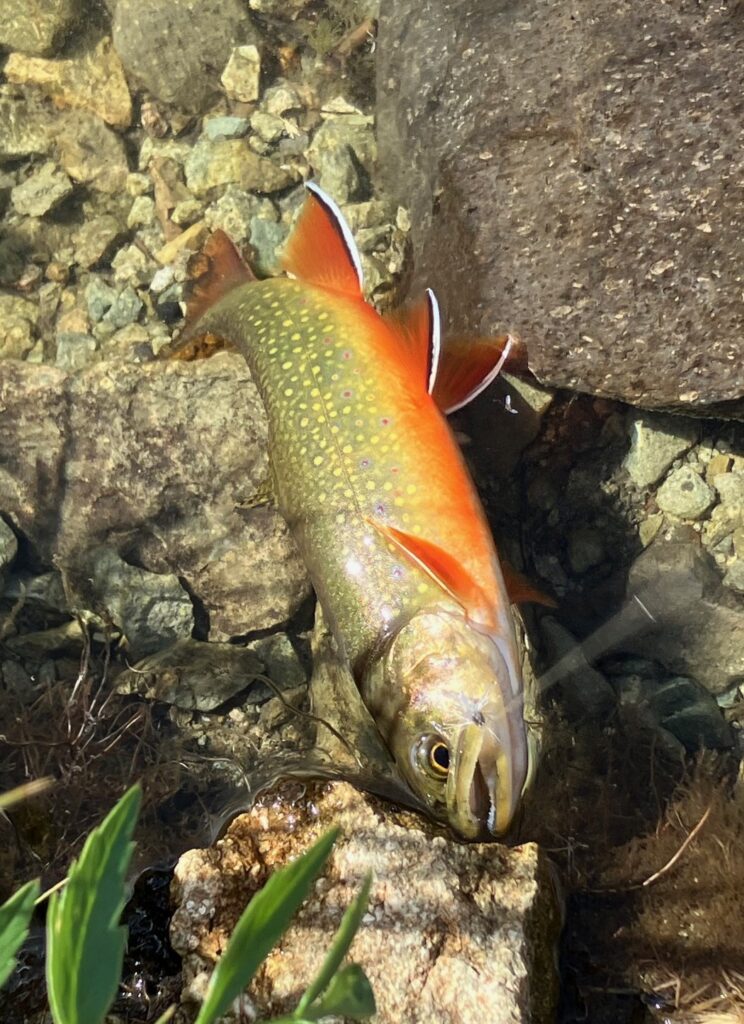
Brook trout (Salvelinus fontinalis). Image: Chris Shutes and Family
The creeks also had more water than I expected. Some have small reservoirs in their headwaters, while others do not. Yet they were universally okay for flow. It’s worth remembering in years like this when Sierra snowmelt in many places dropped dead before May.
The creeks are the same as I remember them, but they are also different. There are more people around the area, and there are houses where there didn’t used to be. The difficulty of access still discourages most anglers.
Ken’s Sporting Goods is still in Bridgeport. It seems to have persisted by diversifying its repertoire. In addition to conventional gear, it features a very complete fly shop. It also caters to hunters, many of whom we encountered on the back roads either bow hunting or scouting for the opening of conventional deer season in mid-September. Such old-timey venues have a wealth of local knowledge and are an important resource for those who enjoy the area. In the age of online sales, it is more important than ever to support these businesses.
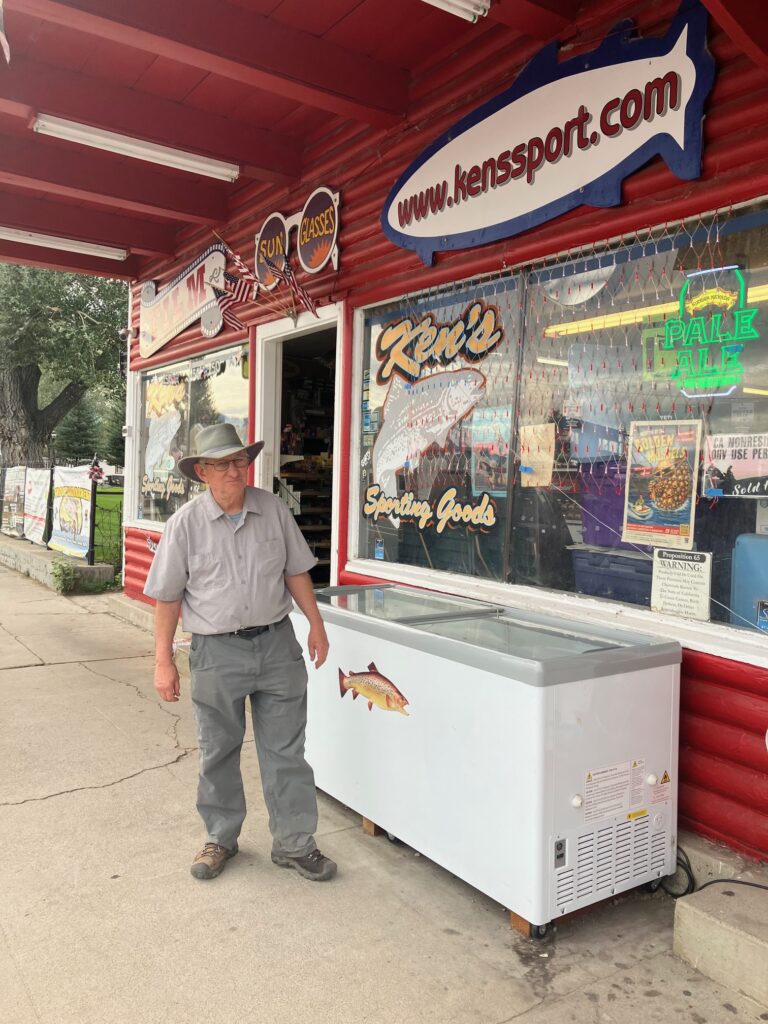
Author outside Ken’s Sporting Goods in Bridgeport, California. Image: Chris Shutes and Family
I won’t mention the places I fished, save one: upper Lee Vining Creek downstream of Saddlebag Lake. Southern California Edison Company uses this creek to convey water from storage in Saddlebag Lake to the Lee Vining Hydroelectric Project’s Poole Powerhouse. The conveyance makes the creek fish well for smallish brook trout all summer. It’s fun to get out to see how the ongoing relicensing of the Lee Vining Project will maintain the fishing opportunity for longer than I’ll be around to fish it. There are a lot of smaller willows and such along this creek situated in a mountain meadow well above 9000 feet, but nothing like the brushy vegetation on most of the other eastward-draining streams I fished.
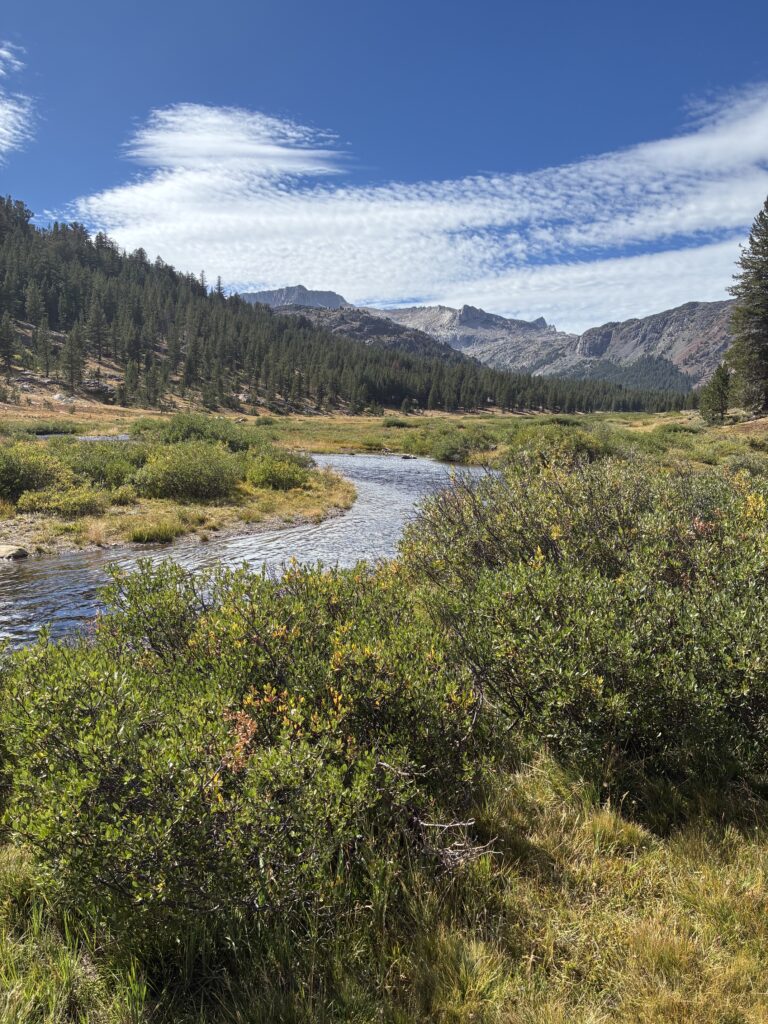
Upper Lee Vining Creek. Image: Chris Shutes and Family
I also took a couple of hours to explore lower Lee Vining Creek just above where it flows into Mono Lake. Forty years ago, the creek was diverted before it reached Mono Lake, so I needed to go see it for myself. I caught a decent brown trout, but I decided that the amount of bushwacking through the brush on a morning turning hot was not worth more time and effort.
That, of course, is part of the downside of waiting 40 or 50 years to return to cherished trout streams. It’s great to rediscover old haunts. But returning to something that in effect is new again is very inefficient.
The final day was the best. We hiked to a high elevation wilderness lake. We got there about ten o’clock. No one else was there. There was a steady surface rise. I hooked a fish every few minutes. The wind came up and it was done. The wind died down and the rise resumed. The wind came up again for good, and we headed back down the trail. It didn’t matter how many fish I caught or how many I missed.
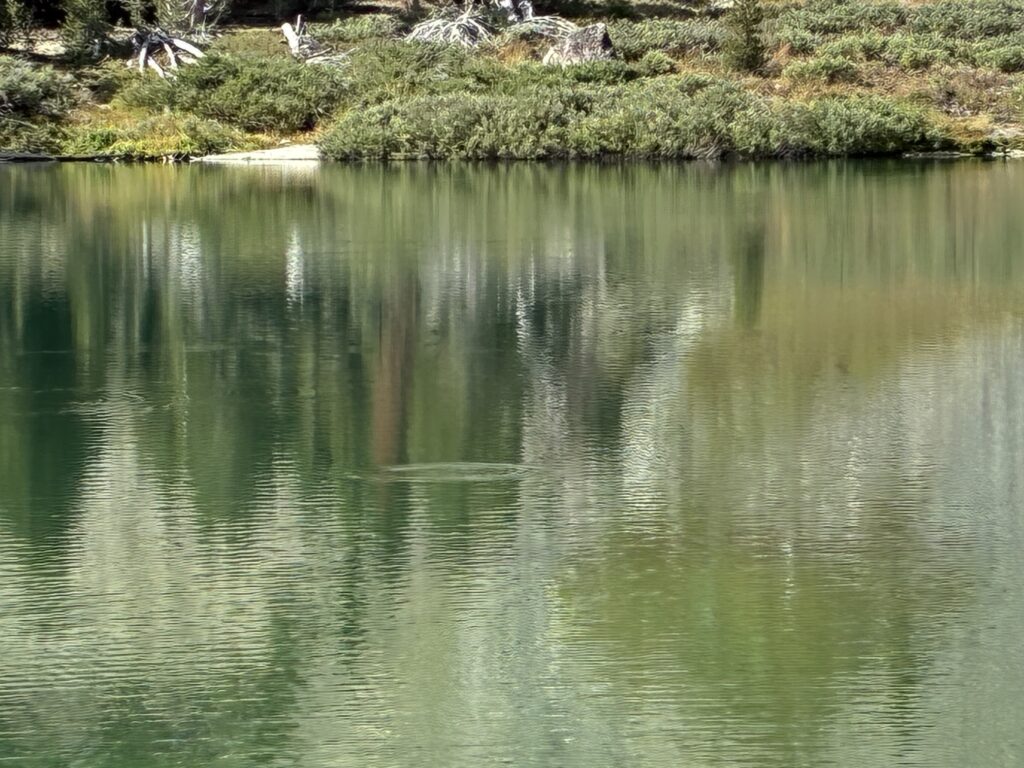
Fish rise in high elevation lake. Image: Chris Shutes and Family
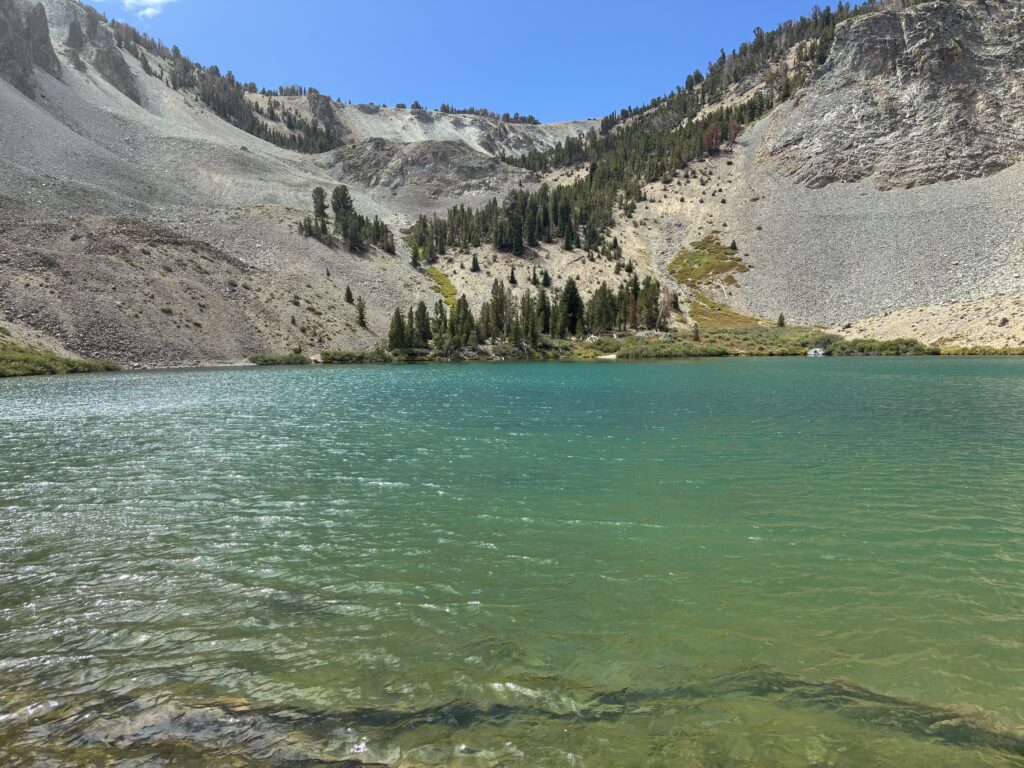
Wind puts down the rise in high elevation lake. Image: Chris Shutes and Family