
Co-written with Amber Jamieson, Water Advocacy Director of the Environmental Protection Information Center
Siskiyou County has rescinded approvals for two proposed irrigation wells in the Shasta Valley. It has also withdrawn the associated Public Trust findings, California Environmental Quality Act (CEQA) exemption, and determinations of no significant impact. The County made these decisions after a coalition of environmentally-oriented nonprofit organizations took action. This coalition engaged in months of negotiations, threats of litigation, and conversations about the future of water management in the Shasta River.
The entities involved in this effort include California Sportfishing Protection Alliance (CSPA), Environmental Protection Information Center (EPIC), Friends of the Shasta River, Mount Shasta Bioregional Ecology Center, Water Climate Trust, and attorney Jason Flanders from Aqua Terra Aeris Law Group.
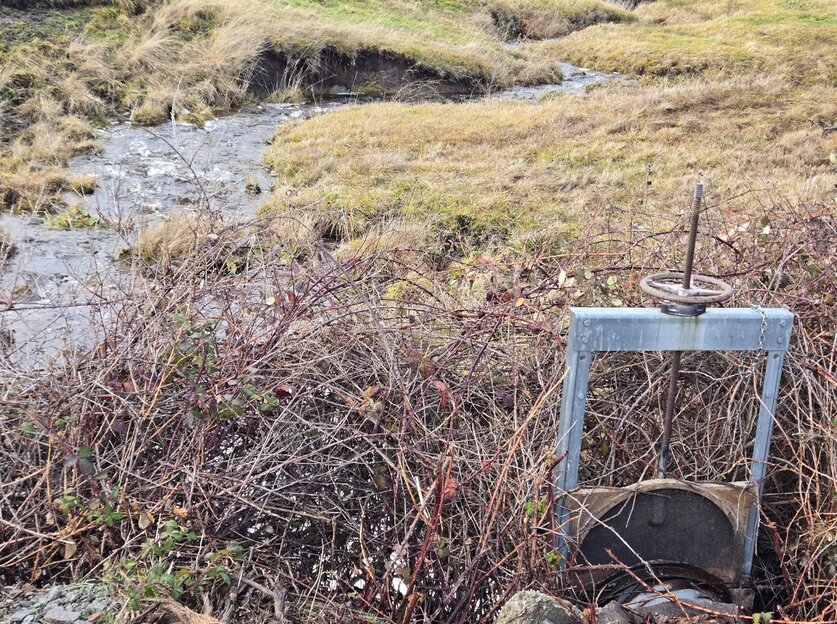
One of many diversion gates on a tributary to the Shasta River. Image: Angelina Cook
This decision not to allocate as much water for irrigation is significant for those of us who have spent years advocating to preserve natural habitats in the Shasta Valley. We have watched flows decline, springs dwindle, fish populations plummet, and tensions around water use rise. In this case, the permitting process slowed down long enough to allow reconsideration of important issues.
General understanding of the interaction of groundwater and surface water in the Shasta Valley has improved in recent years. Surface flows are intimately and extensively interconnected with groundwater in regions whose groundwater basins consist of volcanic fractured hard rock geology. In order to ensure that sufficient flows remain instream for all beneficial uses, curtailment of water diversions is sometimes necessary. Surface water is actively regulated. Groundwater, for the most part, is not. Pre-1914 and other higher-priority surface water rights are more likely to be curtailed if unlimited groundwater pumping occurs in regions such as the Shasta River and its underlying volcanic groundwater basin.
A Complex Ecosystem with Complex Regulations
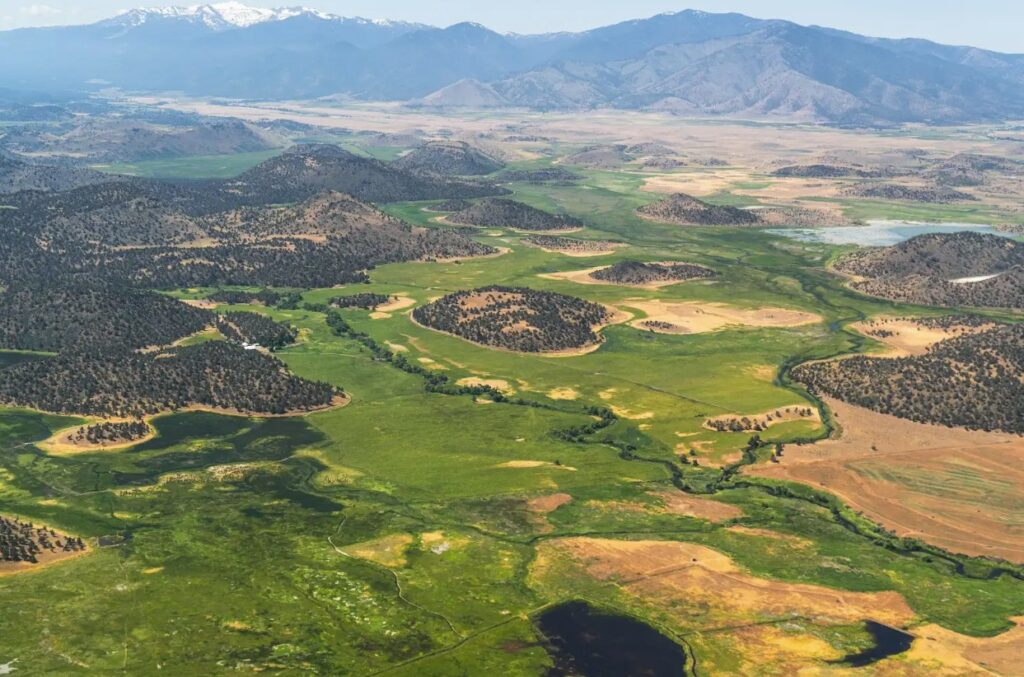
Extensive irrigation in the Shasta Valley near the confluence of Little Shasta River and Shasta River. Image: EcoFlight
Water management in Shasta Valley is complicated. The watershed is fed by lava flows and perennial spring systems, and supports unique underwater plants and macroinvertebrates. These features create prime habitat for salmon and steelhead. Numerous unmetered diversions, Dwinnell Dam, and growing demands for water make it difficult for those fish to survive. Procedural, economic, and drought-related pressures intensify the threats to the fish.
Solutions to protect the fish are not simple. Thus, it was concerning when Siskiyou County approved new production wells based on modeling still under development. The County’s Shasta River groundwater-to-surface water model is currently in its formative stage. The model is not yet capable of determining impacts from individual wells.
Throughout this process, river advocates reviewed hundreds of pages of technical reports, well records, and groundwater model documentation. They commented in Sustainable Groundwater Management Act (SGMA) and State Water Board meetings. They reviewed SGMA materials and submitted Public Records Act requests to the County. Over and over again, several topics came up. These included:
- cumulative groundwater demand impacts to streamflow depletion
- recharge assumptions
- groundwater and surface water interactions
- whether Siskiyou County’s model could reliably predict impacts from individual wells
- how the County defined “significance” under SGMA and
- how the County determined that CEQA exemptions were warranted.
These are not abstract concerns. New irrigation well permits directly affect whether water remains in the Shasta River and its tributaries for salmon, wildlife, downstream users, springs, and wetlands. Allowing the use of new wells also affects whether groundwater remains for domestic users and future generations.
Another complication is the fact that there is a discrepancy between groundwater and surface water regulation. This means current instream flow regulations can curtail legacy farmers who have used surface water to irrigate their crops for decades. Meanwhile, some new groundwater irrigators are allowed to pump groundwater with less or even no restriction.
Minimum instream flow requirements are intended to ensure the continued survival of imperiled salmon and other aquatic species in the Shasta River. Flows less than the minimum instream flow requirements can strand organisms in disconnected streams. This can leave the fish and other animals to perish in hot or polluted waters.
A Step in the Right Direction
In evaluating two new production wells in the Shasta Valley, Siskiyou County staff consulted potential plaintiffs and participated in technical discussions. Ultimately, County staff chose to rescind the well approvals. In a region historically opposed to environmental regulation, this is an encouraging sign of responsible governance.
Work Ahead
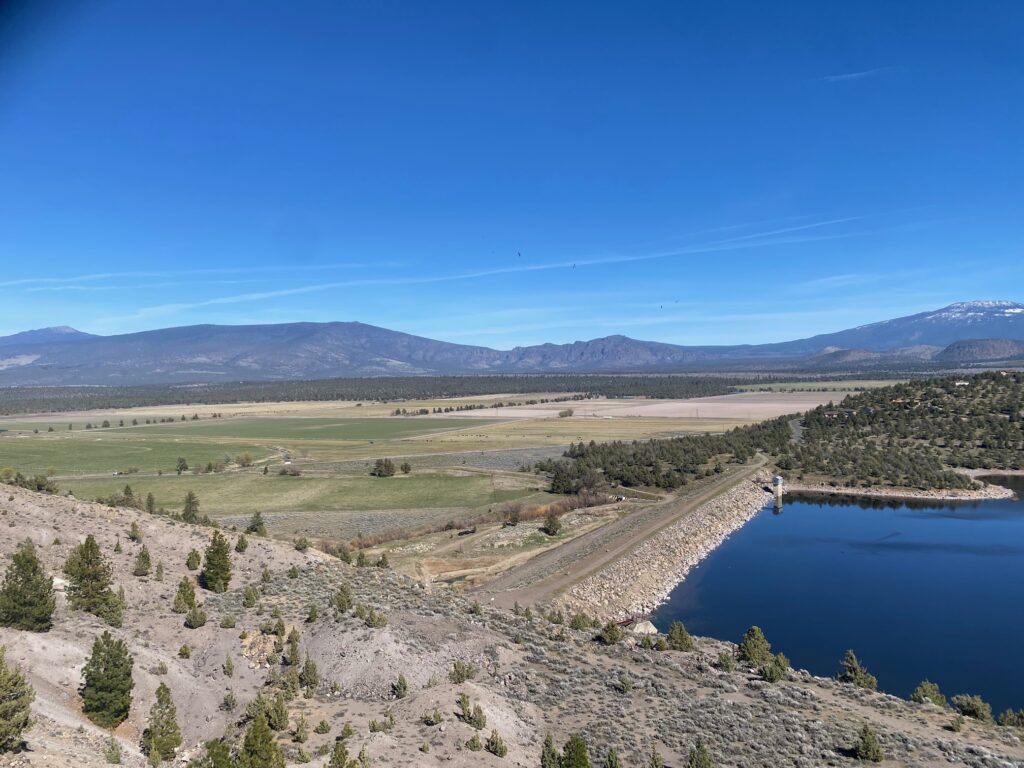
Dwinnell Dam with irrigation for Lassen Canyon Nursery in the background. Image: Angelina Cook
The Shasta Basin has been beset by problems stemming from overallocation since the last major water rush. This took place starting in 1913 and continued through the 1930s. During that period, three large irrigation districts were formed: Big Springs Irrigation District, Grenada Irrigation District, and Montague Water Conservation District. The early 20th century water rush also saw the completion of Dwinnell Dam, which impounds Lake Shastina reservoir. The reservoir behind Dwinnell Dam has a capacity of about 50,000 acre-feet of water.
Later, in the late 1950s, the use of groundwater for irrigation became widespread when demand outstripped supply of surface water. Surface water was also available, but not enough to meet demand. Today, water supplies are further stressed by more frequent and severe droughts. Demand has increased as farmers seek to maximize irrigated acreage and get more annual cuttings of field crops. New farmers have moved into the valley. Some have applied for water rights and well permits to irrigate previously unirrigated lands.
There is simply not enough water to achieve two goals: satisfy full deliveries to all of the water rights holders in the basin, and have enough clean, cold water for the survival and recovery of salmon and steelhead.
Agencies must understand the cumulative impacts of current and projected domestic and commercial water needs before issuing new non-domestic, industrial-scale water rights or well permits. Agencies must also observe limits to improve equity, water quality, and water supply reliability. Restoring balance between economy and ecology in the Shasta Valley will be a long and difficult process. Each step counts.
Concluding Thoughts
One of the clearest lessons from the process of fighting new wells in the Shasta Valley is public participation matters. Progress can occur when people and nonprofits who care about the environment invest time to ask questions, review records, attend meetings, challenge assumptions, and stay engaged. Staying active and remaining part of the discussion is important, even when the technical details are overwhelming.
The future of the Shasta River and its groundwater systems depends on collaboration, accountability, transparency, and willingness. All sides need to adopt the mindset that they should work to resolve difficult problems honestly and carefully. CSPA and EPIC are happy to see the retraction of two well approvals. We view this as an important step in the right direction.