A Foolish Proposal to End the Restoration of San Joaquin River Spring Run Salmon

In a recent editorial,  the Fresno Bee editorial board1 stated that restoring salmon near Fresno in the San Joaquin River below Friant Dam is a “fool’s errand.”  The editorial referred to recent events near Shasta Dam on the Sacramento River:  “This decimation (of Sacramento Winter Run salmon) has occurred despite the best efforts of federal officials to save salmon – and at the expense of irrigation water for farmers. Officials, in fact, sharply curtailed water flows out of Lake Shasta last spring in an attempt to keep sufficient cold water in the system to support the fish.”  The editorial further stated: “If the Sacramento can’t sustain healthy salmon runs without crippling farmers, what are the prospects that the San Joaquin River – with less water and higher temperatures – can flow with spring-run salmon again?  The editorial implies that it is a waste of time trying to save salmon, especially San Joaquin salmon, “at the expense of irrigation water for farmers”.

Well, the Fresno Bee’s editors are wrong.  Both salmon populations can be restored.  The feds’ efforts at Shasta were in fact not their best.  Yes, most of the Winter Run Salmon died in 2015 as in 2014, but the salmon could have been saved (see our recent post).2  Farmers weren’t “crippled” by salmon: there was simply too little water to supply farmers, especially south of the Delta based on water right allocation priorities.  No additional water could have been released from Trinity or Shasta without jeopardizing next year’s water supplies (or salmon).  In both 2014 and 2015, the Sacramento River Settlement Contractors got most of their allocation (75% – over 1 MAF including water from Trinity Reservoir); at the end of 2015 in particular, many transferred water south of Delta.  Again, this was hardly crippling.  The Settlement Contractors could have and should have been allocated less.  They would have survived.  The salmon did not.  The salmon died from mismanagement of the water supplies and hydropower system, and because the managing agencies deliberately allowed water temperatures to stay for months above the safe level for incubating eggs.

There is no reason healthy salmon runs cannot be sustained in both rivers.  Most of the water released for salmon will still go to farmers.

Here is the best strategy for San Joaquin River salmon.

  1. Spring Run Salmon Only – There is a unique opportunity in this program to keep Fall Run and Spring Run apart to allow the native Spring Run to recover. Do not haul Fall Run salmon to the upper river or include Fall Run in the conservation hatchery.
  2. Conservation Hatchery – The San Joaquin needs a conservation hatchery to raise Spring Run salmon of an appropriate genetic stock for the San Joaquin. Such a facility is planned but so far it is only an “interim facility.”3   It is called the Salmon Conservation and Research Facility (SCARF).4  Its plan calls for using Feather hatchery spring run eggs.  That is a problem – the hatchery must start with eggs from native Central Valley stocks (Deer, Mill and Butte creeks), not “summer run” hybrids from the Feather River.  Yes, the San Joaquin is warmer, which is why having Feather “spring run” that migrate in May and June is not a wise choice.  March-April is a better time for adult upstream migrations in the San Joaquin, which is the timing the Deer, Mill and Butte creek stocks can provide.  The program review team recognizes this:  “Moving forward, there is a program goal of reintroducing multiple stocks from more than one spring-running population available, but there are a lot of questions that need to be answered from a genetics standpoint, in order to make sure reproductive success and survivability of progeny is maximized using pedigree-based genetic marking techniques.”5  The draft EIR (p. 6-57) for the new hatchery argues against using eggs from Deer,Mill or Butte creeks as it poses a threat to the  Deer, Mill and Butte creek populations:  “Propagation of fish at the SCARF has the potential to unintentionally change the genetic composition of wild populations and subsequently contribute to reduced survival in natural environments if conservation stock stray into the Sacramento River basin and spawn with wild spring-run stocks. Additionally, conservation stock may stray into other tributaries of the San Joaquin River basin and interbreed with fall-run Chinook, which may interfere with existing wild and hatchery management actions and reduce genetic fitness of these fall-run populations.”6  I contend that using Feather “spring run” that are already “compromised” genetically would pose a greater threat to other Central Valley stocks.  The technical review team seems to recognize this.  The federal Salmon Recovery Plan has a goal of adding more stock diversity to the Central Valley salmon populations to reduce the threat of extinctions.
  3. Trap-and-Haul – The young salmon produced by the conservation hatchery or produced by wild spawning salmon near Fresno should be trapped and hauled to the Bay except in wet years when river flows are high and the lower river is connected. The present plan is to trap the young and transport them for release near the mouth of the Merced River.  Most of these fish would not survive downstream passage through the lower San Joaquin and the Delta except in high flow wet years.  The young fish should be “barged” in boats with live wells and recirculating river water to ensure they continue imprinting on the San Joaquin.  This avoids many problems discussed in the Issue Paper on Delta effects.7
  4. Winter-Spring Pulse Flows in Wet Years – Young Spring Run would migrate downstream to the Bay and Delta from December to February as fry and fingerlings, and March and April as pre-smolts. Adults would migrate upstream in March and April.  In wet years with substantial natural connection, river flows and water supply, supplemental reservoir releases could be made to improve migration survival.  Such conditions may occur after or between storms, or simply to enhance storm flow peaks of less than adequate magnitude.  Such added flows could be coordinated with Sacramento flows and Delta conditions.  Delta conditions (Delta exports, Head of Old River Barrier, and Delta Cross Channel operations) could also be modified to help young San Joaquin salmon in wetter years when they would be passing through the Delta, and in all years when adults pass through the Delta.

As well as being a legal requirement and the correction of a grievous moral injustice, restoration of Spring Run salmon remains a viable goal for the San Joaquin River.

Scott River Chinook Crisis

Klamblog1 recently reported that the Scott River Chinook salmon are again delayed from ascending the lower Scott from the Klamath River because of low water flow. This major Klamath tributary to the west of Mt. Shasta and Weed, CA that flows most winters with thousands of cubic feet per second (cfs) from rain and snow from the Trinity and Marble mountains has been flowing at less than 10 cfs this summer and fall. The salmon simply cannot migrate up this large, steep river with such low flow, especially in dry years when there is no snowmelt after June. The salmon simply wait for rain at the mouth of the Scott. Rains often come by December, just in time for California’s last viable run of Coho salmon, but too late for the Chinook.

As usual the blame is on irrigators in Scott Valley who draw down the water table with heavy groundwater pumping and surface water diversions in the summer for hay and pastures. The State Board did restrict most surface diversions this summer, but with little snowpack there was little streamflow to restrict. Scott Valley often has high groundwater, but with little snowpack recharge, less flood irrigation, and heavy pumping, groundwater seepage and ag returns to the river have virtually ceased, leading to the low flows.

Surprisingly, there is a solution that ranchers are willing to do – pump groundwater into the river in the fall after the summer irrigation season. There is more than enough pumping capacity and groundwater available. Ranchers only want payment for the electricity – a reasonably modest cost. In years like this we are talking about 8 to 10 weeks of a nominal amount of pumping and groundwater storage with a high likelihood that the groundwater used would be replaced/recharged this coming winter and spring.

The concept and proposal have fallen on deaf ears, and the ranchers have circled their wagons much like the salmon in the video link below. As the political fight over water goes on, we should take every opportunity like this one to save the salmon from extinction.


Trap and Haul –a better Central Valley option

Last month, CalTrout’s blog had a post on a federal government program to trap-and-haul salmon and move them upstream of Shasta Reservoir.1 Earlier we also commented on trap-and-haul (http://calsport.org/fisheriesblog/?p=334). The National Marine Fisheries Service’s (NMFS) Recovery Plan for Central Valley Salmon and Steelhead prescribes trap-and-haul, as does their biological opinion for operation of state and federal Central Valley water projects.

Transporting adult salmon above dams and the offspring back below the dams is an expensive and difficult task. No one loves trap-and-haul, but NMFS considers it necessary to ensure that endangered salmon and steelhead do not go extinct. The prescription comes out of frustration that the populations are declining below the dams. Given the choice of extinction or doing something that no one is thrilled with, NMFS has chosen a set of actions in the latter category. The feds have again begun raising Winter Run Chinook in the fish zoo at Livingston Stone Hatchery to ensure there is some genetically pure stock available in the future. Having a wild stock above Shasta in the McCloud River seems a wiser option, given that those fish would be wild even if they spend some time in a truck. It is a further hedge against conditions like the past two years when the Bureau of Reclamation failed to keep their promise to protect the Winter Run downstream of Shasta.

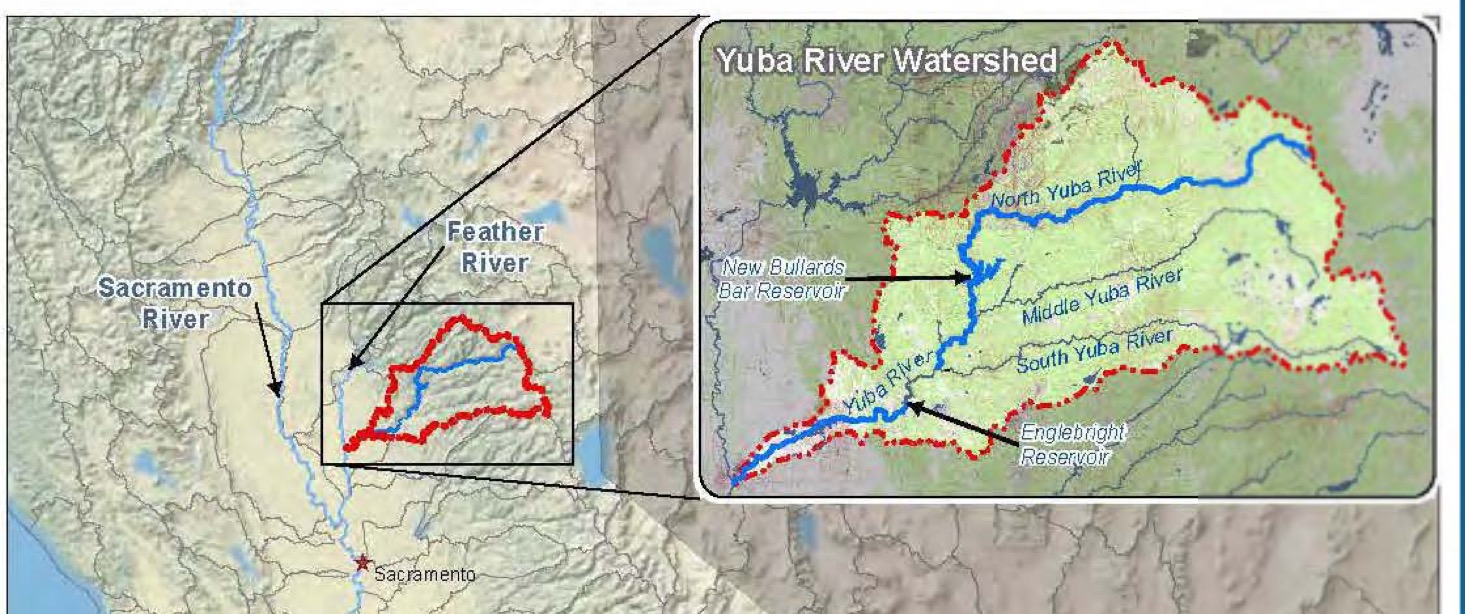
NMFS has also prescribed trap-and-haul to pass Spring Run Chinook and Steelhead around Shasta Reservoir and other Central Valley dams. Stakeholders on the Yuba are developing a plan to carry out the prescription.

In a second blog post, CalTrout recently asked: “Will winter run go the way of the bull trout?”2 Most assuredly, trap-and-haul can help maintain populations while we get our act together below the dams. It’s a better option than a zoo.

Save the Winter Run Salmon

By now most everyone has seen the newspaper articles on the catastrophic decline in Winter Run Chinook salmon production in the Sacramento River below Shasta Reservoir in 2015. The number of Winter Run juveniles passing downstream past Red Bluff is down substantially from last year, when the estimated survival rate was 5%.  Many blame the drought  – the fourth year of drought.  I have blamed poor water management and the weakening of water quality standards prescribed to protect the salmon (see previous posts).

It is now time for extreme actions to save these fish.  This coming year’s winter adult run will be made up primarily of the 2013 spawn, with some from 2012.  These spawns were marginally successful and could produce enough spawners next summer to help fix this debacle.

The responsible agencies plan to take more eggs and increase smolt production at the Livingston Stone Hatchery near Redding.  They also plan to truck these hatchery smolts to the Bay to maximize their survival.  They will likely severely limit commercial and recreational fisheries that may harvest Winter Run.  They plan to again start raising a rescue population in captivity to ensure they have some fish in the future to draw on for recovery.  A new drought plan will again address how flows and water temperatures will be managed below Shasta.  The State Board may resist weakening Sacramento River and Delta water quality standards designed to protect Winter Run, unlike what they did in the last two years.  All of these actions together will indeed help Winter Run from further decline, but it will not be enough even if the El Niño brings abundant rain and snow.

What else?  The answer to that question should be everything that is reasonably possible to increase production and survival.  Here are some suggestions:

  1. Do not weaken Sacramento River and Delta water quality standards that protect Winter Run. (This alone would have averted the catastrophes below Shasta the past two years.)
  2. Minimize warm water inputs to the Sacramento River in summer from the Trinity River to keep Sacramento River temperatures lower and save Shasta’s cold-water pool.
  3. Alter peaking hydropower management and system infrastructure in Shasta-Trinity CVP system to improve water temperatures in the Sacramento River and the conservation of reservoir cold-water pools.
  4. Further limit Shasta-Trinity reservoir releases to water contractors to conserve cold-water pools and maintain flow requirements for salmon.
  5. Enhance natural winter and spring flow pulses from tributaries below Shasta with flow releases from Shasta to increase survival of emigrating wild juvenile salmon migrating downstream in the Sacramento River, to and through the Delta, and to and through the Bay to the ocean.
  6. Conduct an aggressive rescue program of adult Winter Run that migrate into Sacramento Valley bypasses only to be blocked below overflow weirs, or that migrate into dead-end basins, or that stray into other tributaries including Battle Creek, Feather River, and American River salmon hatcheries.
  7. Capture wild juvenile Winter Run in an enhanced trapping program at fish screen bypasses, screw traps, and other techniques in the Sacramento River in fall and winter migration period, and transport these juveniles to the Bay to avoid lower river and Delta sources of mortality.
  8. Modify Delta operations to maximize juvenile Winter Run survival through the Delta. This may involve further changes to Delta Cross Channel operations and Delta export schedules, as well as Delta inflow and outflow.
  9. Maximize egg taking and rearing capacity in hatchery system.
  10. Barge wild and hatchery young from the Sacramento River through the Delta for release in the Bay to avoid future straying problems associated with trucking fish.
  11. Raise juvenile hatchery salmon in floodplain habitats in winter in the Sacramento Valley (e.g., Sutter and Yolo Bypasses).
  12. Conduct egg injection or fry releases in appropriate locations in Battle Creek to jumpstart its prescribed new population; this can be managed at the Battle Creek hatchery.
  13. Develop and implement an emergency comprehensive plan with appropriate agencies with the necessary authority to carry out these actions. Include stakeholders in the plan development and review process.  Obtain necessary funding from available sources.

Knights Landing Outfall Gates New Screens – Only a Start

A SacBee article on October 22, 20151 describes the nearly completed Knights Landing Outfall Gates (KLOG or Outfall Gates) screening project on the Sacramento River: “local, state and federal officials are close to completing a $2.5 million project that will block an entrance wayward salmon use to get into the Colusa Basin Drain”. The operative word here is “an”, because the other entrance, and by far the more important, is the Knights Landing Ridge Cut (KLRC or Ridge Cut) outlet into the upper Yolo Bypass (Map 1).

Upstream-migrating Winter Run Chinook Salmon bound for spawning grounds below Shasta Dam near Redding in the Sacramento River can be attracted into irrigation and stormwater drainage system outfalls and eventually lost. The two largest outfalls are the Yolo and Sutter bypasses (see my previous blog on the bypass attraction – http://calsport.org/fisheriesblog/?p=421 ). Of lesser importance are a series of agricultural outfalls from low-lying basins adjacent to the Sacramento River. Chief among these are the Knights Landing Outfall Gates, which drain the Colusa Basin on the west side of the Sacramento River Valley.

The new screens on Outfall Gates will ensure that no salmon leave the river for the basin through the gates. But that is not the big problem. The Colusa Basin Drain (CBD or Drain) is also a stormwater drain that can flow mightily in winter storms even in drought years such as 2013-2015 (Charts 1 and 2). When stormwater-driven high flows in the Drain occur, the Outfall Gates’ outlet is usually closed because the river is higher than the gates during storm runoff. Under these high flows, water in the Drain is forced down the Knights Landing Ridge Cut into the upper Yolo Bypass (see Map 1).

Storm runoff that passes through the Ridge Cut into the Yolo Bypass attracts many salmon, steelhead, and sturgeon into the Drain and to their eventual demise in the dead-end Colusa Basin. Storm flow to the Yolo Bypass reaches 4000-6000 cfs in drought years, while non-storm flows through the Outfall Gates are usually only several hundred cfs (Charts 1 and 2). Flows leaving the Yolo Bypass and entering the Delta at Cache Slough (Map 2) attract many salmon, steelhead, and sturgeon moving through the Delta. During floods, the Sacramento River spills into the Yolo Bypass, adding even more attraction flows through Cache Slough. With limited passage options past the Fremont Weir at the upper end of the Yolo Bypass (Map 1 or 2), many of fish moving up the Yolo Bypass are attracted to and migrate up the Ridge Cut.

In short, the Knights Landing Ridge Cut outlet also needs to be blocked to keep fish from migrating into the Colusa Basin and being lost. The threat is serious not only to Winter Run Chinook, but also to Fall Run, Late Fall Run and Spring Run Chinook, as well as Steelhead, Green Sturgeon and White Sturgeon. Fish passage facilities at Fremont Weir are also needed so that adult fish that migrate up the Yolo Bypass are not stranded in the Bypass.

Map 1

Map 1. Location of Knights Landing Outfall Gates (KLOG) on Sacramento River and Knights Landing Ridge Cut (KLRC) outlet in the Yolo Bypass near Knights Landing, CA. Red arrows point out routes taken by salmon into the Colusa Basin.

Chart 1

Chart 1. Flow in the Colusa Basin Drain Nov 2013 through May 2014. Red line depicts flow when KLOG were closed due to high Sacramento River stage. (At flows above about 900 cfs in the CBD the KLOG were closed and flow diverted to Yolo Bypass via KLRC.)

Chart 2

Chart 2. Flow in the Colusa Basin Drain Nov 2014 through May 2015. Red line depicts flow when KLOG were closed due to high Sacramento River stage.

Map 2

Map 2. Route salmon take from the Delta via Cache Slough up the Yolo Bypass when attraction flows are input from either the Knights Landing Ridge Cut or the Fremont Weir.