The California Department of Fish and Wildlife proposes to close fishing in the 5.5 miles of the Sacramento River above Hwy 44 Bridge from April 27-July 31 this year.1 These upper few miles of the river below Keswick Dam provide a world-class sport fishery for rainbow trout (salmon fishing in this river reach is permanently closed). The premise of the ban is to reduce mortality on endangered Winter Run Chinook Salmon. The reach is where most of the Winter Run spawn, eggs incubate, and fry emerge in gravels from late spring through early fall (Figure 1). Last summer 95% of the 2014 Winter Run brood year perished from redd dewatering and high water temperatures.
The proposed closure would inappropriately place the drought-management burden on sport anglers when the problem is poor water management in the present drought. The low flows and high water temperatures in 2014 were caused by depletion of Shasta Reservoir’s cold-water pool to meet water demands of Central Valley Project Settlement Contractors in the Sacramento Valley. These senior water rights holders received 1.3 million acre-ft of Shasta storage during 2014. An additional 110,000 acre-ft released was sold to south of Delta contractors via water transfers from July through November. Shasta Reservoir storage peaked last year near 2.4 million acre-ft in early May, then declined to 1.1 million acre-ft in October.
Shasta Reservoir releases were over 6000 cfs from early May through August (Figure 2). Most of the Winter Run spawned in June and July at flows in excess of 8000 cfs. During the August through September incubation period, flows fell to near 4000 cfs, resulting in the dewatering of many salmon redds. Redd dewatering coupled with high water temperatures resulted in the loss of 95% of the brood year production during September, according to CDFW and NMFS.
Closing the fishery this summer implies that sport fishing activities would otherwise contribute to Winter Run mortality when there is no scientific evidence to support this assumption. Boat traffic is mainly drift boats, which minimally disturb fish. The most obvious risk from fishermen would be trampling redds in the low water period in the August-September incubation period, which is not included in the proposed ban. Even that risk is low, since few anglers wade the spawning reaches.
DFW’s blog states: “Given the gravity of the current situation, it is imperative that each and every adult fish be given maximum protection.”2
The “maximum protection” standard would be much better applied if the Department unequivocally supported measures to protect all life stages of Winter Run. Instead of burdening sport fishermen with the proposed ban, the solution is for the State Water Board to reduce deliveries from Lake Shasta to water contractors this summer. If releases had been cut by a third from May-July last year, the Winter Run could have been saved. Yes, this would have come at a substantial cost to state’s agricultural production (Settlement contractors were already cut 25%), but the drought is unprecedented. Winter Run salmon extinction should not be the price paid to keep rice production high this year in the Sacramento Valley.
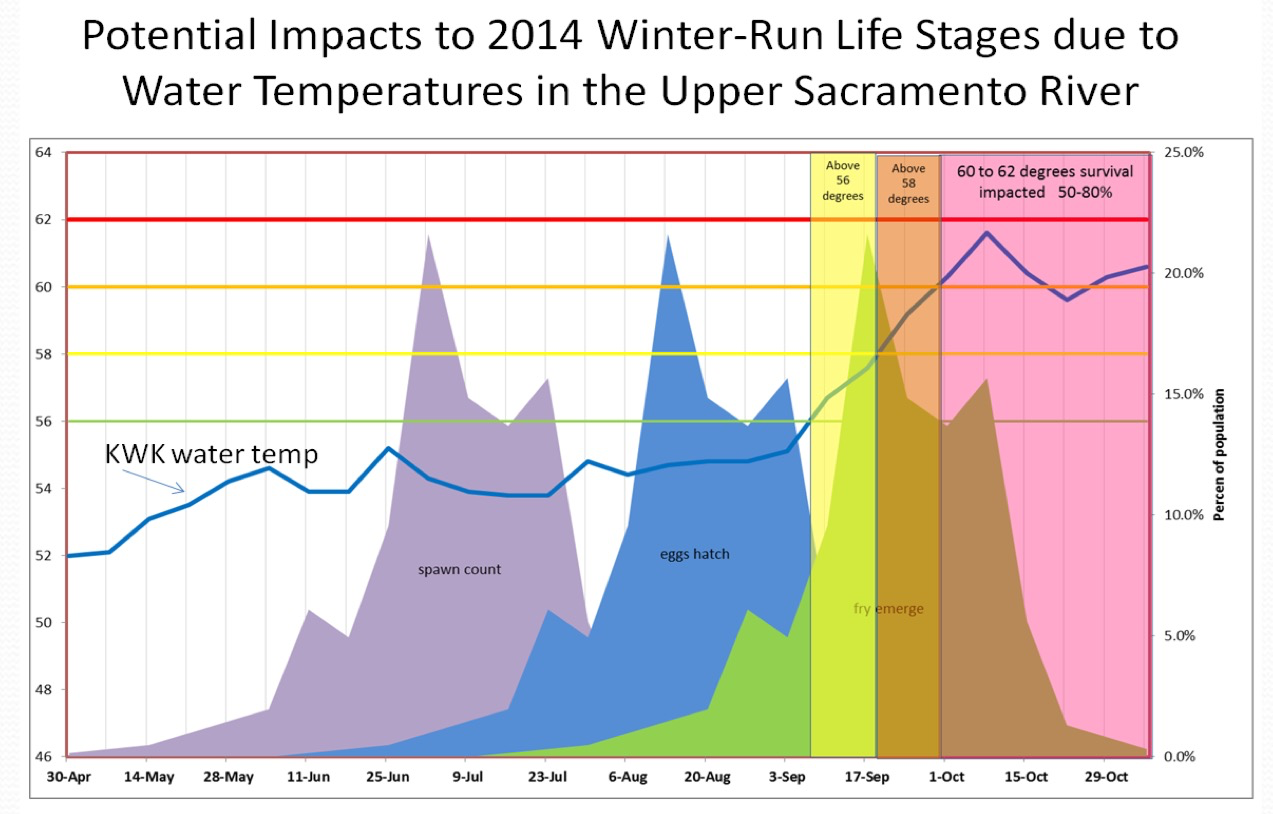
Figure 1. Water temperature (degrees F) in Redding reach below Keswick Dam (KWK) in 2014, along with percent of Winter Run life stage present. Red line shows water temperature where egg/alevin survival is less than 50%. Source: NMFS
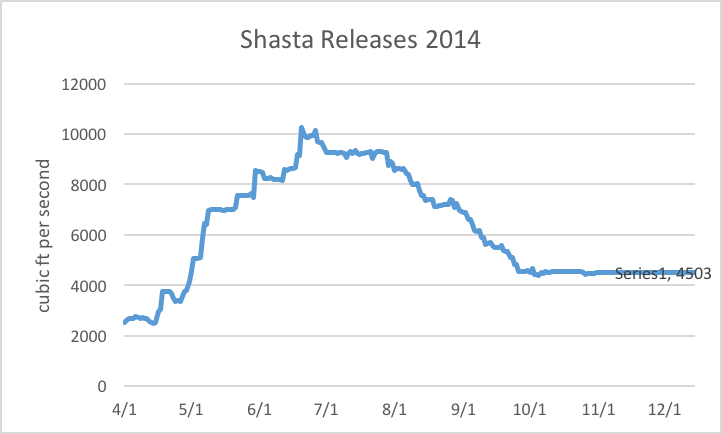
Figure 2. Shasta Reservoir releases from April through October 2014.
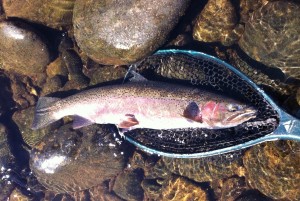
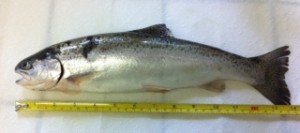 The 14-inch “half-pounder” hatchery steelhead in photo at right was caught in the lower American River in early March. It was likely one of 430 thousand stocked last June into the American River as fingerlings when Nimbus hatchery water was predicted to be too warm to sustain the fish through the summer. “Half pounder” is the name given to young steelhead that spend a few months in coastal waters before returning as premature adults to their natal rivers. This fish actually weighed about a pound. This “half-pounder” life history strategy is more frequent in North Coast steelhead, and may reflect the Eel River origin of the American River hatchery stock.
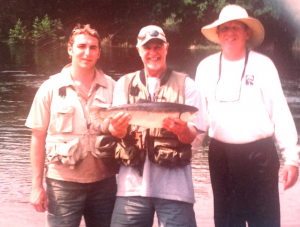 ung steelhead.The native American River steelhead are “spring” run like the many larger fresh (bright) adults I have caught over the past two decades in the river from March-June. The bright steelhead at left was caught in June. Whether a remnant run or some genetic material remains in the population from these fish is unknown.
 With record low numbers of winter (Dec-Feb) steelhead reaching the hatchery this year