Welcome to the California Fisheries Blog

The California Sportfishing Protection Alliance is pleased to host the California Fisheries Blog. The focus will be on pelagic and anadromous fisheries. We will also cover environmental topics related to fisheries such as water supply, water quality, hatcheries, harvest, and habitats. Geographical coverage will be from the ocean to headwaters, including watersheds, streams, rivers, lakes, bays, ocean, and estuaries. Please note that posts on the blog represent the work and opinions of their authors, and do not necessarily reflect CSPA positions or policy.

It is time to save the Delta Smelt

Causes of the Decline of the Endangered Delta Smelt

There are multiple threats to the Delta Smelt population that contribute to its viability and risk of extinction. Chief among these threats are reductions in freshwater inflow to the estuary; loss of larval, juvenile and adult fish at the state and federal Delta export facilities and in urban, agricultural and industrial water diversions; direct and indirect impacts of the Delta Smelt’s planktonic food supply and habitat; and lethal and sub-lethal effects of warm water and toxic chemicals in Delta open-water habitats.

Temporary urgency change orders by the State Board have allowed reduced Delta outflow and increased Delta salinity. This has moved the Low Salinity Zone further upstream (eastward) into the Delta, thereby increasing the degree of each of these threats. During the past few drought summers, remnants of the population have been confined to a small area of the Low Salinity Zone where water temperatures barely remain below lethal levels. The change orders are an obvious and direct threat to the remnants living in the Low Salinity Zone. Further allowing these weakened standards to be violated is a direct disregard for the remnants of the population. It places them at extraordinary risk by bringing them further into the zone of water diversions, degrading their habitat into the lethal range of water temperature, further degrading their already depleted food supply, and increasing the concentrations of toxic chemicals being relentlessly discharged into the Delta.

Saving the Delta Smelt

The following are measures necessary to save the remnant Delta Smelt population:

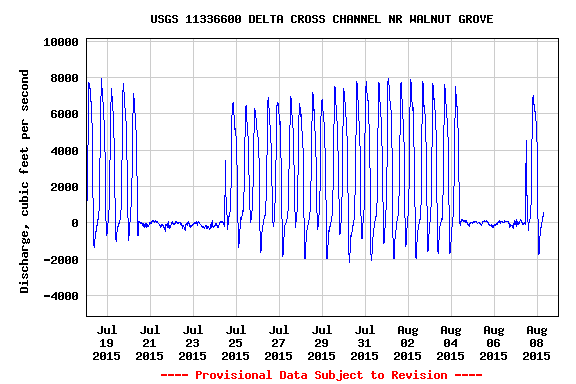
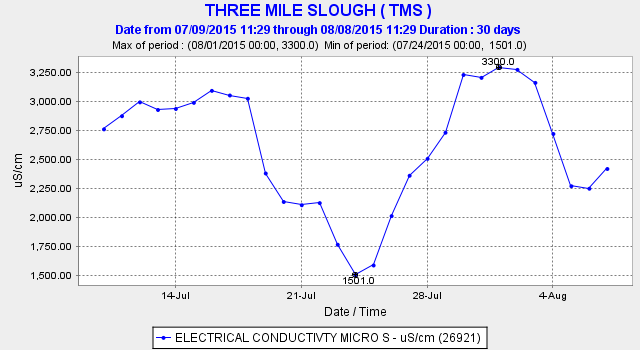
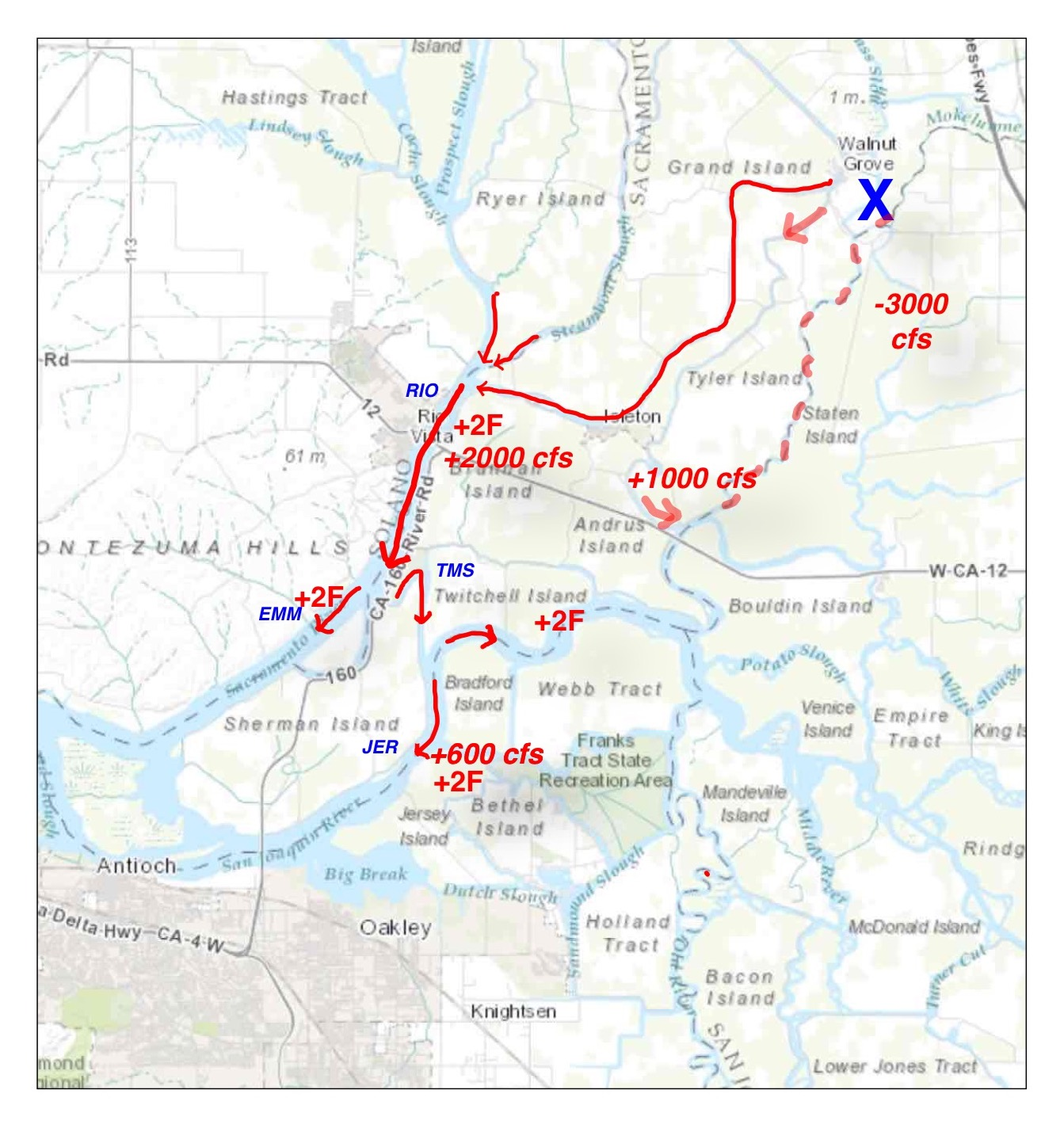
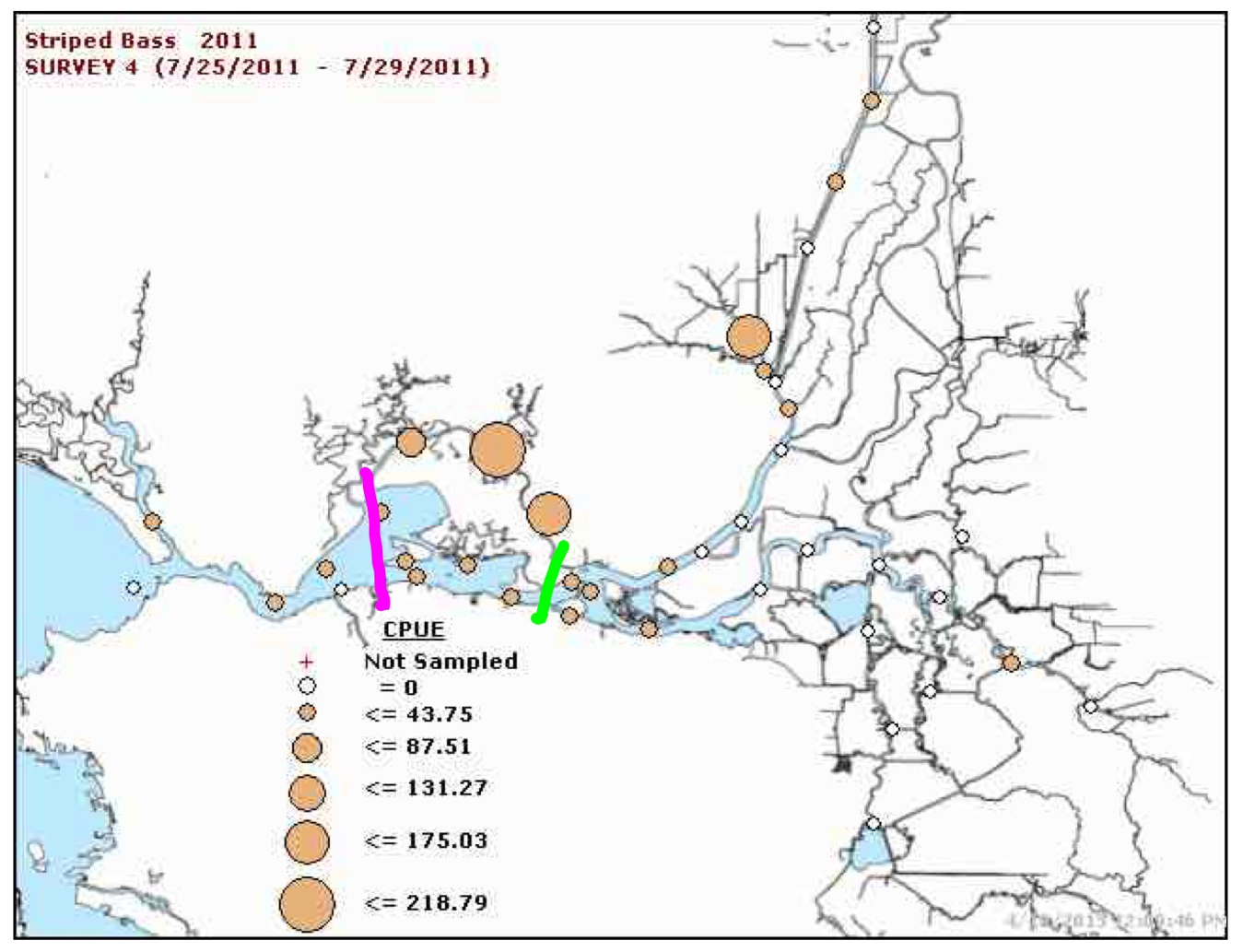
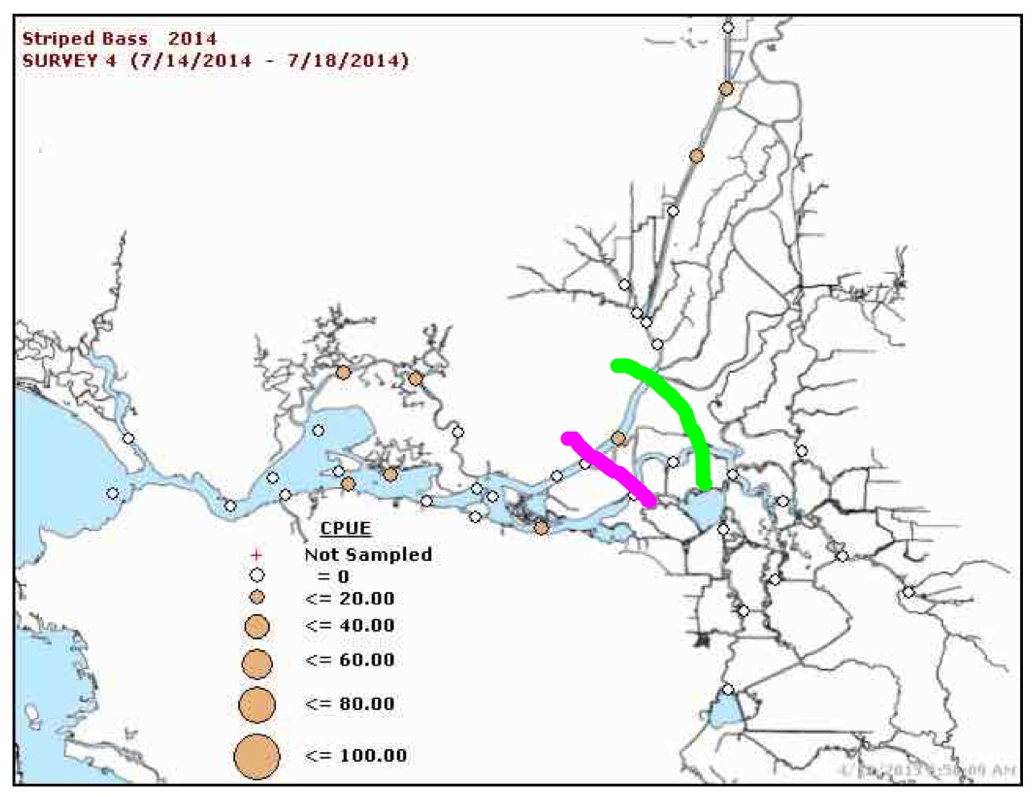
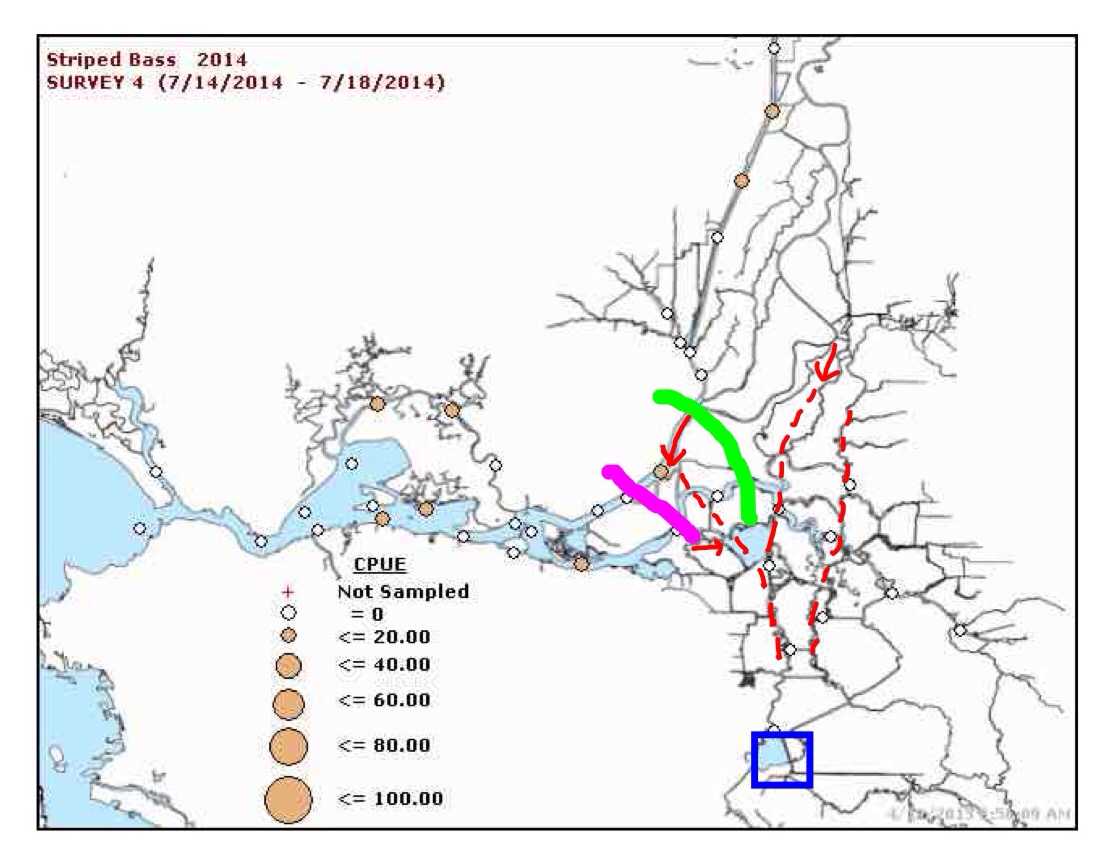
  1. Keep the low salinity zone (LSZ) out of the Delta as prescribed in State water quality control plans over the last several decades. This can be readily accomplished by meeting already defined flow and salinity standards and restrictions on Delta exports. The LSZ on the Sacramento channel side should be in the wide open reach of eastern Suisun Bay between Collinsville and the west end of Sherman Island (location of Emmaton standard). It must be kept out of the Emmaton-to-Rio Vista reach just upstream in the west Delta, because this reach is confined and continually degraded by reservoir releases and warm water passing through the North Delta via Three Mile Slough to the interior of the Delta and south Delta water diversions. On the San Joaquin (south) side, the low salinity zone belongs in the wide Antioch–to-Jersey Point reach as prescribed in standards. This can be accomplished in spring and summer of dry years by maintaining prescribed flows, salinity standards at Jersey Point, installation of the False River and Dutch Slough Barriers, and opening the Delta Cross Channel (which results in positive net outflow from the mouth of Old River downstream to Jersey Point in the Central Delta). Maintaining the net positive flows in west Delta channels helps tremendously in getting salmon, steelhead, sturgeon, striped bass, and smelt from upstream freshwater spawning areas to their downstream rearing area target, the estuary’s LSZ. Keeping the LSZ in eastern Suisun Bay, as has always been an objective Delta Water Quality Plans, has huge indirect benefits as well, including greater plankton production, lower non-stressful water temperatures (conducive to growth and survival of all the Delta fish including smelt and salmonids), higher turbidity levels in the LSZ (reduced predation on and improved feeding for Delta smelt), lower invasive Asian clam concentrations in eastern Suisun Bay (which siphon off plankton and larval fish), and lower concentrations of toxins in the LSZ.
  2.  Improve the physical habitat of the LSZ. Habitat in eastern Suisun Bay, though far better than that of the west Delta, has been continuously degraded over the past century. Fortunately, there are few levees along the north shore of the Sacramento side. However, the wave-swept shores along Antioch Hills have lost all riparian vegetation except pockets of invasive Arundo. Hillside windfarm and shoreline erosion have filled in shoreline shoals, shallows, bays and alcoves that provided rearing habitat for smelt and salmon (salmon fry are the most abundant fish in these shallows through the winter). Miles of shoreline bays, inlets, and tidal marshes east of Collinsville have been lost. On the south side of the Sacramento channel are the remnants of historic Delta marshes and islands of West Sherman Island and Sherman Lake. Gradually the riparian shoreline and shallow waters are washing away as a consequence of wind as well as ship-wake erosion. Lack of interior marsh channel circulation has also led to grand infestations of invasive non-native submergent, emergent, and floating aquatic vegetation. Like the north shore, the south shoreline of West Suisun Bay on the San Joaquin side is not leveed. Likewise, shoreline and shallow water habitats are degraded, but from industrialization. Large areas east of Antioch to Big Break are degraded much as in the area of Sherman Lake. Both the north and south East Suisun Bay channels are degraded by dredging of the two deep-water ship channels, which has resulted in the loss of shallow shoal, bay, and mudflat habitats. Virtually none of the habitats mentioned above were addressed in the grand BDCP restoration plans for the Bay-Delta. Though some of the areas have been prescribed for restoration in various mitigation plans, virtually no progress has been made toward their restoration in the last several decades.
  3. Stock hatchery raised smelt in the LSZ. The agency-sponsored Delta Smelt conservation hatcheries could be upgraded to production status to provide juveniles to be stocked in the LSZ in late spring and summer. The population is so low now (zero 20-mm and Townet survey indices) that stocking would be helpful if not necessary.
  4. Provide a spring pulse flow into and through the Delta to help smelt fry transport from freshwater spawning areas downstream to the LSZ. This could include passing some Sacramento River flow through the blocked entrance to the Deepwater Ship Channel at the Port of West Sacramento. Delta inflow pulses could be provided by reservoir releases coordinated with infrequent natural flow pulses through the Delta.
  5. Manage tidal flows and Delta hydrodynamics, as well as water quality, on a real time basis to help maintain the LSZ in east Suisun Bay and to stimulate and sustain plankton blooms. Real time management is possible because of the many satellite-accessible data recorders in the Delta, as well as the many frequent biological monitoring surveys being conducted throughout the Bay and Delta. Active adaptive management is possible with the many flow controls available on diversions, reservoir releases, and flow splits (e.g., Delta Cross Channel).

More on Longfin Smelt

Longfin Smelt have declined as other pelagic fish species have over the past two decades. The species was listed in 2009 under the California Endangered Species Act. In a previous blog1 I described trends in their abundance and distribution in the upper Bay and Delta. Below is a chart depicting the long-term trend in another standard CDFW survey, the San Francisco Bay Midwater Trawl Survey. The index is the average catch for the April and May monthly surveys at a basic array of 28-44 standard stations from San Francisco Bay upstream into the central Delta. Yearling smelt are dominant in the April surveys, while young predominate in the May surveys.

Longfin Smelt Average Catch Apr-May Baay Mid-water Trawl Surveys

As in other surveys, the index pattern clearly shows a sharp reduction in average catch since 2007. The average catch is particularly low in the last three years. There was no May survey in 2008. Similar patterns were evident in the Fall Midwater Trawl Survey, Summer Townet Survey, Winter Kodiak Trawl Survey, 20-mm Smelt Survey, and the Larval Fish Survey.

Longfin Smelt Update – They’re Gone

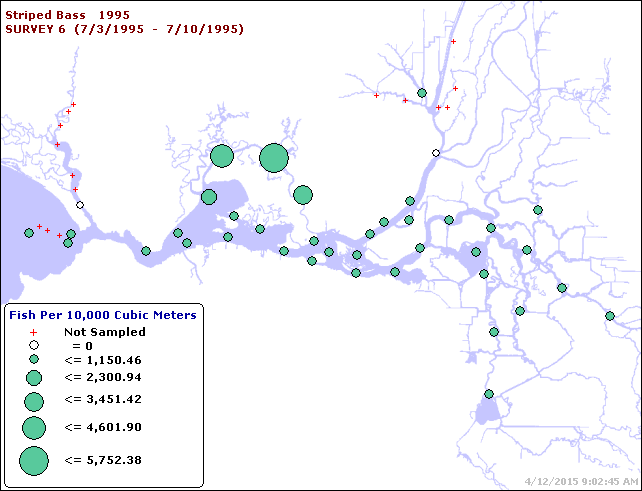
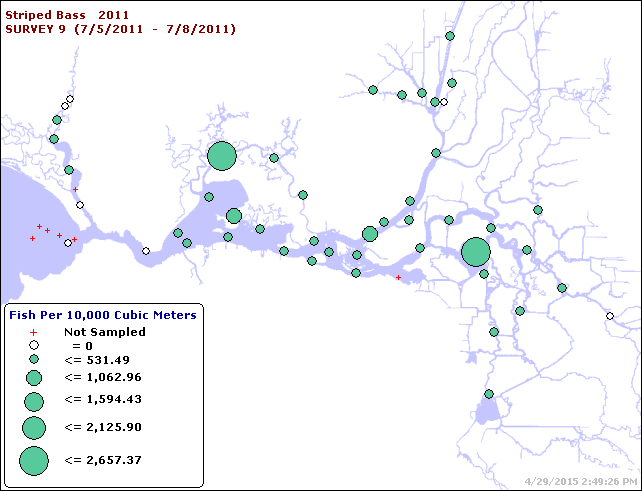
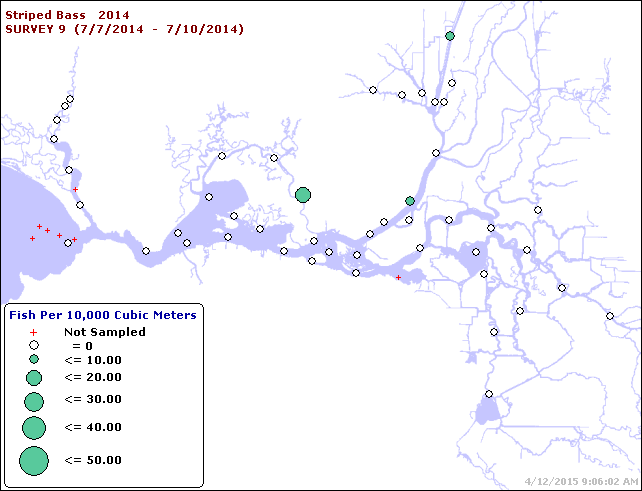
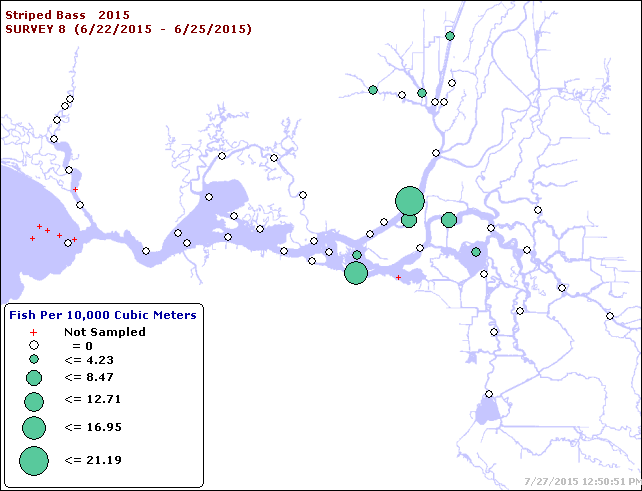
Back in April, I questioned whether Longfin Smelt, a state-listed endangered fish, are going extinct in the Bay Delta1. The June surveys are in. The Bay Midwater Trawl, the Bay Otter Trawl, the Townet, and the 20-mm Survey show Longfin are at record lows with only a few caught in the Bay2. One only has to compare 20-mm Survey results for June over the past three years to see the trend. Going, going, gone.

Longfin Smelt Survey 2013

Longfin Smelt Survey 2014

Longfin Smelt Survey 2015

Trap-and-Haul of Salmon/Steelhead Around Instream Barriers

By Don Beyer
Dams, impassable falls, and other instream barriers such as reduced flow, high temperature, poor water quality block or impede the migration of salmonids. The following are brief summaries of several case studies in Washington State where trapping and transport around these barriers has had encouraging results.

Recovery of Baker River Sockeye Salmon

Baker River is a tributary to the Skagit River in northern Washington State. Sockeye salmon have a very challenging life history in that they need a lake for young rearing prior to smolt outmigration to the ocean. Before the development of two hydroelectric dams, the native Baker Sockeye salmon used natural Baker Lake for spawning and rearing. After the two dams were constructed (the first dam, Lower Baker, was completed in 1925 below the lake, the upstream dam was completed at Baker Lake outlet in 1959) the sockeye salmon migrations were nearly completely blocked. Natural spawning habitat was destroyed upstream of the upper dam. The adult returns of sockeye salmon prior to the dams were estimated by the Washington Department of Fish and Wildlife1 to be about 20,000 fish but the returns fell to a low of about 99 fish in 1985.

Considerable efforts have gone into research and development of ways to facilitate both upstream and downstream passage around the two dams. The current efforts include improved trap-and-haul operation facilities below the lowermost dam, trucking to artificial spawning beaches (also newly improved) located on Baker Lake, and a new conservation hatchery next to the spawning beaches. Some adults are also released into Baker Lake to spawn naturally in Baker River and its tributaries upstream of the lake. Downstream smolt migration has been improved by trapping outmigrating smolts at both dams and transporting by truck for release below the lowermost dam. The outmigrant collection facilities have been upgraded with nets behind each dam that guide the outmigrants to the traps where they are collected and transported below the lowermost dam.

These improvements have resulted in a record run of 22,500 adult sockeye in 2010. The Washington Department of Fish and Wildlife2 forecast for returns in 2015 is 46,268 adults. The improved runs have resulted in removal of the Baker River sockeye from the Endangered Species Act candidate list. In addition, the current runs support both a tribal fishery (in downstream areas) and sport fishery (in downstream areas and in Baker Lake).

Adult Salmon/Steelhead Trap and Haul – South Fork Skykomish River at Sunset Falls

The South Fork Skykomish River joins the North Fork near Index, Washington. Combined, the two forks form the Skykomish River, which eventually flows into Puget Sound (as the Snohomish River) at Everett, Washington. This Snohomish River basin supports significant runs of coho salmon, Chinook salmon, chum salmon, pink salmon, steelhead, and cutthroat trout. Sunset Falls (near Index) is the first of three steep gradients that historically formed a totally impassable barrier to upstream migration of adult salmonids. The drainage area upstream of these barriers is about 350 square miles which has many mainstem and tributary areas that are favorable for spawning and rearing of anadromous fish.

The Washington Department of Fish and Wildlife (at the time they were the Washington Department of Fisheries) built a trap and haul facility below Sunset Falls in 1958. Trapped adult anadromous fish are captured and transported by truck to an area above the uppermost falls. These fish then migrate further upstream to spawn naturally.

The trap and haul approach has been in operation since 1958 and has passed an average of 25,000 total fish (all species) per year. This average has increased in recent years (to 46,000) due to large increases in pink salmon returns3.

Cowlitz River Fish Transport

The Cowlitz River is a major tributary to the Lower Columbia River that supports major runs of salmon and steelhead. Upstream passage of adult fish was blocked by construction of Mayfield Dam which began operation in 1963. Initial attempts to pass adults upstream were made by capturing adult fish below the dam and transporting them upstream. Outmigrants were passed around the dam through a bypass system. The situation became more complex when Mossyrock Dam (upstream of Mayfield Dam) began operation in 1968. At the same time, a barrier dam was constructed downstream of Mayfield Dam to channel fish into a newly constructed hatchery. This hatchery, one of the largest in the world, was mainly composed of concrete raceways for holding of adults and rearing of juveniles. In addition, another hatchery, primarily dedicated to production of steelhead, was constructed downstream. This hatchery has large rearing ponds for the juvenile steelhead rather than concrete raceways.

The operation of the barrier dam provided the opportunity to utilize fish for production in the hatchery or to move adults to upstream areas to naturally spawn. The challenge then was to have the outmigrants successfully migrate downstream through the reservoirs and dams.

The success of the two hatcheries has been monitored and evaluated over the years since they began operation until the mid-1990s. During this period, the mainstem below the barrier dam supported an intense sport fishery which in some years had been very good and other years not so good (mixed results that have been attributed to a number of factors including the fish handling/hatchery conditions, ocean survival, commercial/sport fisheries downstream, volcanic eruptions (i.e., Mt. St. Helens in 1980), and others). This fishery continues to the present day.

Although the fish management approach to the Cowlitz River evolved over a number of years, the situation changed when another dam (Cowlitz Falls Dam) was completed 1994. This dam is located upstream of the Mossyrock reservoir. With the current operation of the three dams, a new emphasis was placed on natural production of fish in upstream areas. Adults are transported from the downstream barrier dam to areas upstream of the Cowlitz Falls Dam where they can naturally spawn. They are also transported to the Tilton River, a tributary to the Mossyrock reservoir.

Outmigrating juveniles are funneled into bypass flumes at the Cowlitz Falls Dam where they are passed downstream to a fish collection facility. At the facility, fish are marked with various methods including coded wire tags implanted in the snout of the fish that allows for later identification. Some are radio tagged for research purposes.

Upstream migrating adults originating from above the dams captured at the barrier dam can then be transported above the Cowlitz Falls Dam with natural production (unmarked) fish. Fish marked originally at the hatchery can also be kept for production at that facility.

The Cowlitz River situation can best be described as an evolving process that is moving in a favorable direction. The fish management approach has maintained and, in some instances (such as increased limit sizes), improved the very active sport fishery in the downstream areas. Improvements in utilizing the areas upstream of the dams for natural production should assist in further expansion of the fisheries resources in the Cowlitz River basin while increasing natural production.

Corps gears up for summer fish operations – June news release

Sorry to say this is not in California – it’s the Columbia River system with its eight major mainstem dams.1  Summer “spills” have been the heart of the Columbia salmon recovery because they have helped smolts reach the ocean. The cost of “spills” is primarily lost hydropower to federal and state utilities. That was the price for keeping all the dams.

In the Central Valley the dams were built for hydropower, flood control, and water supply. Here we have Settlement Contractors with water rights that preceded the dams, who agreed to contracts that allowed the dams to be built. These folks come first in line when it comes to federal and state water rights to stored water. After these folks come the big water districts and urban water contractors of the Central Valley Project and the State Water Project.

The Columbia dams also have fish ladders that allow adult salmon to reach tributaries and headwaters and require smolts to pass the dams to reach the ocean. In the Central Valley we have wild and hatchery salmon populations below the large dams, and there are no fish ladders. (Note there are also no ladders on the big Grand Coulee and Hells Canyon Columbia system dams.)

The equivalent action of “summer spills” on the Columbia would be “spring spills” from Central Valley reservoirs. However, with stored water over-appropriated (even in most flood years when too little storage is carried over for the following year), there really is no water for “spring spills” without taking water away from people, mostly irrigators, who expect to get that water. (Note there are some higher flow requirements on the Sacramento and San Joaquin rivers and from the Delta in wetter years, but these are not near the amount of water in “spills”.)

Would Central Valley salmon benefit from “spring spills”? Yes, substantially, especially in non-flood wet and normal years. Obviously, there would be insufficient water for “spills” in some drier years and even in some normal years.

What do they do on the Columbia River in dry years? They have a smolt collection and transport program that collects wild and hatchery smolts and transports them with trucks and barges around the dams and to the estuary.

The federal recovery plan for Central Valley salmon does not include either spills or transport, but instead requires trap-and-haul above the dams. This is important and likely essential to prevent extinction of some salmon races (e.g., winter and spring run), but we also need spill and transport programs downstream of the dams. If we want to retain these fisheries, we must invest in spill and transport programs now. These programs, like those on the Columbia, should be paid for by those benefitting from the flood control, electricity, water supply and recreation provided by the dams.