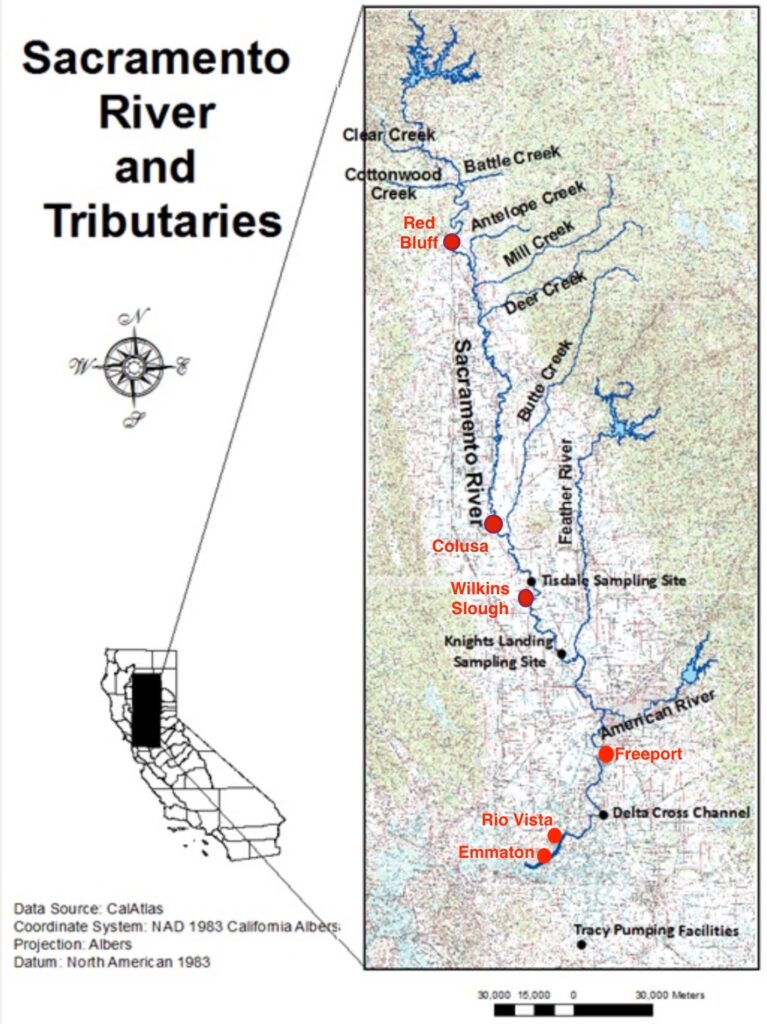
Figure 1. Sacramento River system and major water gaging locations in red.
Dry and Warm Beginning in March
The end of winter 2026 brought dry conditions to the lower Sacramento River and Bay-Delta (Figure 1). What had been wet-year-type conditions in early March at Wilkins Slough (WLK) and Freeport (FPT), and high Delta outflows (DTO), had become dramatically drier by late March (Figures 2 and 3). The lower flows and dry warmer weather brought warm water temperatures stressful (>65ºF) to many of the Delta’s native juvenile fish (smelt, salmon, steelhead, and sturgeon) that concentrate in the lower Sacramento River and the Bay-Delta in early spring.
Reservoirs were holding back what remained of the winter snowmelt (Figure 4), putting unnecessary stress on this year’s fish reproduction. Minimum flows should have been 10,000 cfs at Wilkins Slough, 20,000 cfs at Freeport (below inputs from the Feather and American Rivers), and 10,000 cfs Delta outflow (see Figure 1 for locations).
Delta exports were moderate but falling from 8000 cfs to 5000 cfs during March (Figure 5). With falling Delta inflows and dry and warming conditions, central and southern Delta water temperatures also increased to stressful levels (reaching 70ºF, Figure 5). The moderate exports decreased outflow and increased Delta water temperatures.
Many of the naturally produced juvenile salmon had passed into the Delta by early March (Figure 6) and began showing up in Delta export salvage (Figure 7). Millions of Sacramento River hatchery salmon were released in late March and began showing up in Delta export salvage facilities (Figure 8). These fish also suffered from the low flows and related stress-level water temperatures.
Wet and Cool April
Wet and cool weather returned to the Central Valley in April. Reclamation also released a flow pulse from Shasta Reservoir into the Sacramento River to help salmon migrations (Figure 9). Benefits of the flow pulse came late to the problem but will likely provide benefits further into the spring.
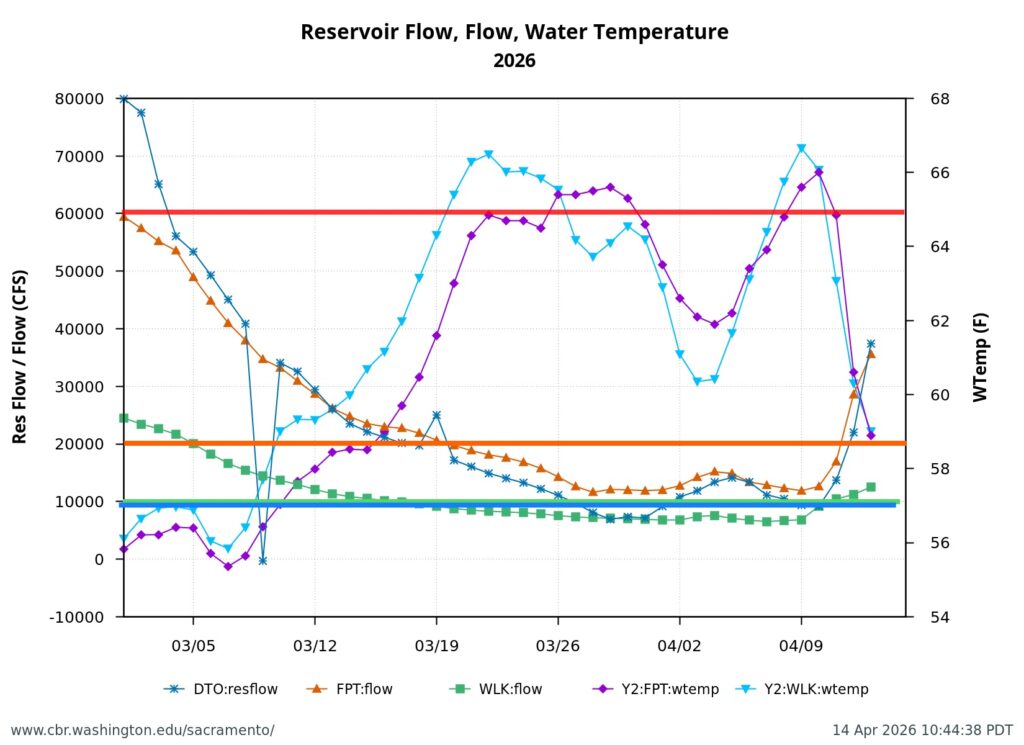
Figure 2. Sacramento River daily average streamjlow and water temperatures, and Delta outflow to the Bayin early spring 2026. Orange, green, and blue lines are recommended minimum daily-average flows for Freeport, Wilkins Slough, and Delta outflow. Red line is the sress-level for water temperature at Wilkins Slough and Freeport for juvenile Delta native fish.
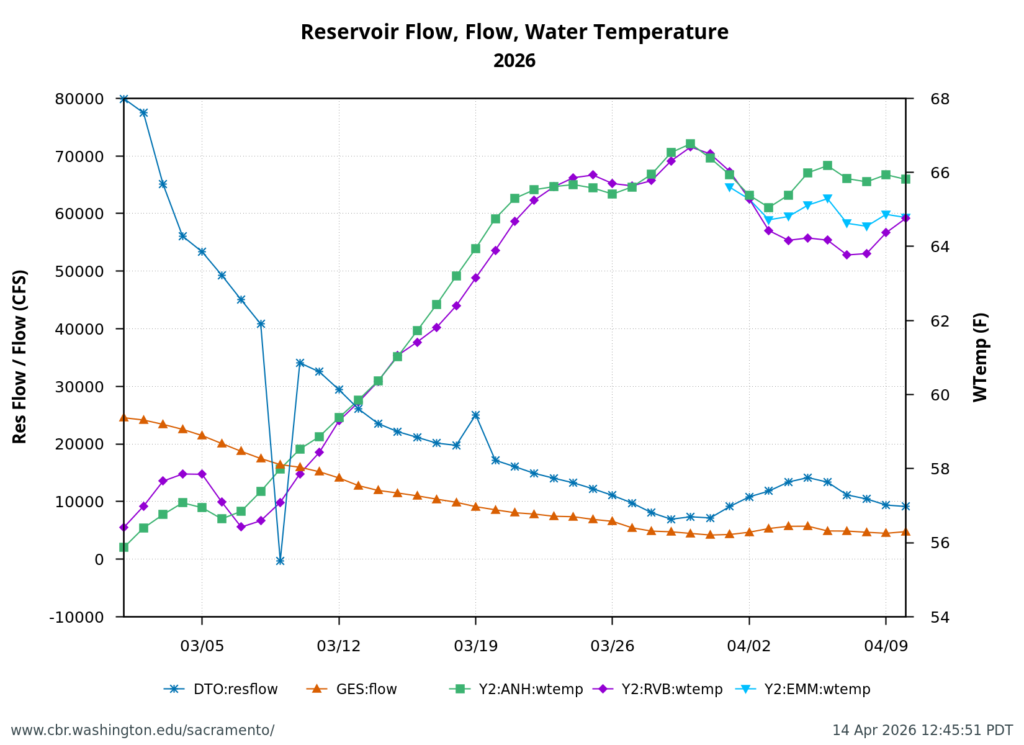
Figure 3. Delta outflow and Sacramento River channel flow below rhe Delta Cross Channel (GES) along with west Delta water temperatures at Antioch (ANH), Rio Vista (RVB), and Emmaton (EMM) in early spring 2026.
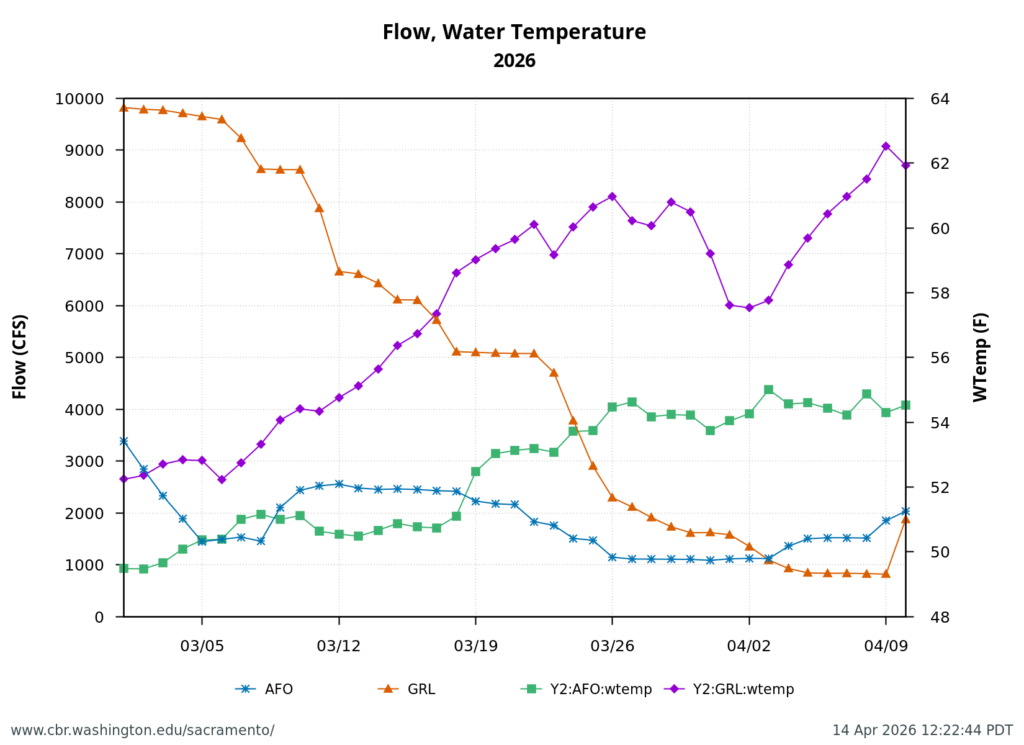
Figure 4. Streamflow and water temperature from the lower Feather River at Gridley (GRL) and American River at Fair Oaks (AFO) in early spring 2026.
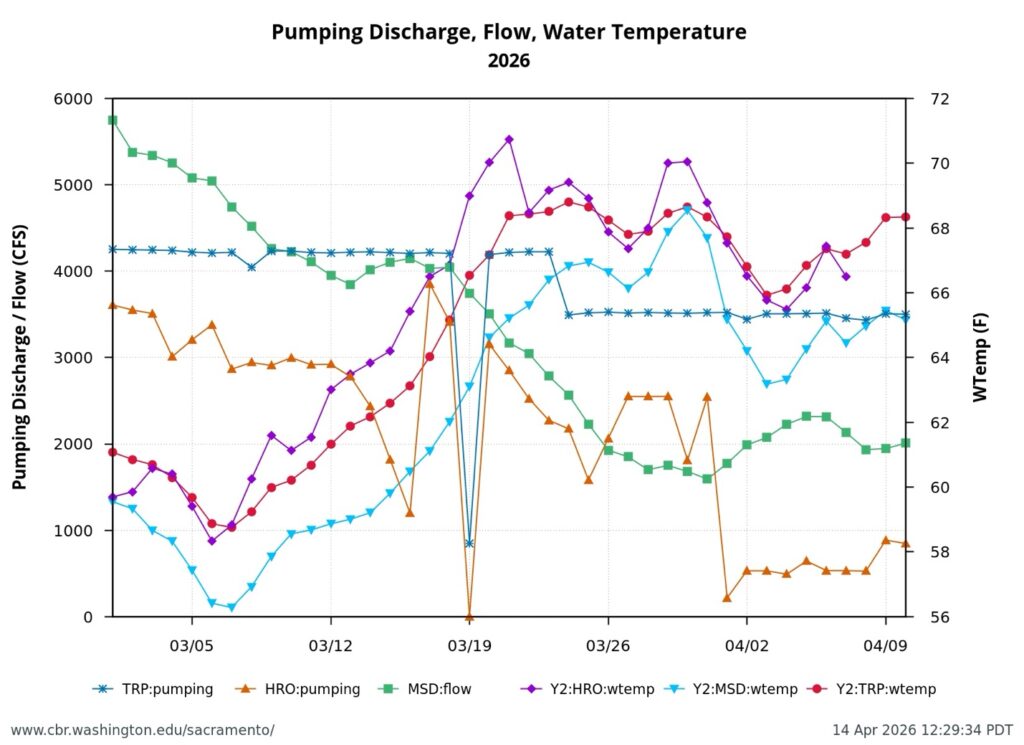
Figure 5. Delta exports from state Harvey Banks and federal Tracy pumping plants, San Joaquin River Delta inflow at Mossdale, and water temperatures at the three locations in early spring 2026.
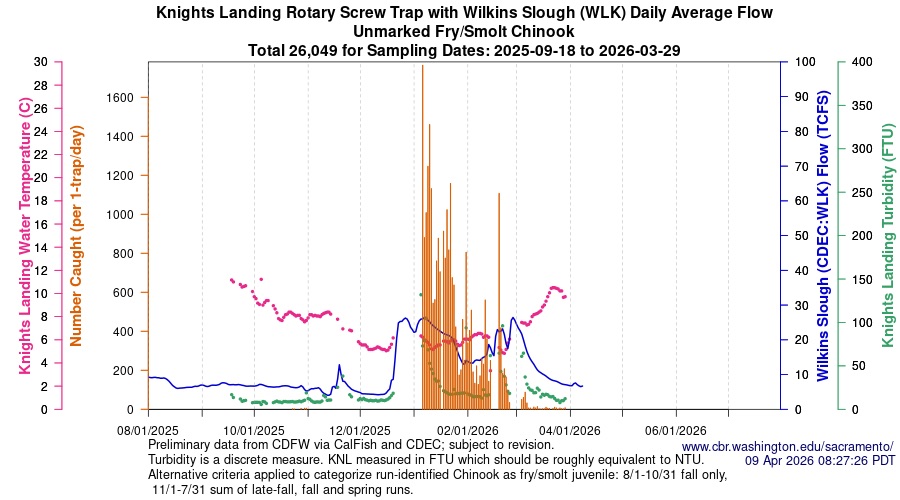
Figure 6. Catch of juvenile salmon in Knights Landing screw trap along with river flow, water temperature, and turbidity from August 2025 to April 2026.
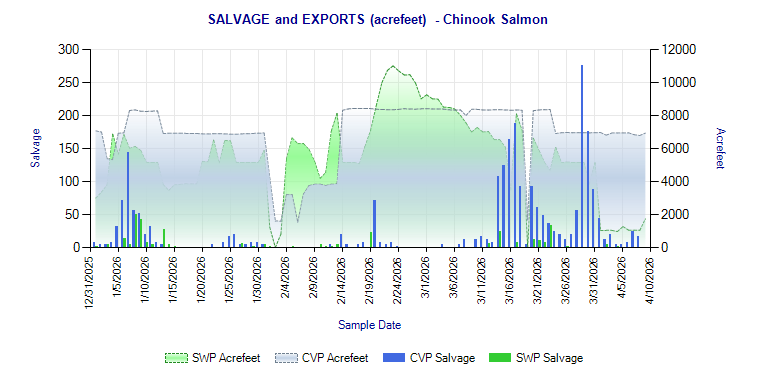
Figure 7. Export rates and juvenile salmon daily salvage at south Delta export pumping planrs in winter and early spring 2026.
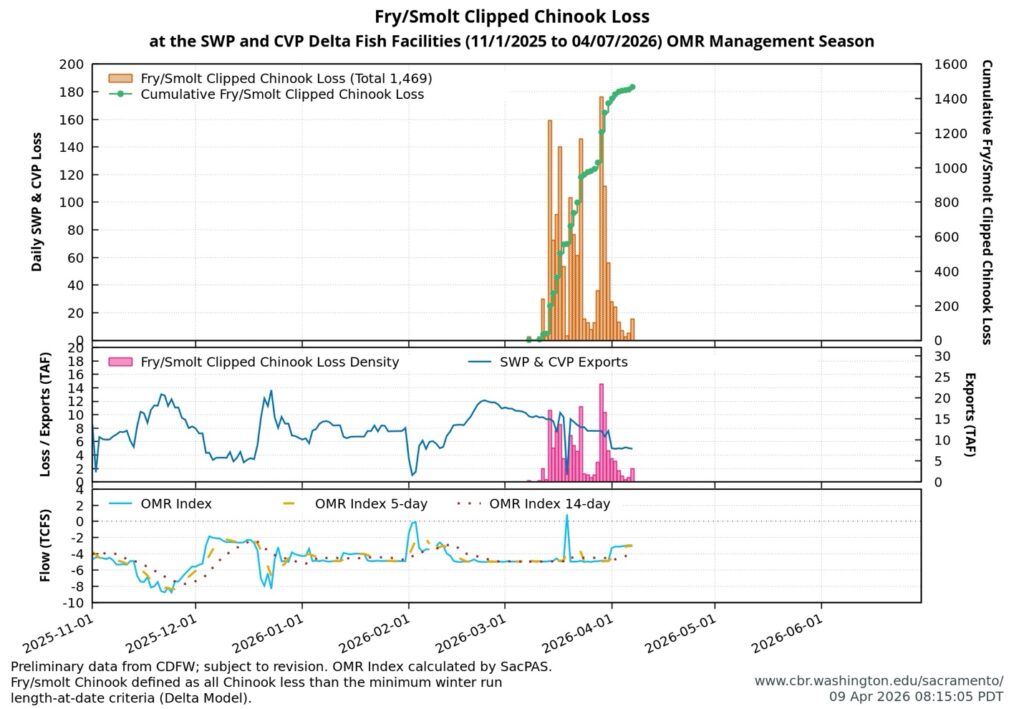
Figure 8. Marked hatchery salmon Delta pumping plant salvage and export rates from November 2025 to April 2026. Also shown is net flow in south Delta Old and Middle River channels (OMR) near export facilities.
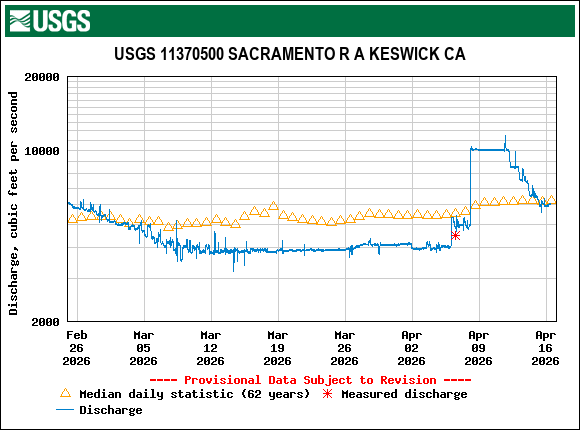
Figure 9. Shasta/Keswick Dam release rates into the Sacramento River near Redding CA in late winter and early spring 2026. Also shown is daily average rate for previous 62 years.