Welcome to the California Fisheries Blog

The California Sportfishing Protection Alliance is pleased to host the California Fisheries Blog. The focus will be on pelagic and anadromous fisheries. We will also cover environmental topics related to fisheries such as water supply, water quality, hatcheries, harvest, and habitats. Geographical coverage will be from the ocean to headwaters, including watersheds, streams, rivers, lakes, bays, ocean, and estuaries. Please note that posts on the blog represent the work and opinions of their authors, and do not necessarily reflect CSPA positions or policy.

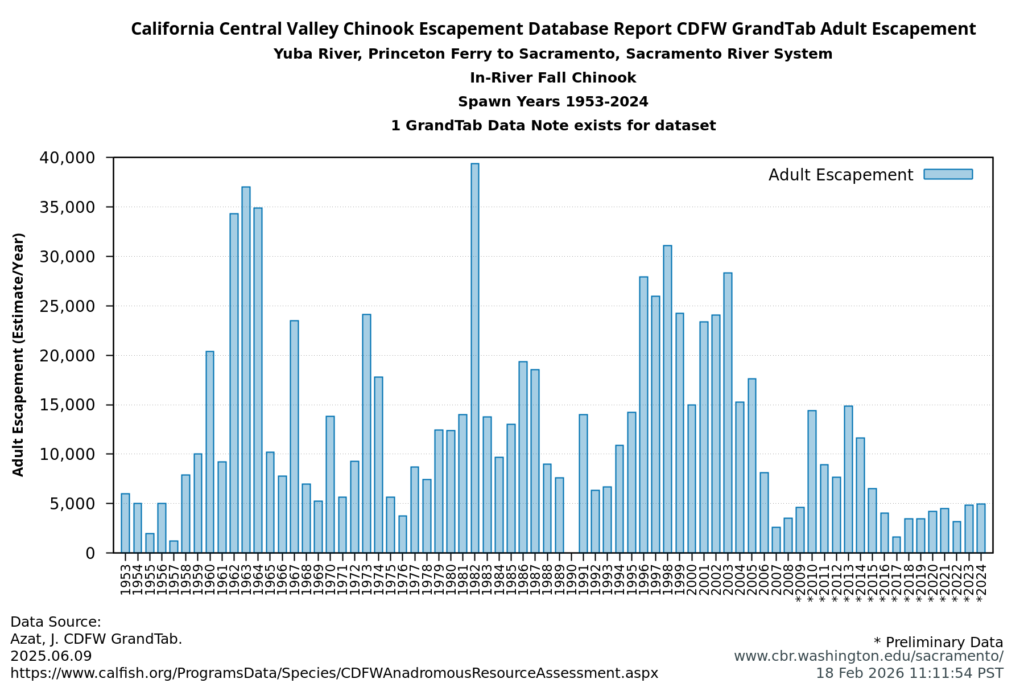
Yuba River Fall-Run Salmon Crash 2016-2025

The Yuba River Fall-Run Chinook salmon population “crashed” in the last decade.  Yuba River escapement ranged only from 2000-5000 spawners counted per year (Figure 1).  Such low escapements were last encountered only during the Central-Valley-wide crash during the 2007-2009 drought.

The decade-long low escapement reflects the effects of two droughts (2013-15 and 2020-22). Though the 2023-to-2025 escapements have increased slightly1 despite the 2020-2022 drought, the higher escapement reflects the benefit of fishery closures from 2023-2025 (fisheries normally harvest more than 50% of the adult stock).  Yuba escapement also reflects substantial numbers of hatchery strays from other rivers, including the Mokelumne and American River hatcheries, the Coleman hatchery on Battle Creek in some years, as well as the Feather River (Oroville) hatchery.  Small numbers of spring-run Feather hatchery strays from release locations near the mouth of the Yuba on the Feather River are also included.

The highest number of strays in the 2020-2022 period were from one group of Mokelumne River hatchery smolts released in 2018 to Half Moon Bay on the coast south of San Francisco.  The next highest group of strays are from American and Feather hatchery smolt releases to San Francisco Bay.  The trucked hatchery smolts do very well during drought years and thus tend to bias high the Yuba returns from drought years.  That is to say, drought effects on the natural Yuba run are even worse than indicated in escapement estimates.

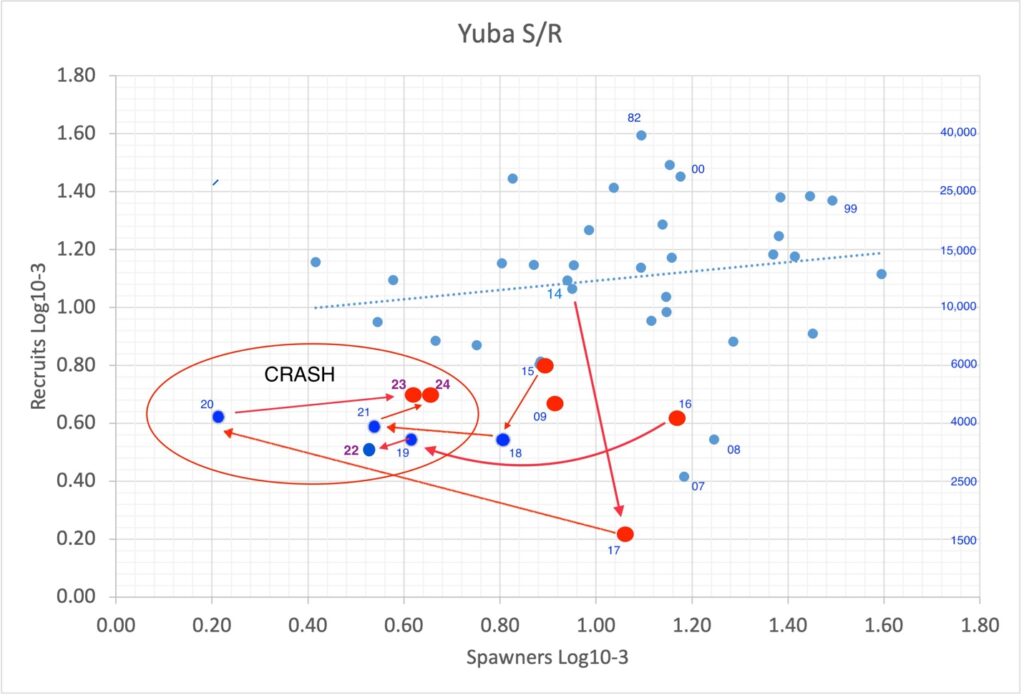
I categorize the decade-long decline as a “crash” based on the population spawner-recruit (S/R) relationship (Figure 2).  The S/R “curve” generally reflects a positive logarithmic relationship between spawner and recruitment numbers.  The more eggs spawned generally leads to more adult returns three years later.  The S/R ratio, at least in the Central Valley salmon populations, also reflects drought or habitat conditions wherein recruits are generally depressed from density-independent habitat factors like droughts.  The six drought years in the last decade shown in Figure 2 as red dots have led to escapement levels in the lower-left quadrant of the S/R curve – a pattern often referred to as a population crash.

Often it is difficult for a population to recover from that situation because there are not enough spawners (eggs) to get the population out of the hole.  It would take a lot of good years in sequence to make that happen, unless certain actions are taken to accelerate the recovery.  For some suggestions on how this can be accomplished, see my past post on the subject.

Because of the supplementation of recruitment from other rivers and resulting mixed bag of spawners, the Yuba run is not threatened with extinction.  However, in its present state, its poor contribution to the commercial and recreational fisheries is a problem.  The Yuba is a magnificent salmon river that should contribute more salmon.

Figure 1. Yuba River Fall-Run Chinook salmon escapement estimates 1953-2024.

Figure 2. Yuba River Fall-Run Chinook salmon spawner-recruitment relationship wherein recruits are related to recruits three years earlier. Red dots represent escapement years where two years earlier it was a drought year during rearing and outmigration.

Klamath River Coho Salmon – December 2025 Update

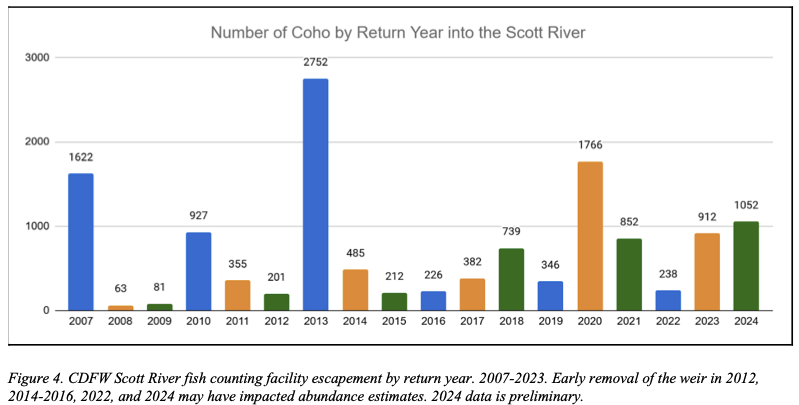
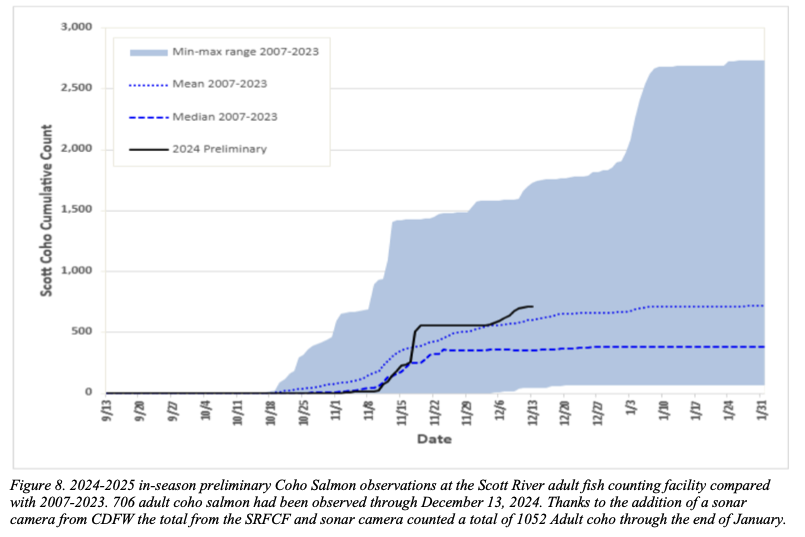
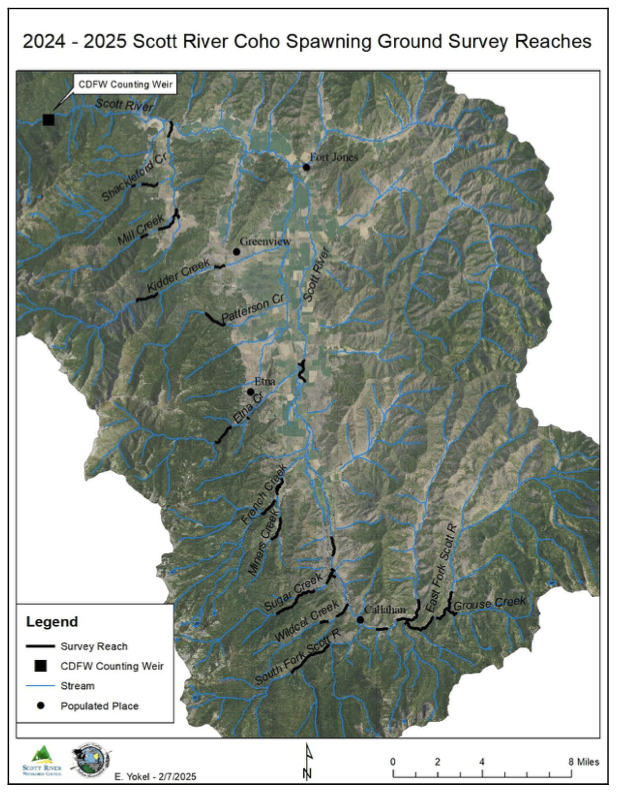
This is my first update of the status of the Klamath River coho salmon population since the removal of four Klamath River dams in 2024. My initial focus was on the Chinook populations.1 The adult coho run during late fall 2024 seemed unperturbed by the effects of dam removal in 2024. Adult coho in 2024, from Broodyear 2021, came back to the Scott River in relatively good numbers. (Figures 1 and 2).

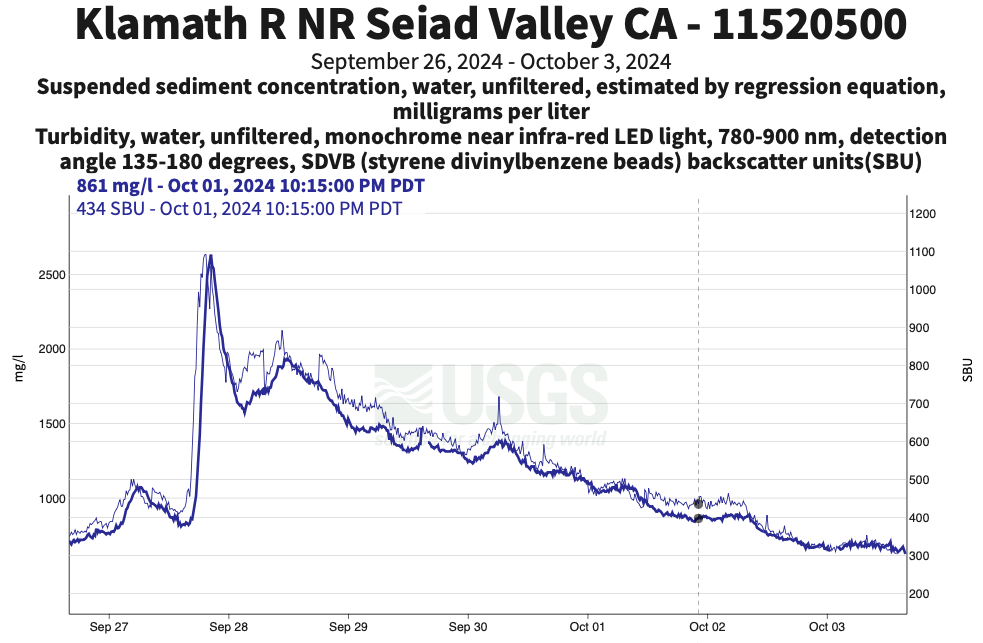
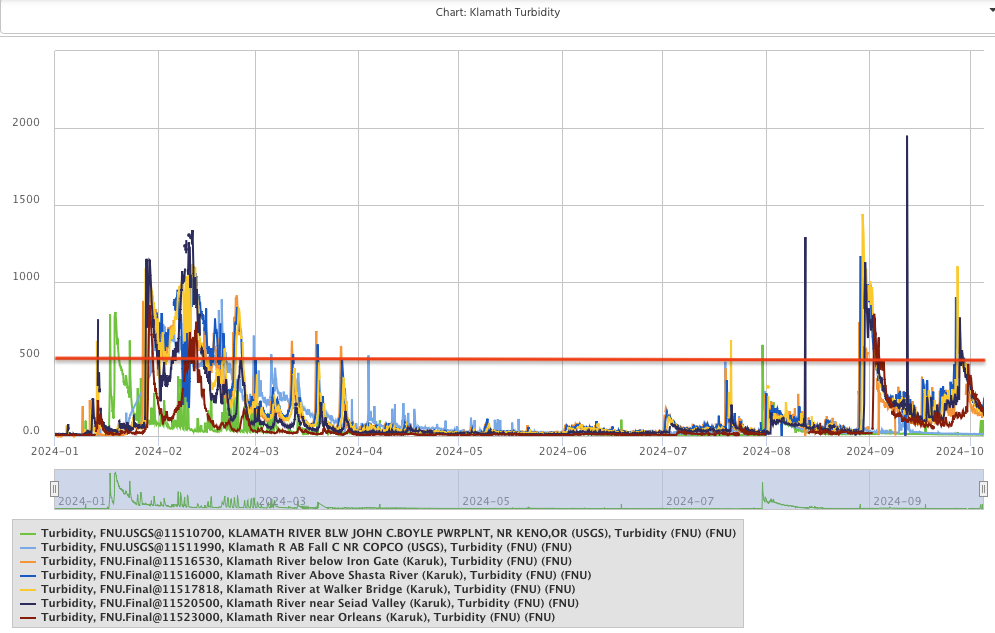
The progeny of Broodyear 2021 were in the ocean prior to the fall of 2024. They returned to the Scott River late enough in 2024 to miss the last of the high turbidity events of late summer 2024, when the remnants of the dams were removed (Figures 3 and 4).

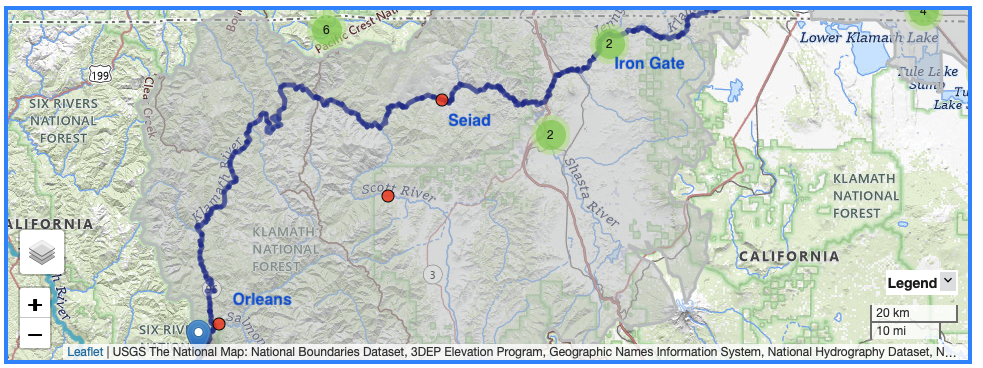
Unlike Broodyear 2021, Broodyear 2022 was subject to the full impact of dam removal in 2024 (see Appendix). Broodyear 2022 spawned in the late fall and early winter of 2022-2023. During the first year (2023), juvenile coho from Broodyear 2022 reared in the Scott River and mainstem Klamath. They then migrated to the ocean during winter-spring 2024 freshets as yearling smolts. Winter and early spring mainstem conditions in 2024 were characterized by high turbidities (see Figure 4) from reservoir drawdown and dam removal activities, including assisted sediment evacuation in the dam-removal reach and downstream mainstem (Figure 5).

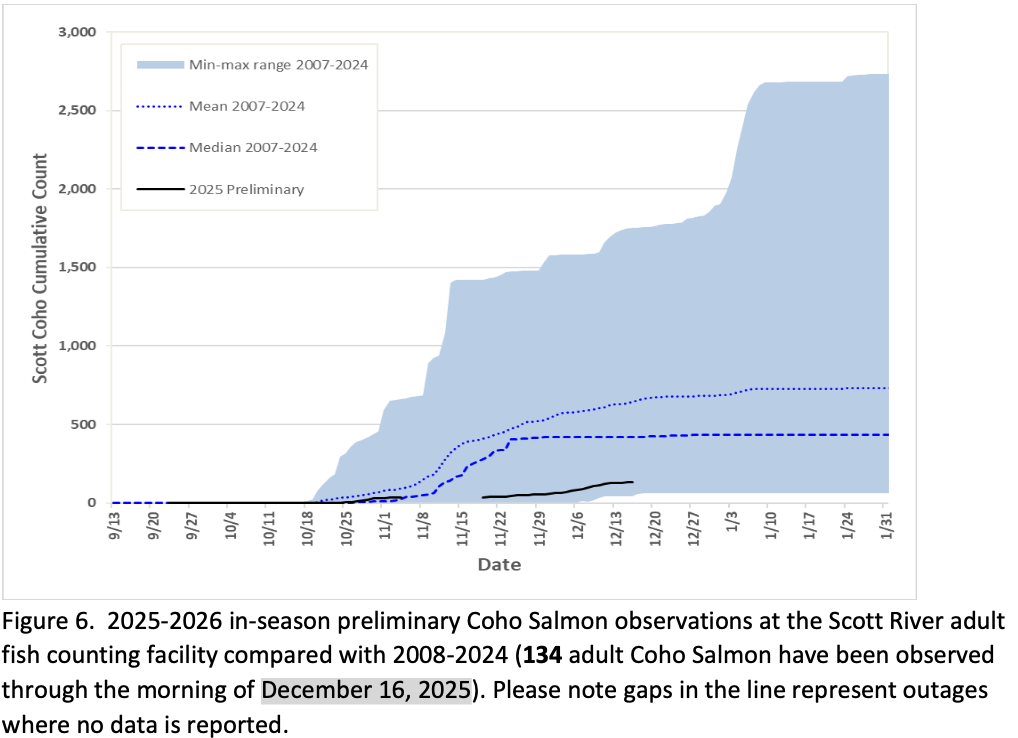
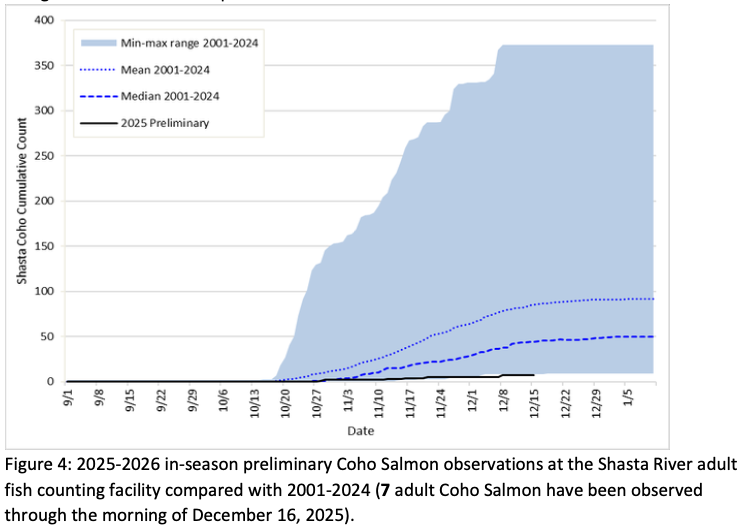
The first indication of the effects of the 2024 dam removal process is in the escapement number of Broodyear 2022 in fall 2025. Preliminary escapement estimates in fall 2025 are markedly reduced compared to recent past runs (Figures 6 and 7). Updates by CDFW of escapement numbers for the winter 2026 will provide a full assessment of Broodyear 2022 effects and initial indications of the spawning run represented by adult from Broodyear 2022.

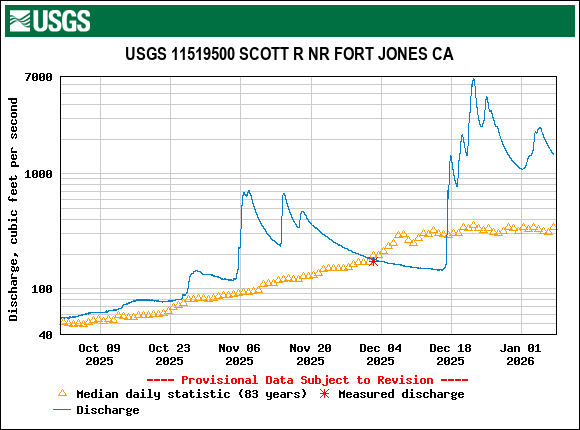
For now, I can only assume that Broodyear 2022 was compromised by the events of 2024 dam removal process. The high fall and early winter flows of 2025 (Figure 8) likely led to widely dispersed spawning of Broodyear 2022 adult in the Scott River. Much of the egg/fry production will be subject to isolation and the potential of eggs/fry becoming stranded and eventually lost. Past efforts to rescue stranded fish should be redoubled in 2026 to save what is likely limited production. Mainstem Klamath flows should be carefully regulated through the summer and fall to sustain juvenile rearing and migration habitat conditions for wild and hatchery coho during 2026.

Figure 1. Source: CDFW and Scott River Watershed Council

Figure 1. Source: CDFW and Scott River Watershed Council.

Figure 2. Source: CDFW

Figure 2. Source: CDFW

Figure 3. Source: USGS.

Figure 4. Water turbidity in Middle Klamath from Iron Gate Dam to Orleans in 2024. Source: Karuk Tribe. Author added the red stress line based on coho salmon science literature.

Figure 5. Source: USGS gaging station map. The Salmon, Scott, and Shasta rivers are the main Klamath salmon spawning tributaries below Iron Gate Dam, the lowermost impassable dam removed in 2024.

Figure 6. Source: CDFW.

Figure 7. Source: CDFW.

Figure 8. Source: USGS.

Figure 9. Source: Scott River Watershed Council.

Appendix:  National Marine Fisheries Service’s 2021 Summary of Potential Dam Removal Effects:

The primary effects of dam removal on Klamath salmon were disruption of habitat conditions in 2024 affecting various life stages of Chinook and Coho salmon and steelhead brood years 2020-2024.  The following are excerpts from the National Marine Fisheries 2021 Biological Opinion on the Klamath Dam Removal Project potential effects on coho salmon.

  • Food resources for coho salmon are expected to be impacted during drawdown due to elevated SSCs as described in Section 2.5.1.2.3. Food resources may be impacted downstream as far as Orleans (about 134 miles downstream of Iron Gate) (FERC 2021a), affecting juvenile coho salmon from the Upper Klamath, Shasta, Scott, and Mid-Klamath populations. Only juveniles that rear in the mainstem during the winter or utilize the mainstem during outmigration in the spring may be exposed to conditions with fewer prey sources.
  • In a summary of literature reporting effects of suspended sediment on salmonids, Lloyd (1987) reports several studies that document stress at 300 mg/L (McLeay et al. 1984) and 50 mg/L (McLeay et al. 1987). Redding et al. (1987) found that juvenile coho salmon showed signs ofstress at high levels of suspended sediment (2000-3000 mg/L), but not at low levels (400 to 600 mg/L). Servizi and Martens (1991) found that at 18°C, 8100 mg/L was the concentration where50 percent of the exposed coho salmon juveniles died.
  • Behavioral effects resulting from elevated suspended sediment include alarm reactions, avoidance, and reduced feeding. Cederholm and Reid (1987) found that juvenile coho salmon prefer low to medium concentrations of suspended sediment, and that juvenile coho salmon prey capture success significantly declined at concentrations of 100 to 400 mg/l. Salmonids have been observed to prefer clear over turbid water (Bisson and Bilby 1982), and move vertically near the water surface (Servizi and Martens 1992) and/or downstream to avoid turbid areas (McLeay et al. 1984; McLeay et al. 1987). More than six weeks of exposure to concentrations of 100 mg/L reduces feeding success, reduces growth, causes avoidance, and displaces individuals (Spence et al. 1996).
  • All populations of coho salmon in the Klamath Basin have the potential to be exposed to elevated SSC during project implementation. All populations use the mainstem Klamath River as a migratory corridor during both the adult life stage and outmigrating smolt life stage. Additionally, some juvenile (i.e., young-of-year, subyearling, yearling) individuals from each population will use the mainstem for over-summer and over-winter rearing, although the proportion of populations using the mainstem for rearing varies.
  • Juveniles may rear in the mainstem throughout the year, and consist of sub-yearlings (0+) and yearlings (1+). Juvenile coho salmon have been observed residing within the mainstem Klamath River downstream of Iron Gate Dam throughout the summer and early fall in thermal refugia during periods of high ambient water temperatures (>22 °C). Sub-yearling juveniles may be present in the mainstem from the time they leave the tributaries to the following winter. However, most juveniles from the tributaries are assumed to rear in the tributaries. A small number of sub-yearling juveniles that successfully emerged from mainstem redds will be present in the mainstem until they redistribute in the fall. The Renewal Corporation modeled suspended sediment concentrations associated with reservoir drawdown using trap data, run timing, and location information to estimate exposure and potential risk to rearing 0+, rearing 1+, and outmigrating 1+ smolt coho salmon (Appendix H of FERC 2021a). Because coho salmon have complex life history strategies, we cannot predict with certainty the timing of exposure. Spring and seasonal redistribution of 0+ juveniles and outmigration is timed based on a variety of environmental cues. For example, the outmigration period may start in February and last into June. However, no individual fish spends that entire period of time in the mainstem.
  • Coho salmon smolts (1+ yearlings) are expected to migrate to the ocean beginning in late February, although most natural origin smolts outmigrate to the mainstem Klamath during April and May (Wallace 2003). Courter et al. (2008), using USFWS and CDFG migrant trapping data from 1997 to 2006 in tributaries upstream of and including Seiad Creek (e.g., Horse Creek, Seiad Creek, Shasta River, and Scott River), reported that 44 percent of coho salmon smolts were trapped from February 15 to March 31, and 56 percent from April 1 through the end of June. 

WINTER-RUN CHINOOK SALMON A Plan for the Future

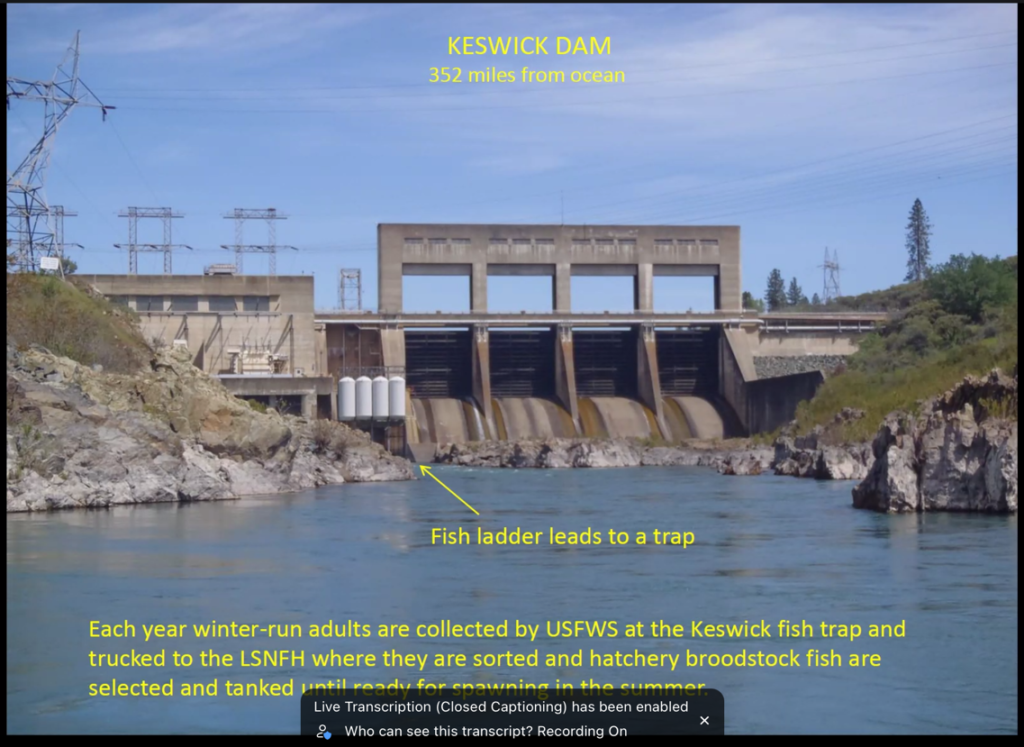
Photo 1. Keswick Dam – the upper extent of salmon in the Sacramento River. Source: USFWS

Winter-run Chinook salmon were once found throughout the Upper Sacramento River watershed, including the Sacramento, McCloud, and Pit River drainages, as well as in Battle Creek (Figure 1).  Following the construction of the Central Valley Project’s Shasta and Keswick dams in the 1940s, winter-run were confined to the lower Sacramento River below Keswick Dam.

Winter-run are one of four Chinook salmon subspecies found in the Central Valley.  As “winter-run,” the historical population took advantage of the Mediterranean climate’s wet winter and spring to migrate to and from the ocean to optimal spawning habitats in the Mount Shasta and Mount Lassen volcanic Cascade watersheds.

Adults returned from the ocean in winter and spring, reaching elevations near 3,000 feet on the west and south flanks of Mount Shasta in the upper Sacramento River, McCloud River, and Pit River.  Cold, clear spring waters sustained them until they spawned in late spring and summer.  Fry emerged from the gravel redds in early fall.  High winter-spring flows transported fry to the Lower Sacramento River, Valley floodplains and the Bay-Delta estuary that provided optimal winter rearing conditions (e.g., water temperatures from 10-15oC), with abundant food and cover in marshes, creeks, and sloughs.  The fry grew to ocean-ready smolt size by late winter and early spring and headed to the ocean.

The system was ideal, producing hundreds of thousands if not millions of adult winter-run salmon which many native peoples depended on for centuries.

But that all changed in the mid-20th Century when winter-run salmon populations were decimated by dams that blocked adult salmon access to their historical spawning grounds.  Winter-run salmon persisted in the Sacramento Valley below Shasta and Keswick dams in tailwater habitat sustained by cold-water releases from the depths of Shasta Lake, a modicum of spawning and rearing habitat, and – since 1998 – by one conservation hatchery. Much of the remaining spawning, rearing, and migration habitats were lost to mining, water diversions, roads, logging, and urbanization.

Winter-run salmon were nearly gone from the Sacramento River after the 1976-77 drought.  Cold-water habitat was not sustained below Shasta Dam in the drought, and escapement plummeted (Figure 2).  The escapement (returns) in 1979 and 1980 from brood years 1976 and 1977 was very low.  Brood year 1978, the offspring of brood year 1975 (which had been in the ocean during the drought) did well in wet year 1978 and returned well in 1981.  However, because of dry conditions in 1981, survival of brood year 1981 was poor.  The failures of brood years 1976, 1977, and 1981 (and their offspring) led to a general population collapse.

The subsequent 1987-92 drought led to the near extinction of the run and its listing as endangered under the federal and state endangered species acts.  Protections mandated in the listings, a decade of wetter years (1993-2003), some major improvement in CVP infrastructure and operation, and initial operation of the Livingston Stone Winter Run Conservation Hatchery in 1998 led to a partial recovery from 2001-2006.

The population declined again with the 2007-2009 and 2013-2015 droughts, with only partial recovery after two wetter periods (2010-2012 and 2016-2019).

The 2020-2022 drought caused poor brood year 2020 and 2021 fry production (Figure 3) and subsequent poor escapement in 2023 and 2024 (see Figure 2).  Emergency management actions in 2022, including the establishment of a new Battle Creek population and increased hatchery production, may have helped ameliorate some of the effects of the 2021-22 drought, leading to an increase in the 2025 returns (based on initial indications).  Despite its low fry numbers, brood year 2022 had good juvenile survival conditions in wet winter 2023 and good conditions for returning adults in above-normal water year 2025.  Also, closed fisheries from 2023-2025 contributed to strong 2025 escapement.  The good 2025 run and the good habitat conditions in 2025 resulted in strong fry production of brood year 2025 (Figure 3).

Many factors contributed to these long-term population trends, including negative factors such as overfishing, degradation and loss of freshwater and estuarine habitat, Shasta-Trinity hydropower operations, poor ocean conditions, disease, and hatchery practices.1 These include:

  • Overfishing – Though winter-run adults in the ocean are partially protected with closure of spring coastal fisheries near the entrance of San Francisco Bay, winter-run immature adults are not explicitly protected in other seasonal fisheries during their two-year period of ocean residence. Regional closures in ocean fisheries based on known ocean movements of winter-run are only partially effective.
  • Fall-winter rearing and out-migration habitat – Fall-winter habitat in the 200 miles of river and Delta habitat between Redding and the Bay are essential for winter-run brood year survival and smolt production to the ocean. Especially important are late fall and early winter movement to and through the Delta that are stimulated by stream flows and sustained by the first river flow pulse.2  Operation of the Delta’s Cross Channel gates and south Delta diversions restrictions play a very large role in successful outmigration (Figure 4).
  • Hydropower Operations – Shasta-Trinity Division hydropower operations affect real-time stream flows and water temperatures in the lower Sacramento River in the summer, fall, and winter seasons. Late-fall reductions in Keswick Dam releases at the end of the irrigation season limit both spawning and incubation habitat and flow-related downstream migration.
  • Poor Ocean Conditions – Poor Ocean conditions in 2007-2009 that contributed to the 2008-2009 crash of fall-run salmon also likely contributed to poor winter-run escapement.
  • Hatchery Practices – Hatchery practices for the most part have been beneficial to the winter-run population through the release of several hundred thousand sub-yearling smolts per year. However, releases near the hatchery in drier years help minimally because fewer hatchery smolts survive to the ocean.  Survival of coded-wire tagged winter-run hatchery smolts in dry years (Table 1) is only about 1/10th of that in wet 3  Survival is improved when hatchery smolt releases are coordinated with natural or prescribed pulse flows.4

Recommended Actions

Recovery recommendations are outlined in this section in three categories: habitat, hatcheries, and harvest.  The two main themes of the recommendations are (1) the best strategies for dealing with warmer, drier years and (2) improving population recovery after droughts.  These themes will require policy improvements for both drought and non-drought years.  The recommendations can be reasonably implemented based on the historical range and capabilities of winter-run salmon, but they may prove difficult under present political and social demands for water supply and project operations (e.g., hydropower peaking demands).

Lower Sacramento River – water temperature:  Maintain spring water temperatures in the Lower Sacramento River downstream from Red Bluff to the Delta (Freeport gage) at <65oF.  At all other times water temperature should be no higher than 68oF from Red Bluff to the Delta.

Upper Sacramento River – water temperature:  Maintain water temperatures at or below a maximum of 53oF in the Upper Sacramento River below Keswick Dam (river mile or RM 300) downstream to the mouth of Clear Creek (RM 290), and at or below a maximum of 56oF below the mouth of Clear Creek to the mouth of Battle Creek, and at or below 60oF from the mouth of Battle Creek to Red Bluff (RM 240).  (See Figure 5 for suggested standard/objective.)

Upper Sacramento River – streamflow:  Adaptively manage stream flow in the 6,000-10,000 cfs range depending on available cold-water pool supply and irrigation needs, fall-run salmon spawning, and the need to ensure that a late summer/fall stage drop does not lead to redd stranding for winter-run or fall-run salmon.  I recommend, at minimum, two pulse flows, each of 10,000 cfs minimum at Red Bluff, supported as needed by Keswick Dam releases, one in late fall or early winter coinciding with the first seasonal rains, and one around early February.

Sacramento River Base Winter Flow:  For the Sacramento River through the Delta, I recommend a base minimum flow of at least 5,000 cfs to maintain juvenile salmon transport and rearing habitat.

DeltaThe Delta Cross Channel (DCC) should be closed during fall flow pulses.  South Delta exports should be kept to a minimum during fall flow pulse.  Sacramento River Delta inflow (Freeport gage) should have a minimum daily (tidal) average flow of 20,000 cfs in late fall and winter.  Delta outflow should have a minimum daily (tidal) average flow of at least 10,000 cfs in late fall and winter.

Hatchery:  Release winter-run hatchery smolts to the Sacramento River and Battle Creek near Redding during flow pulses.

Hatchery:  Raise hatchery fry in controlled Lower Sacramento River floodplain habitats for volitional release during flow pulses.

Above Shasta Reservoir Trap-and-Haul:  More fully develop the trap-and-haul program to establish winter-run salmon subpopulations in (1) the spring-fed reach of the upper McCloud River above McCloud Falls, where stable water temperatures and stream flows are best for the logistical requirements of such a program; and (2) Ripley Creek, the South Fork Battle Creek tributary historically fed by Hazen Spring.  Offspring from such efforts can be readily trapped from these controlled flow spring creeks and returned to the hatchery for further rearing or release.

Fishery Harvest: Mark-selective fishery harvest rules could limit harvest of natural-born winter-run salmon.  Incidental catch (bycatch mortality) should be minimized in fishery areas frequented by adult immature and mature winter-run salmon through fishery restrictions.  Mark-selective harvest would involve large-scale investment in more complete hatchery marking throughout the Central Valley hatchery system, most of which currently marks only one quarter of hatchery production.
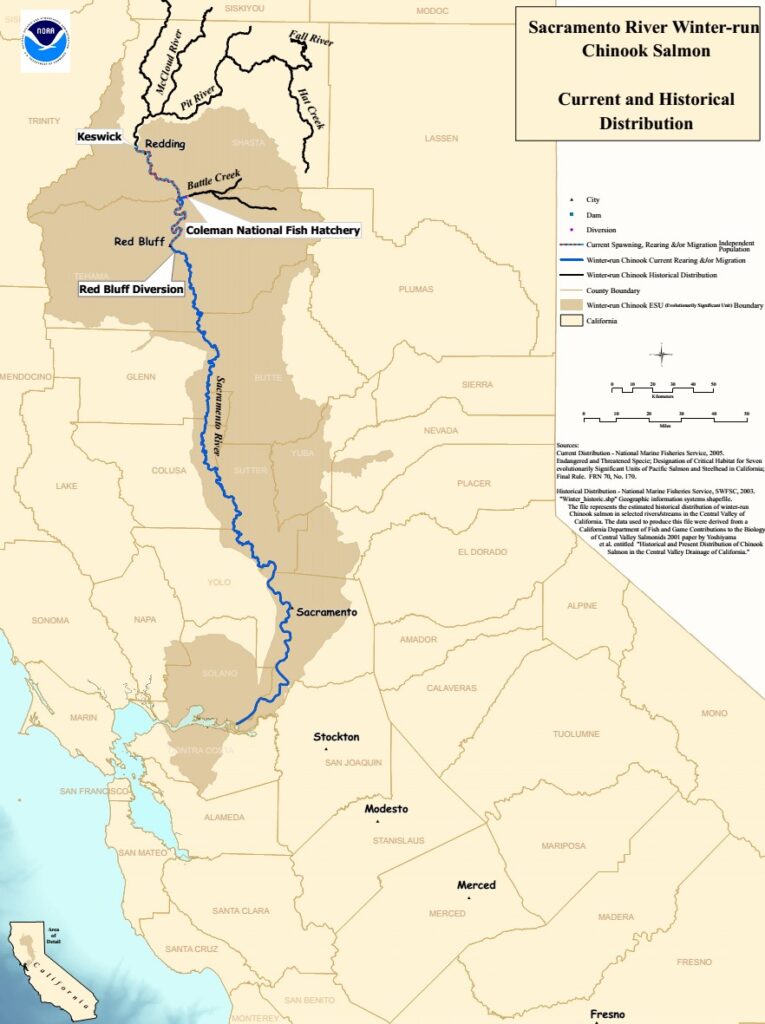
 

Figure 1. Winter-Run Chinook salmon Streams of the Central Valley. Source: NMFS.
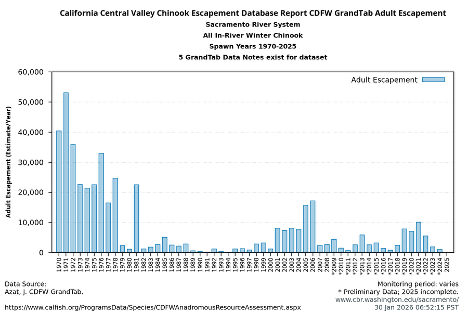
Figure 2. Winter-run Chinook salmon escapement in the Sacramento River mainstem, 1970 to 2024. Note: Winter-run escapement is made up of the total of these components: (a) Winter in-river Battle Creek – upstream of CNFH: Fish passed upstream of Coleman Weir; (b) Winter in-river Clear Creek: not a stable breeding population; (c) Winter in-river mainstem Sacramento – downstream of Red Bluff Diversion Dam (RBDD): downstream mainstem numbers based on upstream estimates and redd distribution; (d) Winter in-river mainstem Sacramento – upstream of RBDD: upstream mainstem in-river estimates prior to 2001 were based on RBDD counts. Subsequent estimates are based on carcass surveys. Numbers using RBDD data are adjusted for angler harvest.
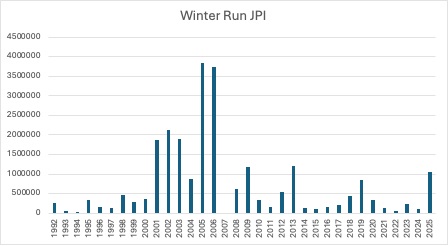
Figure 3. Winter-run juvenile production index (JPI) from Red Bluff trap collections 1992-2025. Data source: USFWS Red Bluff.
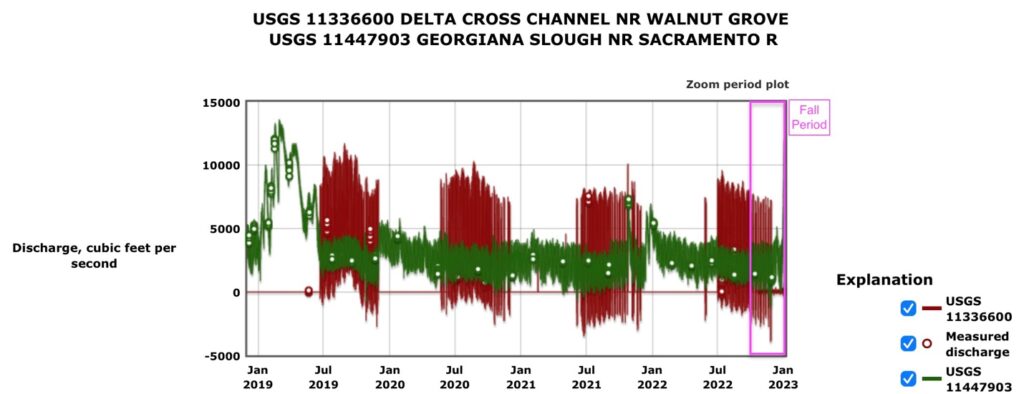
Figure 4. Hourly streamflow in the Delta Cross Channel and Georgiana Slough in the northern Delta, 2019-2022. Note that zero discharge at the Delta Cross Channel gage indicates the gates were closed.
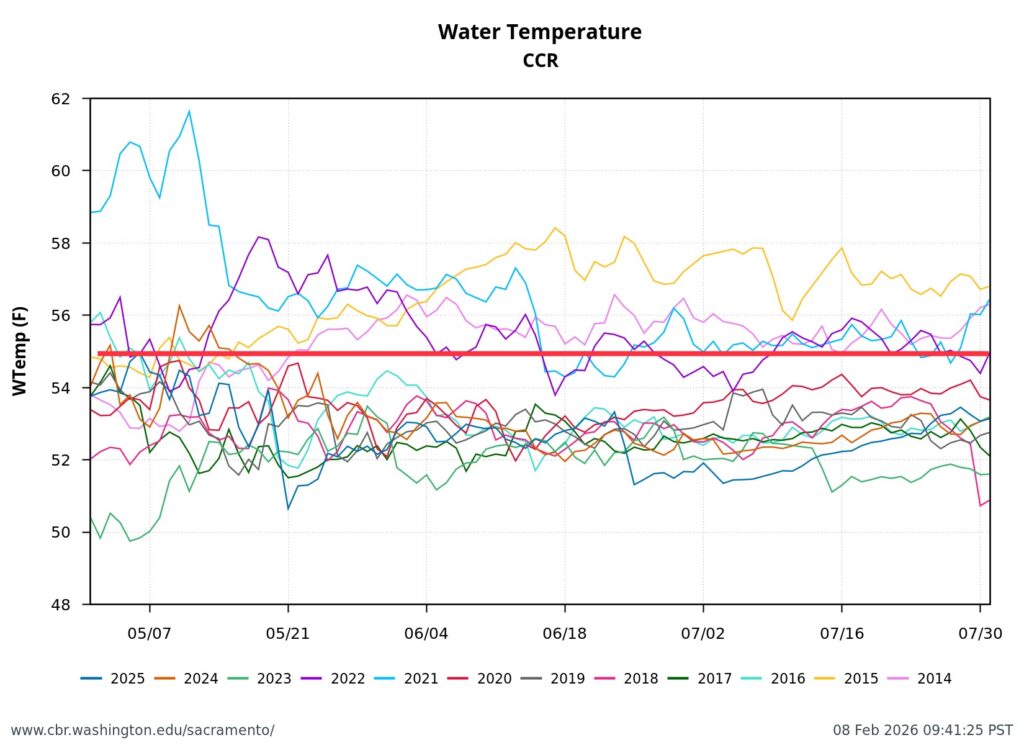
Figure 5. Hourly water temperature in the upper Sacramento River above the mouth of Clear Creek (rm 290) in the May-July spawning season of winter-run salmon. Red line is the upper end of safe spawning water temperature for salmon.
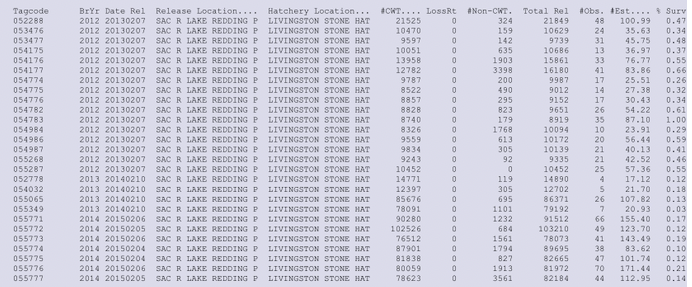
Table 1. Tag returns for winter-run hatchery smolt release groups for brood year 2012-2014, with date released, release location, and estimated percent survival (escapement plus fishery catch). Note there were significantly higher survival rates for brood year 2012 (2013 release date) than brood years 2013 and 2014.
  1. (NMFS), West Coast Region (WCR). 2016. Viability Assessment for Pacific Salmon and Steelhead Listed under the Endangered Species Act: Southwest. Dated: February 2, 2016. Southwest Fisheries Science Center (SWFSC), Fisheries Ecology Division, 110 Shaffer Road, Santa Cruz, CA 95060.
  2. https://calsport.org/fisheriesblog/?p=4034, https://calsport.org/fisheriesblog/?s=winter+run+salmon&submit=Search&paged=3
  3. https://calsport.org/fisheriesblog/?p=4096
  4. https://www.fisheries.noaa.gov/feature-story/sacramento-river-pulse-flow-expected-increase-survival-juvenile-salmon-traveling-ocean

Sturgeon 2025 – A Retrospective

Tom Cannon December, 2025

In a 9/12/25 post, I warned of poor summer conditions in the Bay for sturgeon.  This came on the heels of a poor population status assessment by CDFW.

From the Department of Fish and Wildlife: “Recent results from white sturgeon monitoring surveys by the California Department of Fish and Wildlife (CDFW) suggest the white sturgeon (Acipenser transmontanus) population has continued to decline. CDFW fisheries biologists now estimate there are approximately 6,500 white sturgeon between 40-60 inches long in California — down sharply from the previous estimate of approximately 30,000 fish in that size range, based on the 2016-2021 survey average.” https://mavensnotebook.com/2025/07/10/cdfw-scientific-surveys-show-continued-decline-in-white-sturgeon-population/

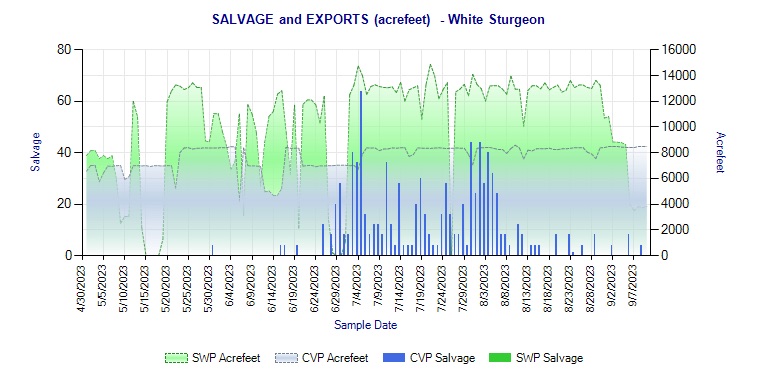
Not only was the recent adult sturgeon population survey estimate down, but the products of sturgeon reproduction in 2025 were nearly non-existent, a pattern inconsistent with an above-normal water year.   During the wet year 2023, white sturgeon reproduction in the Bay-Delta population was up sharply, as shown by numbers salvaged at the south Delta pumping plant fish salvage facilities (Figure 1).  In contrast, sturgeon salvage numbers were very low in summer of above-normal water year 2024.  In above-normal water year 2025, no sturgeon were collected in the south Delta salvage surveys.

Figure 1. Number of juvenile sturgeon salvaged at south Delta state and federal pumping plant fish screens in wet year 2023. Source: https://wildlife.ca.gov/Conservation/Delta/Salvage-Monitoring

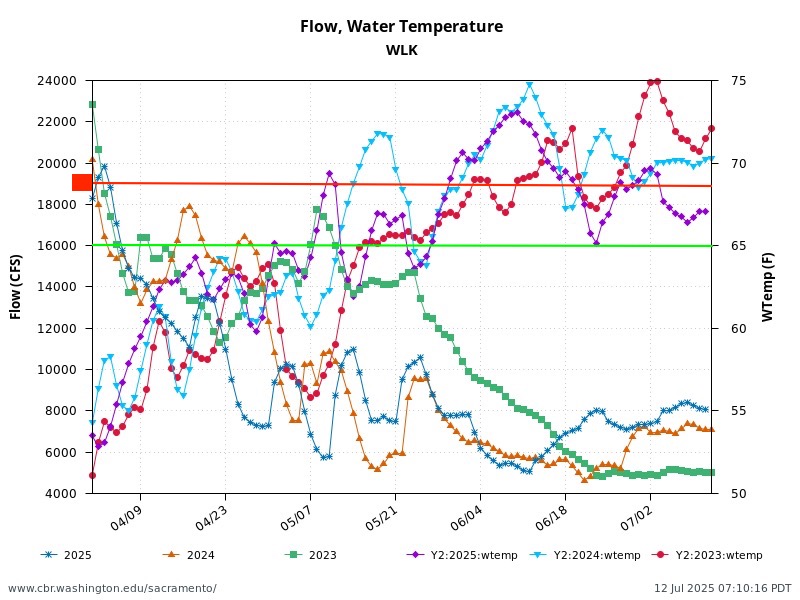
A big reason for the unsuccessful sturgeon reproduction in water years 2024 and 2025 was poor conditions in the spring spawning and early rearing reach of the middle Sacramento River (Figure 2).  Water temperatures were above optimal (>65oF) and at times stressful (>68oF) or even lethal (>72oF) in 2024 and 2025.  Few juvenile sturgeon survive to reach the Delta under these habitat conditions.  This was one of the factors that led the State Water Board and USEPA to set 68oF as the water quality standard for the Sacramento River two decades ago. This standard is also a condition of the State Water Board water right permits for the state and federal water projects.

The water temperature standard could be met if river flows are maintained in the 8000-10,000 cfs range at the Wilkins Slough gage (WLK) located upstream of the mouth of the Feather River (river mile 120). (Note the water temperature benefit of higher flows in the May and June flow pulses in 2025.)

Figure 2. Lower Sacramento River flow and water temperature at Wilkins Slough gage (RM 120) Apr-Jul 2023-2025. Stress on egg and larval sturgeon occurs above 65ºF, whereas mortality begins at 70-72ºF.

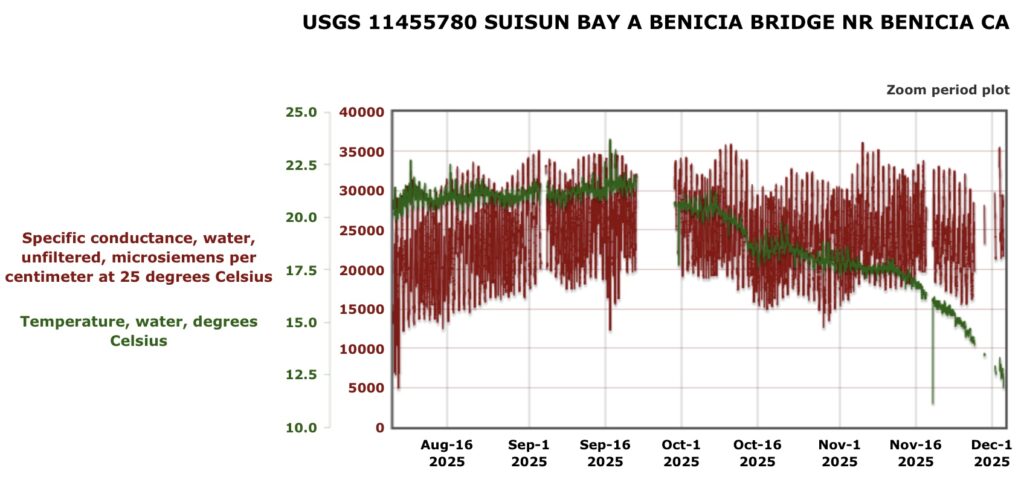
The residual adult sturgeon population within their Bay summer habitat also experienced unfavorable elevated temperature conditions (>20ºC, 68ºF; Figure 3).

Figure 3. Water temperature and salinity in Suisun Bay at the Benecia Bridge gage, Aug-Nov 2025. Water temperature spike in mid-September occurred with Delta draining in super moon cycle and low Delta outflow (without Fall X2 Action).

For further detailed discussion of the status of sturgeon in the Central Valley see:  https://calsport.org/fisheriesblog/?cat=20 .

Sacramento River Salmon Redd Dewatering – Fall 2025

I have previously reported on the dewatering of fall-run salmon redds in the upper Sacramento River near Redding during the early fall spawning season. Redd dewatering has a significant negative effect on salmon egg and fry production that translates to lower annual escapement and significantly contributes to the multi-decade decline in the population (Figure 1).

Figure 1. Escapement to the upper Sacramento River natural spawning area 1952-2024.

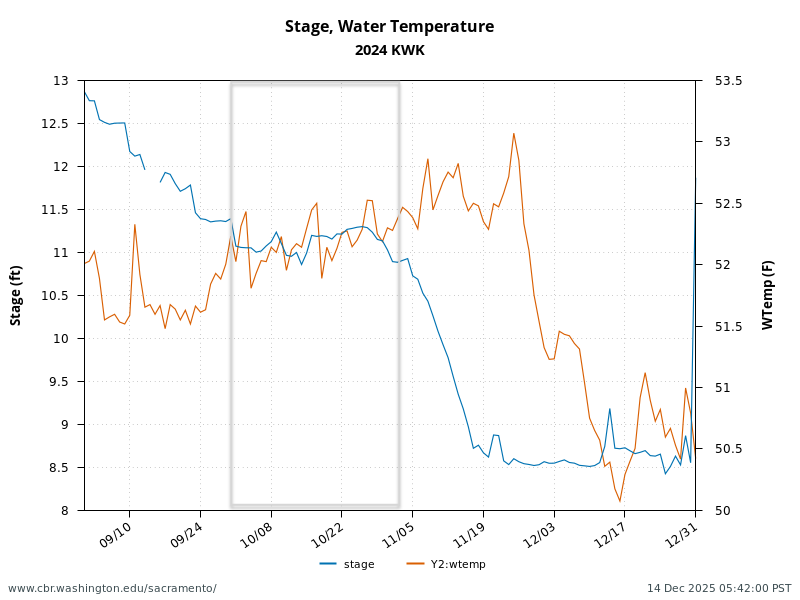
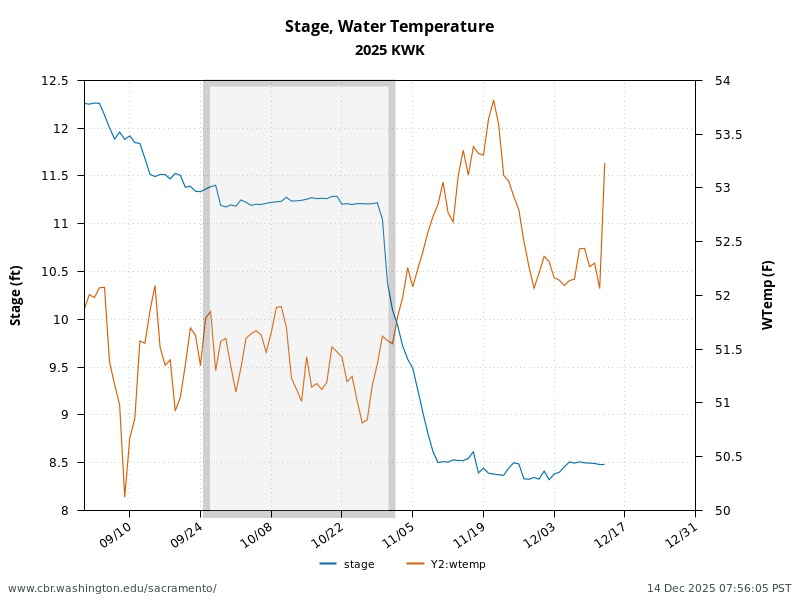
October is the peak in the fall-run Chinook salmon spawning season (Figure 2).  During early November 2024, the Bureau of Reclamation reduced Keswick Dam releases from the October average of 7000 cfs to 4000 cfs.  The flow reduction reduced water levels in the upper river spawning grounds below Keswick Dam from approximately the 11-ft water surface elevation (stage) to about the 8.5 ft level, a drop of about 2.5 feet.  In 2025, nearly identical flow management led to the same redd dewatering conditions (Figure 3). With most of salmon redds constructed in the 1-to-3 ft depth range, most were dewatered or only slightly watered and thus susceptible to high-egg-mortality conditions (low flow, warm water, low oxygen, and sedimentation).

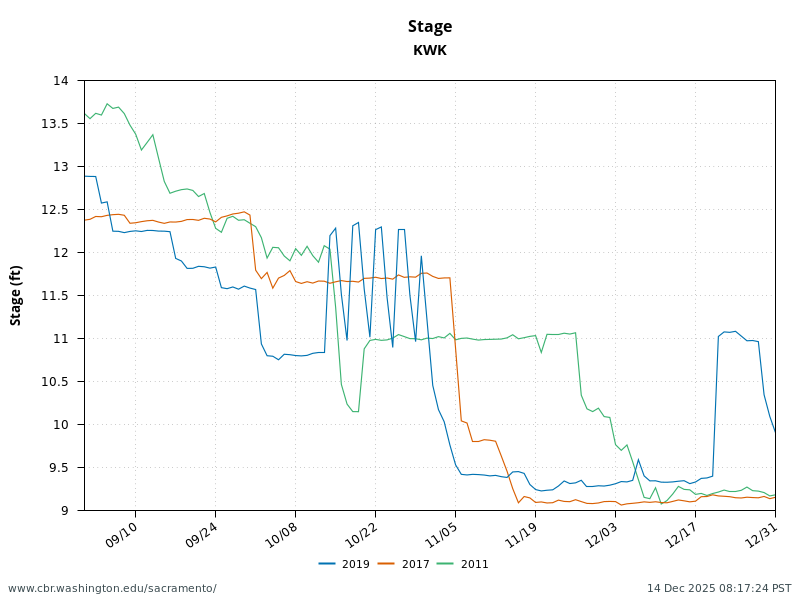
The flow management strategy was also employed in recent wet years 2017 and 2019, although a more benign strategy was employed in historical wet year 2011 (Figure 4).  The issue has attracted inter-agency study and mention, but actions necessary to reduce the problem have been limited.

Figure 2. Stage and water temperature in the Sacramento River below Keswick Dam in fall 2024. Grey box denotes period when most fall run salmon spawn in the upper Sacramento River.

Figure 3. Stage and water temperature in the Sacramento River below Keswick Dam in fall 2025. Grey box denotes period when most fall run salmon spawn in the upper Sacramento River.

Figure 4. Stage and water temperature in the Sacramento River below Keswick Dam in fall of wet years 2011, 2017, and 2019.