An Opportunity Missed?

The U.S. Fish and Wildlife Service has released 400,000 Winter-Run Chinook salmon smolts from the Livingston Stone Fish Hatchery into the Sacramento River near Redding. But according to the US Fish and Wildlife Service’s Steve Martarano, “The release won’t occur until we see a significant increase in density and flow in the Sacramento River. It’s based on a rain event.” 1

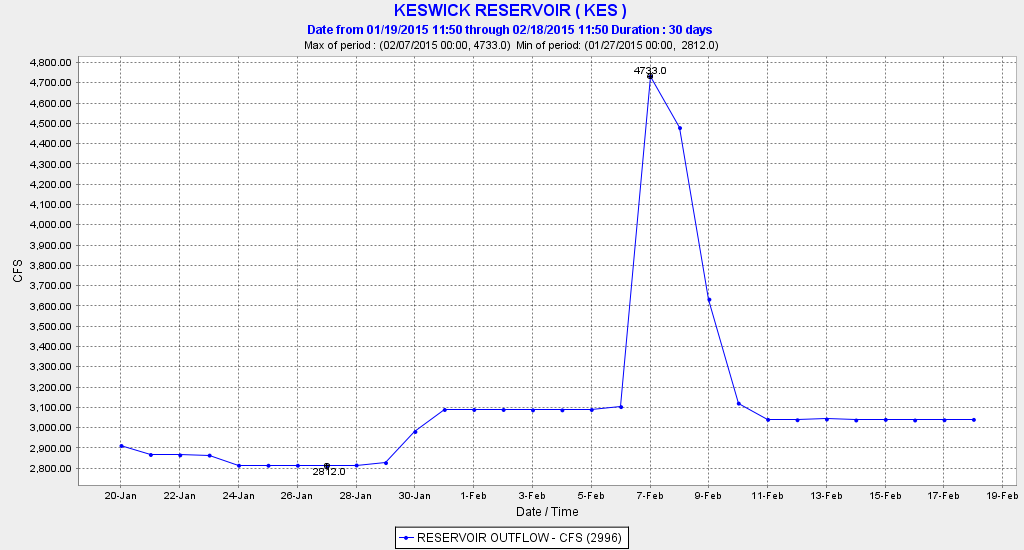
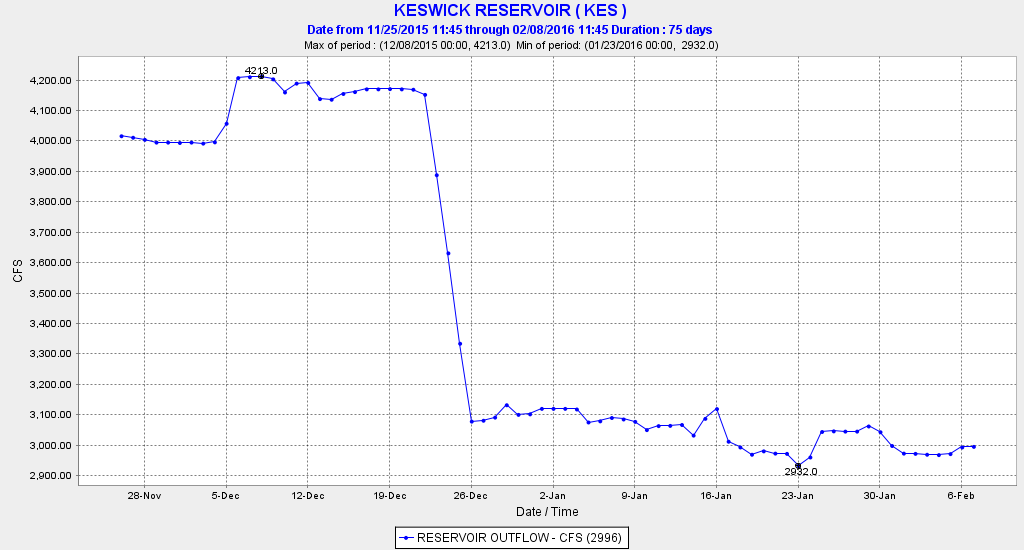
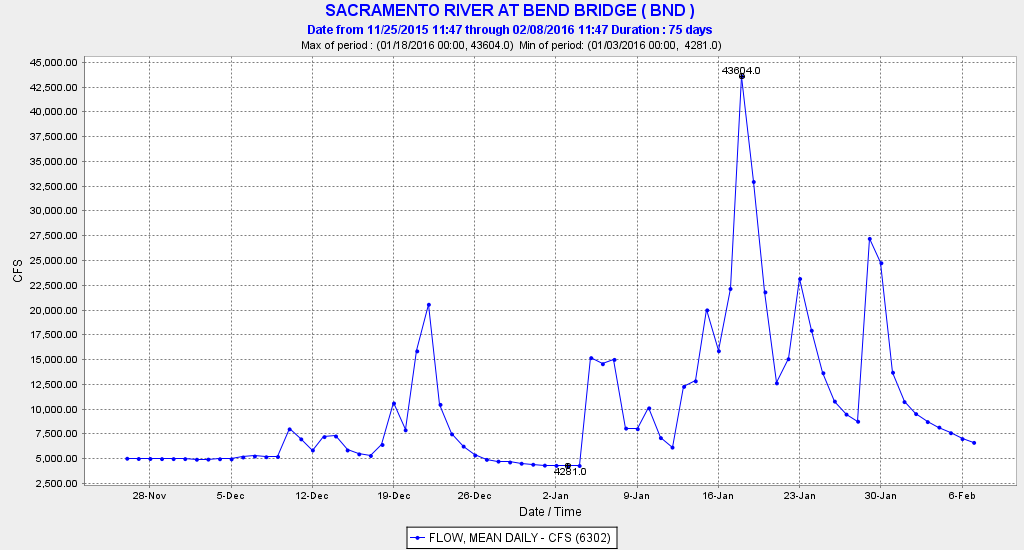
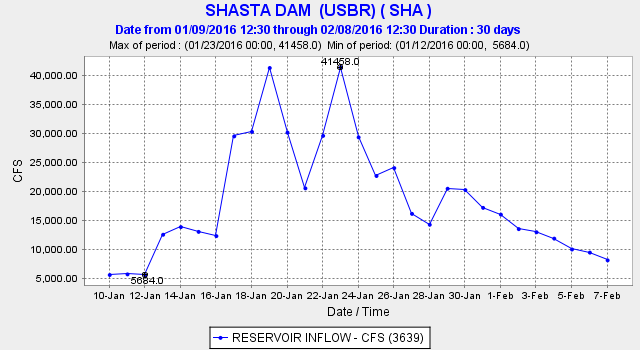
Last year Reclamation released some water from Shasta for the “event” (Figure 1). This year there was no such an “event” (Keswick release) (Figure 2). The real question is whether they missed the “real” flow event in January (Figure 3) when storm flows from Cow, Cottonwood, and Battle Creeks downstream of Redding brought flows near Red Bluff to 10,000-40,000 cfs. Why didn’t Reclamation and the Service coordinate release of water from Keswick and the salmon smolts at Redding in late January? Shasta inflows in January reached 40,000 cfs.(Figure 4.) Such a release would have also helped the wild salmon emigrate from their spawning reach at Redding to San Francisco Bay and the Ocean.

Keswick Reservoir releases into the upper Sacramento River near Redding in winter 2015

Figure 1. Keswick Reservoir releases into the upper Sacramento River near Redding in winter 2015.

Keswick Reservoir releases into the upper Sacramento River near Redding in winter 2016

Figure 2. Keswick Reservoir releases into the upper Sacramento River near Redding in winter 2016.

Upper Sacramento River flow near Red Bluff winter 2016

Figure 3. Upper Sacramento River flow near Red Bluff winter 2016.

Shasta Reservoir inflow during January storms

Figure 4. Shasta Reservoir inflow during January storms.

Shasta Spill Prescription to Benefit Wild Salmon

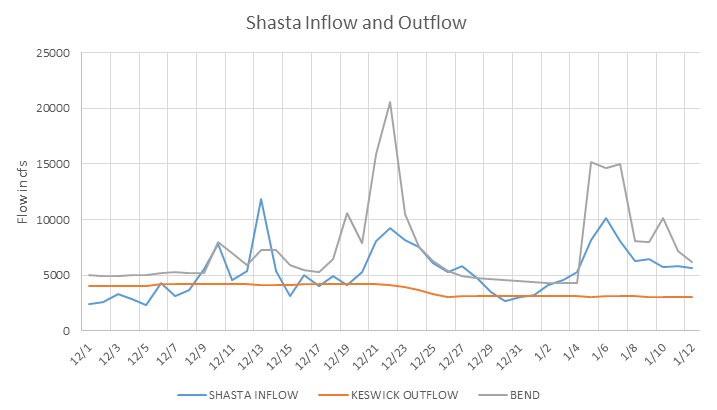
In recent posts I described the need for spill – releases from reservoir storage to increase the number of young salmon reaching the ocean.1 Last summer and fall, Sacramento River salmon were forced to spawn nearer Shasta Reservoir because of limited cold water releases to save reservoir storage in the ongoing drought. Instead of the normal 50 miles of cool water, the salmon only had 10 miles. This winter, the young salmon that spawned in the Sacramento River near Shasta and survived now have to contend with minimum Shasta releases, since most of the reservoir inflows are being stored for future water supply. The winter flow pulses that stimulate emigration and carry the young salmon 300 miles to the lower river, Delta, Bay, and ocean are missing from the spawning reach below Shasta (see Keswick Outflow in chart below).

In contrast, millions of Battle Creek hatchery salmon released 30 miles below in the Sacramento River have the advantage of local inflows from un-dammed tributaries (Bend flows in the chart) to carry them to the ocean. (Note: hatchery fish releases are often timed to flow pulses.2) From the chart below you can see that these inflows have actually been higher than releases from Shasta Reservoir.

In the previous posts I had suggested spills (releases) of 5-10 % of reservoir inflows to increase salmon survival in the current drought. So far this winter, a reasonable prescription would have been several days of 500 cfs spill each time reservoir inflow approached or exceeded 10,000 cfs. A 500 cfs spill would represent a 12-15% increase in streamflow to stimulate emigration of young salmon downstream into the higher flow reach of the river. This would certainly qualify as an adaptive management experiment to help improve survival of endangered salmon in the Sacramento River.

Graph of Shasta Inflow and Outflow

Inflow and outflow from Shasta Reservoir in December 2015 and early January 2016. The Bend Bridge gage is on the Sacramento River near Red Bluff, CA, approximately 30 miles below the Keswick Dam gage. Sacramento River flow at Bend Bridge includes the inflow from Cow, Clear, Cottonwood, and Battle creeks.

  1. http://calsport.org/fisheriesblog/?p=558
  2. Hatchery Winter Run salmon smolts from the Livingston Stone Hatchery are generally released near Redding in the low flow reach below Keswick Dam. They too would benefit if their release was timed with spills.

Cease and Desist DWR! – January 7, 2016

DWR – It just started raining and you already ramped up Delta exports again despite all the salt water and the risks to endangered Winter Run salmon and Delta Smelt. I recently suggested “Whoa,”1 as did Smelt Working Group. At least wait until the runoff from the storm hits the Delta.

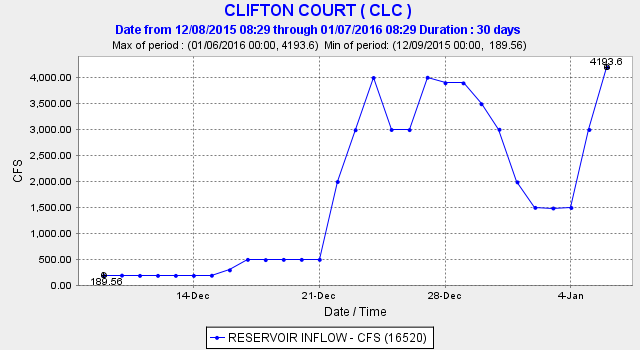
The Smelt Working Group concluded on December 30: “The Working Group reviewed Delta Smelt distribution conditions. The working group concluded that entrainment risk has increased. This is based on fish distribution combined with increased water exports, but the group provided no recommendation for a change in water export reduction for either Delta Smelt or Longfin Smelt. This decision was based on the projected decrease in OMR flows from -5600cfs today to -2100cfs on Monday, 1/4. The group will be monitoring conditions closely over the next several days.” But no sooner had January 4 arrived than exports jumped sharply to even higher than the late December level (Figure 1), despite all the early warning signals brought up by the Working Group2.

Graph of Clifron Court Exports

Figure 1. State Water Project Delta exports at Clifton Court Forebay in past month.

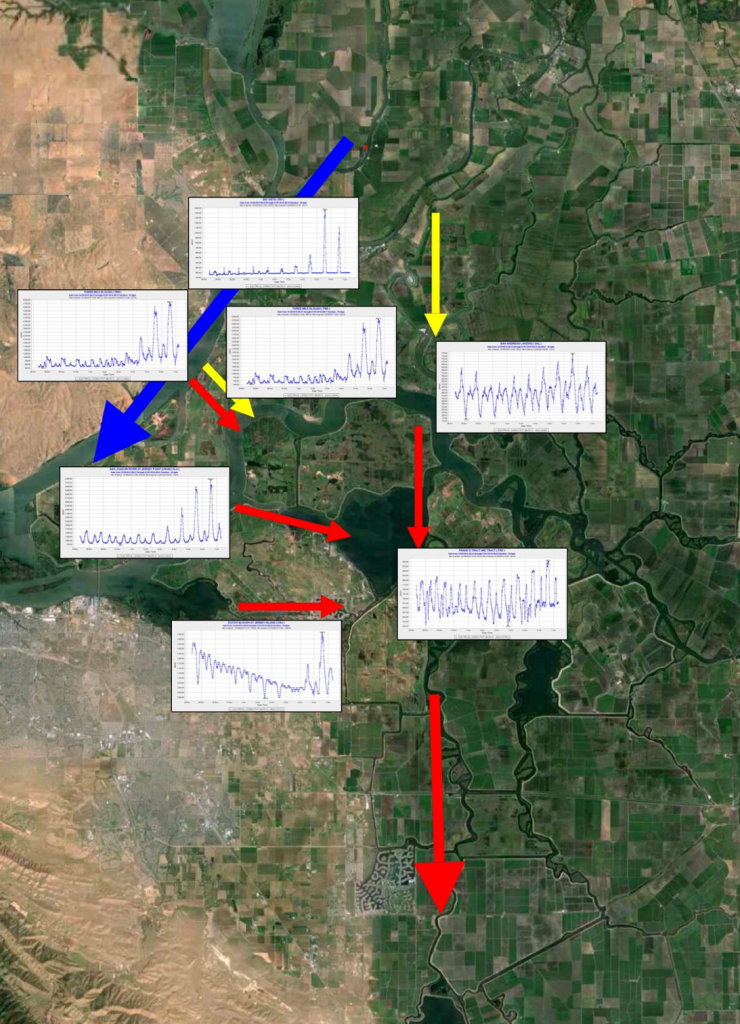
The higher exports, in combination with spring tides, have pushed the Low Salinity Zone further east and south into the Delta (Figure 2). (Note: the ten-day charts readily depict recent increased salinity.)

Aerial map of salinity in Delta

Figure 2. Aerial photo with salinity levels (charts of EC), freshwater inflow (blue arrow), negative net inflows of brackish water (red arrows), and route taken by juvenile Winter Run salmon (yellow arrows). Clifton Court at bottom center.

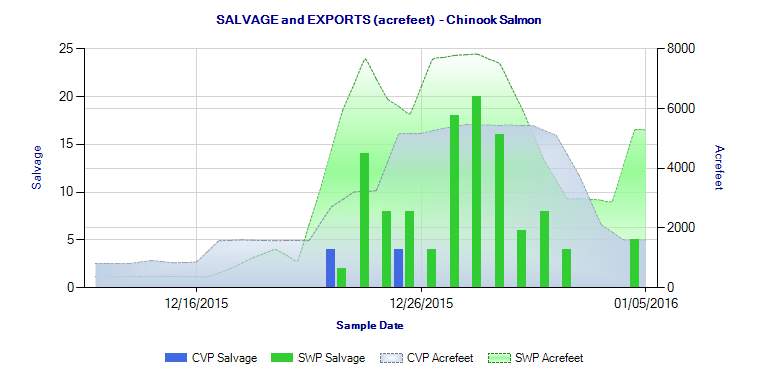
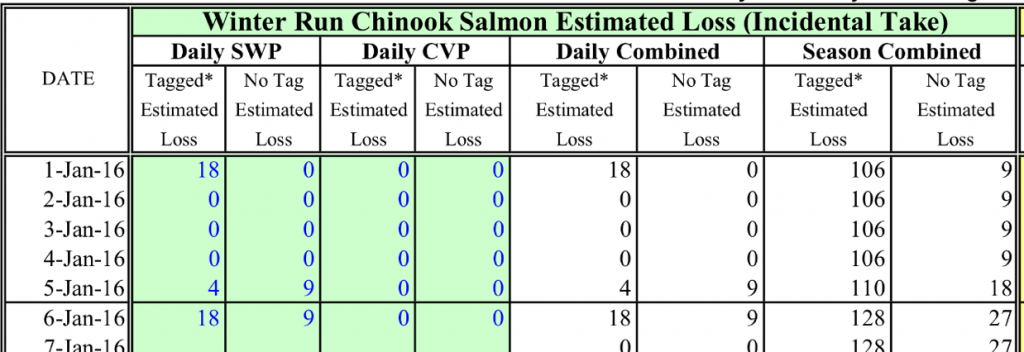
Perhaps more ominous is the increase in salvage of Winter Run salmon (Figures 3 and 4). Twenty-seven were salvaged on 1/6. Given poor salvage efficiency (near 10 % in forebay alone) and the likely presence of many Winter Run trapped in the central and south Delta, as well as the desperate state of the Winter Run population, this is no time to be increasing exports. Where is the Salmon Working Group? This is serious “take”; authorized or not, NMFS should be doing something.

Graph of Salvage of Winter Run

Figure 3. Salvage of Winter Run at south Delta fish facilities. (Missing from this graph is 1/6 salvage that is depicted in Figure 4.) Source: http://www.dfg.ca.gov/delta/apps/salvage/SalvageExportChart.aspx?Species=1&SampleDate=1%2f2%2f2016&Facility=1

Table showing the Salvage of Winter Run

Figure 4. Salvage of Winter Run salmon at south Delta fish facilities 1/1-1/6 2016. Source: http://www.usbr.gov/mp/cvo/vungvari/salmondly.pdf

Whoa on the Delta Exports DWR

The California Department of Water Resources (DWR) and the US Bureau of Reclamation (USBR) recently raised south Delta exports from 800 cfs (12/15) to 6,700 cfs (12/29). Delta outflow of freshwater has declined from 27,000 cfs (12/25) to 5,300 cfs (12/29) in just four days. Though these conditions are allowed in Delta standards, the standards must be changed.

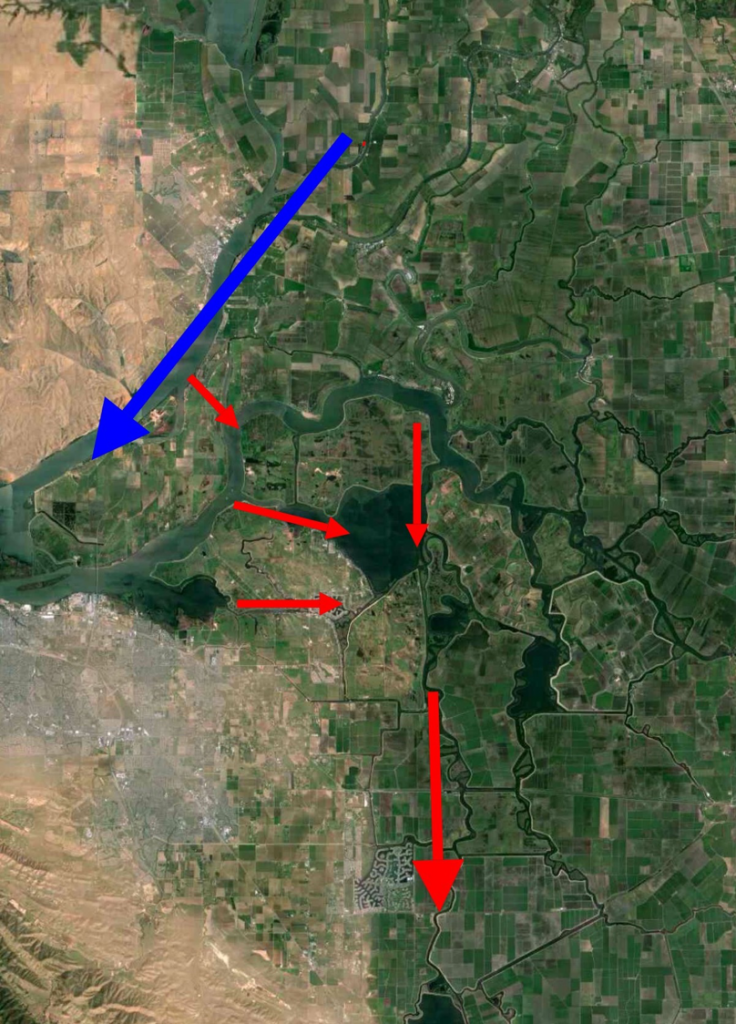
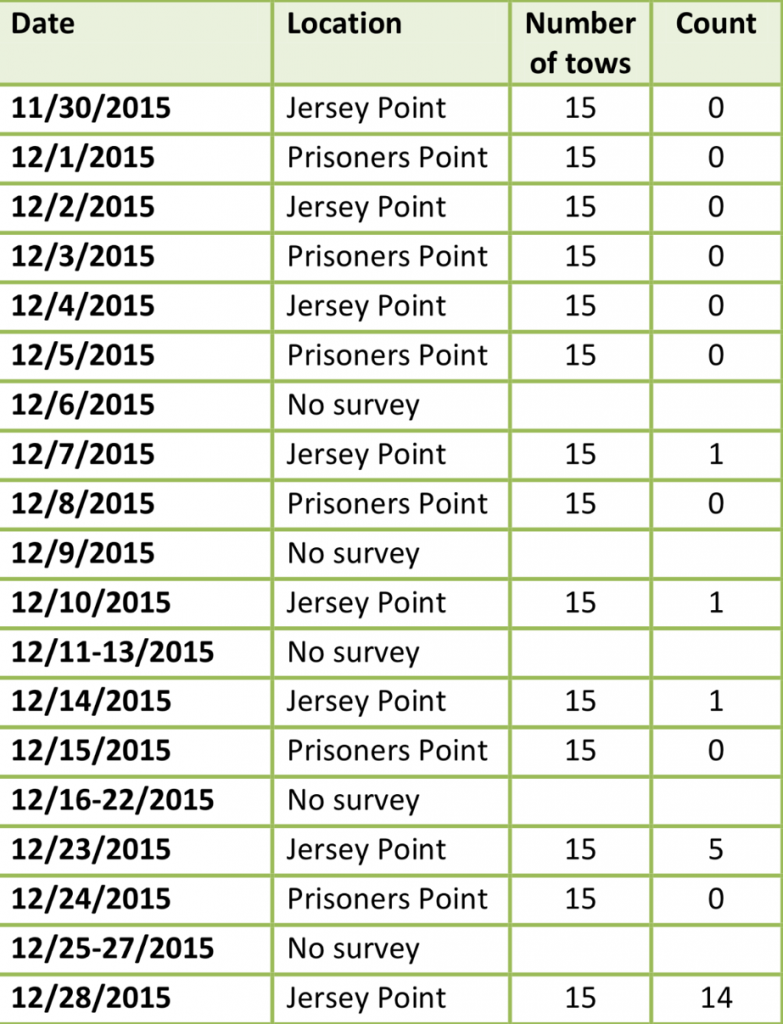
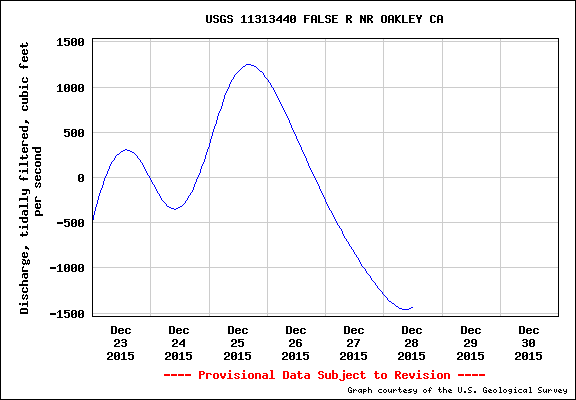
Under these conditions, with the Delta Cross Channel gates closed (per standards), water is pulled from the central and west Delta toward the south Delta export pumps (Figure 1). The problem is that remnants of the Delta smelt population have moved into the west and central Delta on their annual winter spawning migration, as shown in early warning surveys at Jersey Point (Figure 2). Negative net flows (Figures 3-6) draw fish to the pumps and disrupt the salinity field and Low Salinity Zone. Exports also continue to take brackish water (Figure 7) – not good for fish, crops, or humans. They also take juvenile salmon emigrating through the Delta (Figure 8).

Map of Delta Flows Dec 2015

Figure 1. Delta net flow patterns in late December 2015 – positive (blue arrow) and negative (red arrows).

Graph of False River Flows

Figure 3. False River (middle left red arrow in Figure 1) net flows have turned negative with lower Delta outflow and higher exports.

Graph of Three Mile Slough flows

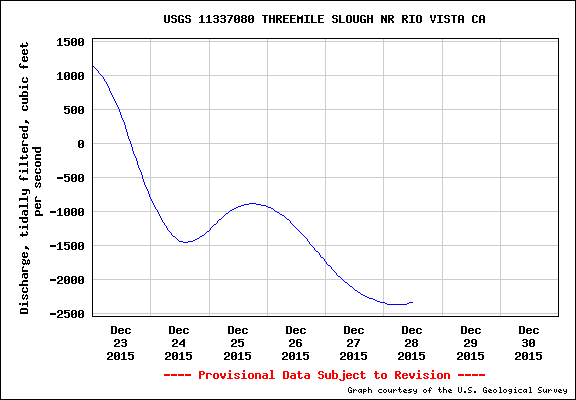
Figure 4. Three Mile Slough (top left red arrow in Figure 1) net flows have turned sharply negative with higher exports.

Graph of Jersey Point flows

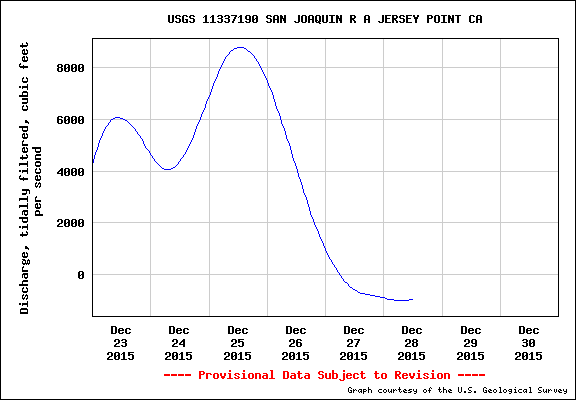
Figure 5. Jersey Point (left end of middle left arrow in Figure 1) net flows have turned negative with higher exports.

Graph of Old and Middle River Flows


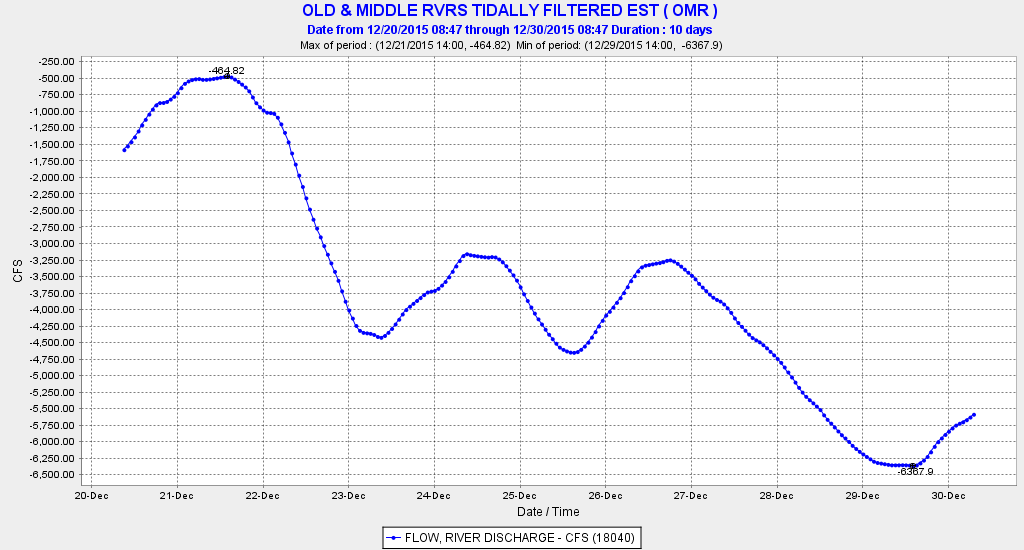
Figure 6. Net flow in Old and Middle Rivers in south Delta (large lower right arrow in Figure 1) has turned sharply negative with higher exports.

Graph of EC at Clifton Court

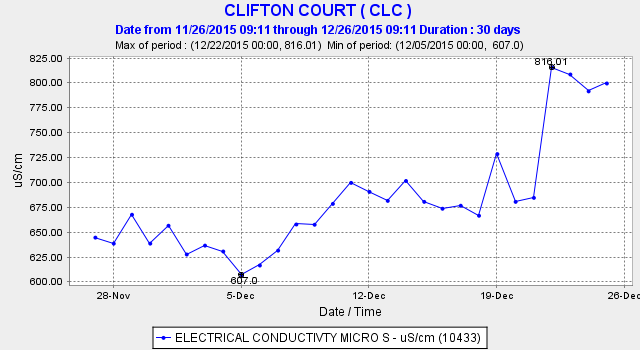
Figure 7. Salinity levels (EC) in Clifton Court Forebay in December 2015.

Graph of Chinook and Exports

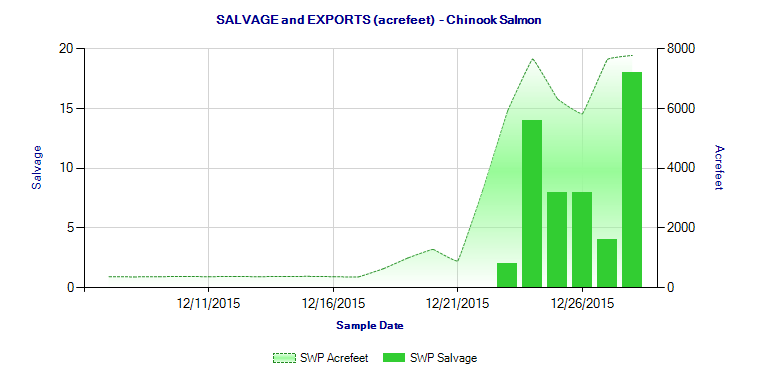
Figure 8. Salvage of Chinook salmon and export rate at Clifton Court Forebay in December 2015. Many of these salmon are likely endangered Winter Run and Spring Run.

Salmon Rescue in Yolo Bypass

A December 23, 2015 article in the Sacramento Bee1 describes salmon rescues occurring in the northern Yolo Bypass near the outlet of the Knights Landing Ridge Cut. The online SacBee article provides a video of the trapping and hauling process. I posted earlier about the stranding of salmon in the Bypass.2

It is encouraging that the California Department of Fish and Wildlife is addressing the immediate situation and that this effort is getting coverage in the press. However, the SacBee article contains several misconceptions about the problem:

  1. “Salmon are having problems with the drought identifying which route to go right now.” This problem is by no means unique to the drought. This stranding problem is far worse in wetter years when higher flows into the Yolo Bypass and Colusa Basin Drain attract far more salmon (and steelhead and sturgeon).
  2. “Beginning in 2013…” – the problem has been known for many decades.
  3. “That spring, biologists discovered that some 600 endangered winter-run salmon had gotten trapped 70 miles off course in the Colusa Basin Drain system” – the estimate was very rough, given that the agencies acknowledged the problem late in spring and surveyed only a few areas of the Colusa Basin. In addition, they were unable to count all the fish concentrations and to identify the genetics of all the fish.
  4. “Although conservationists captured and returned many of the fish to the river” – though the effort was commendable, many of the stray fish were not captured and returned.
  5. “Since then, we’ve started building seasonally these traps that we can put in the channel to allow us to move them pretty efficiently” – when flows got high last winter in the Colusa Basin Drain, the trap was removed because it was ineffective. Many salmon passed the trap location (to die upstream in the Colusa Basin), and hundreds were stranded nearby and died (see photo below).
  6. “The traps are a temporary solution, but efforts are underway to permanently stop the fish from going off-course.” – The traps are better described as a Band-Aid than a solution. They do not work at higher flows when fish passage is greatest. Permanent solutions were prescribed in the 2008 National Marine Fisheries Service Biological Opinion for operation of the federal Central Valley Project and the State Water Project. If a permanent solution is in fact completed next summer as the SacBee article suggests, it can’t be soon enough.
Picture of stranded salmon

Salmon stranded at Knights Landing Ridge Cut Outlet in northern Yolo Bypass after high flows in December 2014.