The US Bureau of Reclamation is well on its way to failing to adhere to its 2026 Sacramento River Temperature Management Plan (TMP). The cold-water pool supply in Shasta Reservoir has fallen as low on this date in 2026 as it was in critical drought years 2015 and 2022 (Figure 1). Survival of winter-run Chinook salmon in the Sacramento River from brood years 2015 and 2022 was less than 5 percent because the cold-water-pool supply in Shasta Lake was exhausted before the end of summer. Reclamation is again creating similar conditions that threaten this year’s production onf winter-run and fall-run Chinook salmon in the upper Sacramento River below Shasta Reservoir.
The 2026 TMP proposed relaxing the requirements for salmon under the National Marine Fisheries Service’s (NMFS) 2024 LTO Biological Opinion for the Long-Term Operation (LTO) of the Central Valley Project and the State Water Project. Reclamation implemented TMPs under the LTO Biological Opinion in 2024 and 2025. 2024 and 2025 were similar water years that, like 2026, had above-average April storage in Shasta Reservoir. Part of Reclamation’s stated rationale is that 2026 had a low snowpack and thus a smaller cold-water pool in Shasta Reservoir.
Reclamation moved ahead with the 2026 TMP despite not receiving the approval of the State Water Board. The conflict with the Board is mainly over the target end-of-September (EOS) storage in Shasta Reservoir, with Reclamation planning for a 2.2 million acre-feet (MAF). The “Shasta Framework” in the LTO Biological Opinion calls for EOS Shasta storage of 2.4 MAF.
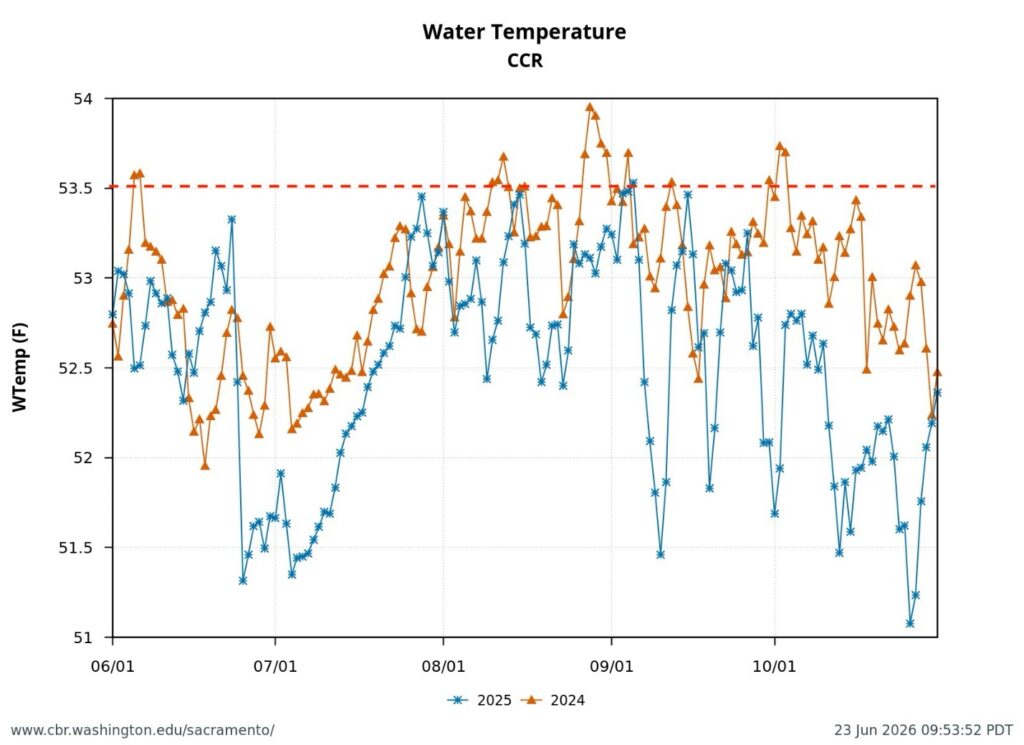
Also at issue is Reclamation’s ability to fulfill the TMP’s commitment to maintain a water temperature of 53.5°F at the Clear Creek gage near Redding through October 31 to protect salmon reproduction. Reclamation has achieved that temperature through July. A cooler than normal spring helped sustain the cold-water-pool supply. However, Reclamation is rapidly using up the cold-water pool by meeting high contractor water demands, by using cold water from Shasta to offset the import of warm Trinity-Whiskeytown water (about 15-20% of total Keswick Dam releases to the upper Sacramento River), and by maximizing peaking-power production at Shasta Dam.
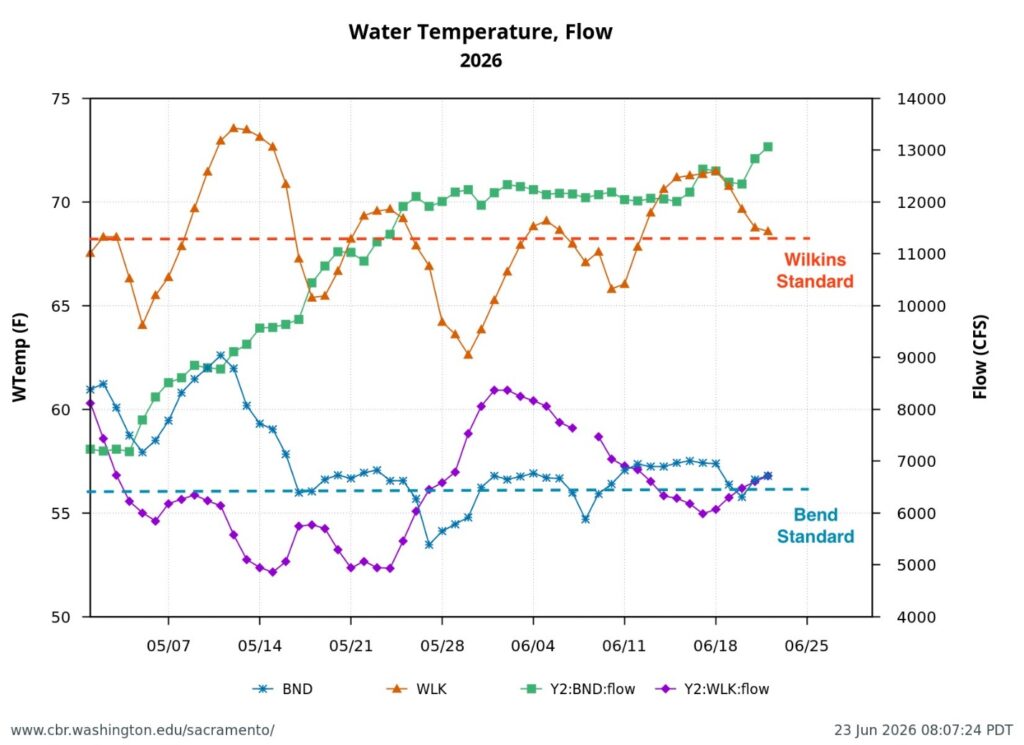
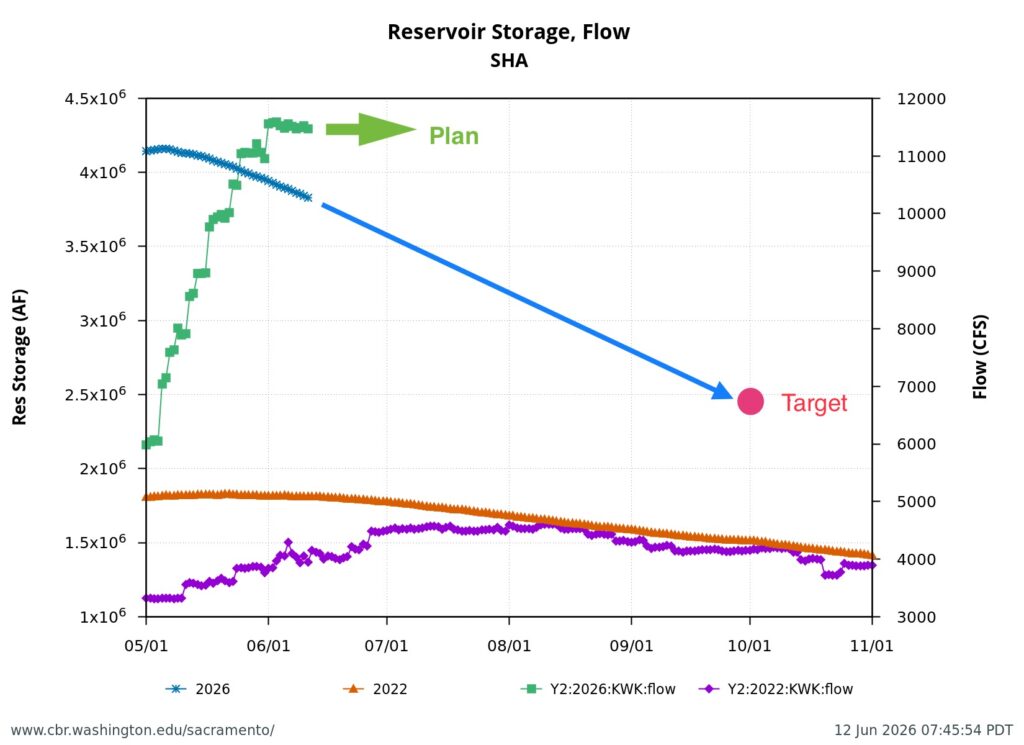
Keswick Dam releases in July are a steady 13,000 cfs, providing approximately 6,000 cfs of contractor demands and 7,000 cfs flows and 68°F target water temperatures in the lower Sacramento River (at Wilkins Slough gage above the mouth of Feather River). At that rate, EOS Shasta storage of even 2.2 MAF will be difficult to achieve without exceeding agreed-to water temperature conditions. Reclamation will prematurely exhaust Shasta’s cold-water pool (Figure 1). Target water temperatures in the lower Sacramento River will be exceeded, as in past years.
Comparison of 2026 with Water Years 2024 and 2025, and Drought Year 2022
At the beginning of spring 2026, there was less snowmelt and a smaller cold-water-pool volume in Shasta Reservoir than there had been in 2024 and 2025 (Figure 2). The spring cold-water-pool conservation period was warmer, but the cold-water release target nevertheless started promptly on May 15. It will continue through October 31, unless the cold-water pool is depleted in September or October, as occurred in 2024.
Reclamation’s 2026 TMP is comparable to water year 2020 TMP, a dry water year (Figure 3). In 2020, the EOS storage was close to the 2.2 MAF target, but Reclamation failed to preserve the cold-water pool. Beginning in September and lasting through November, Reclamation released water from Keswick Dam that exceeded the temperature target in the 2020 TMP. The failure to sustain the cold-water supply increased mortality during the spawning and early incubation season of the winter-run salmon (September-October) and fall-run salmon (October-November).
Summary
In 2026, Reclamation must at minimum immediately revise its TMP to include the following criteria:
- Reclamation must revise its present plan for contractor water deliveries. Otherwise, Reclamation will not meet temperature requirements to protect the salmon through the end of the irrigation season and beyond. Reclamation will have to reduce water deliveries to the 2020 levels or less to save the cold-water-pool supply and meet temperature criteria (Figure 4). The cold-water-pool supply in late July is at the drought year 2015 and 2022 level (see Figure 1), yet the Shasta Dam cold-water release is triple the 2022 level and double the 2015 level (Figure 5).
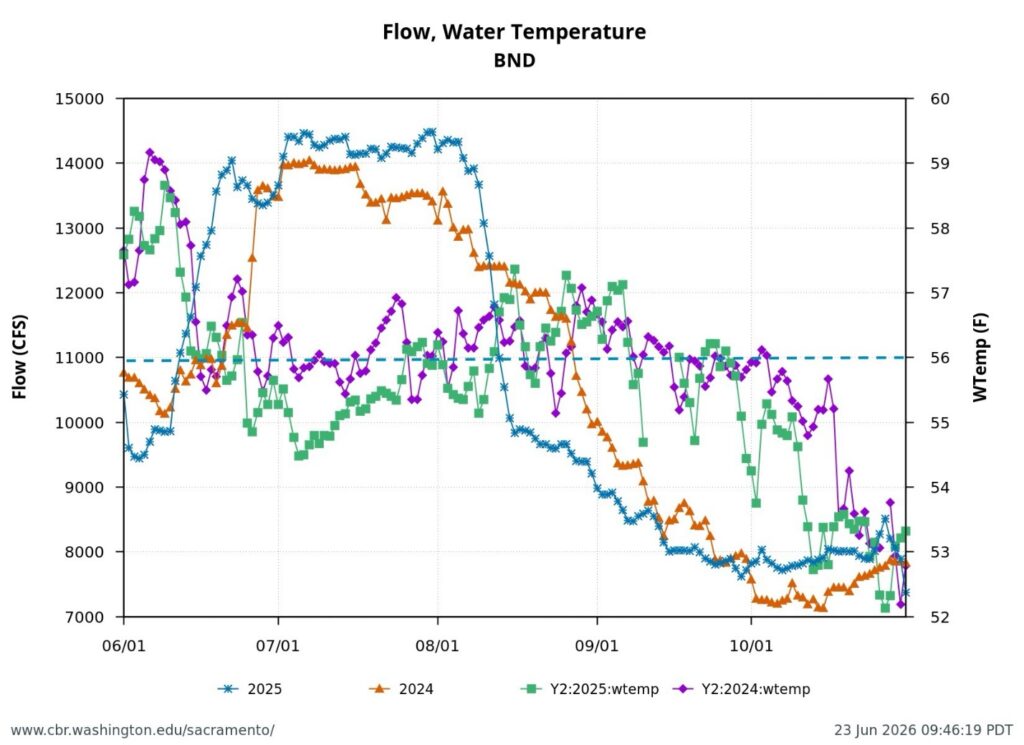
- Reclamation must maintain water temperatures at a maximum of 53.5°F and 56°F at the Clear Creek and Balls Ferry gages, respectively, through October.
- Reclamation must maintain maximum water temperatures of 68oF at the Wilkins Slough gage in the lower Sacramento River.
- Reclamation must meet a target Shasta Reservoir EOS storage of 2.4 MAF.
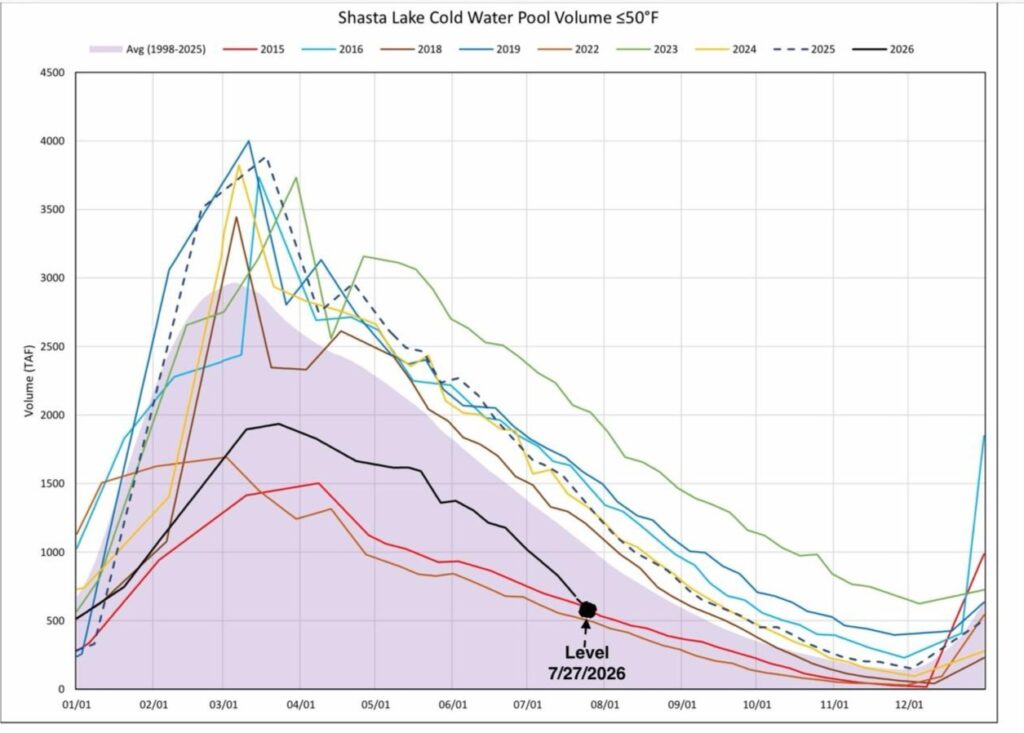
Figure 1.
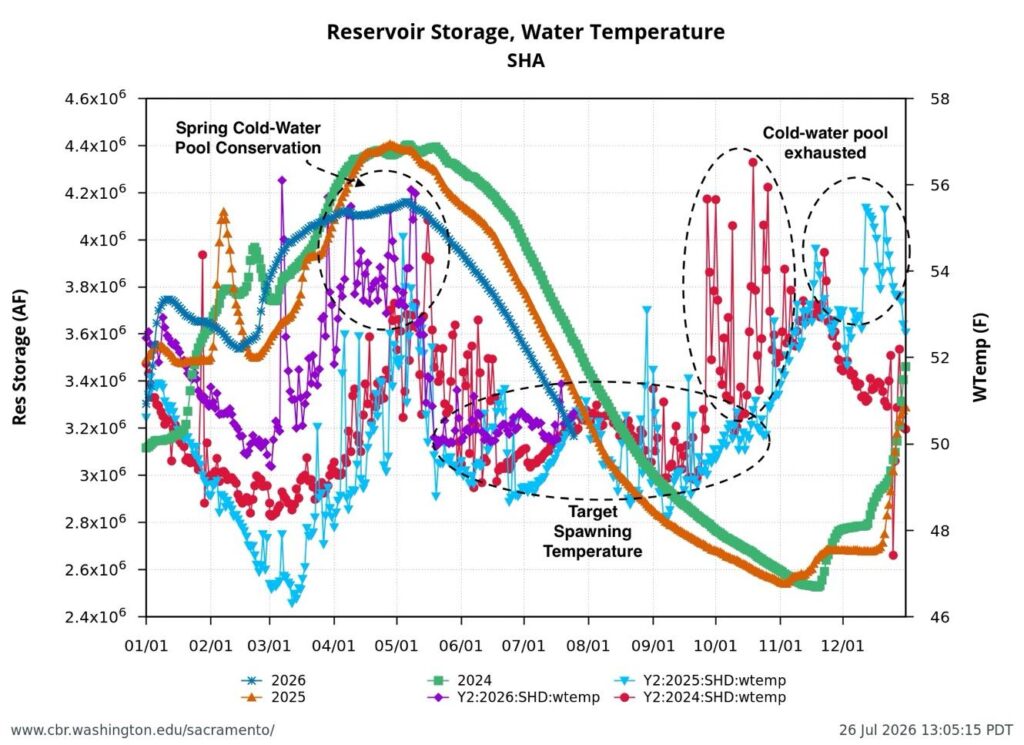
Figure 2. Shasta Reservoir storage and release temperature 2024-2026 with annotations.
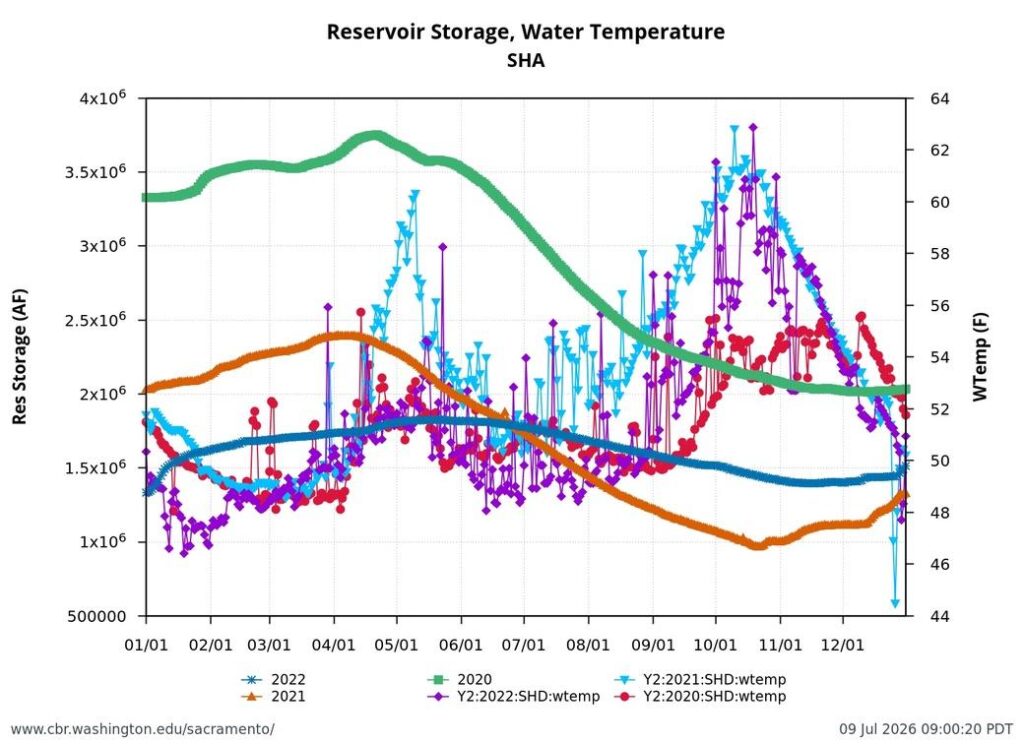
Figure 3. Shasta Reservoir storage and release temperature 2020-2022 with annotations.
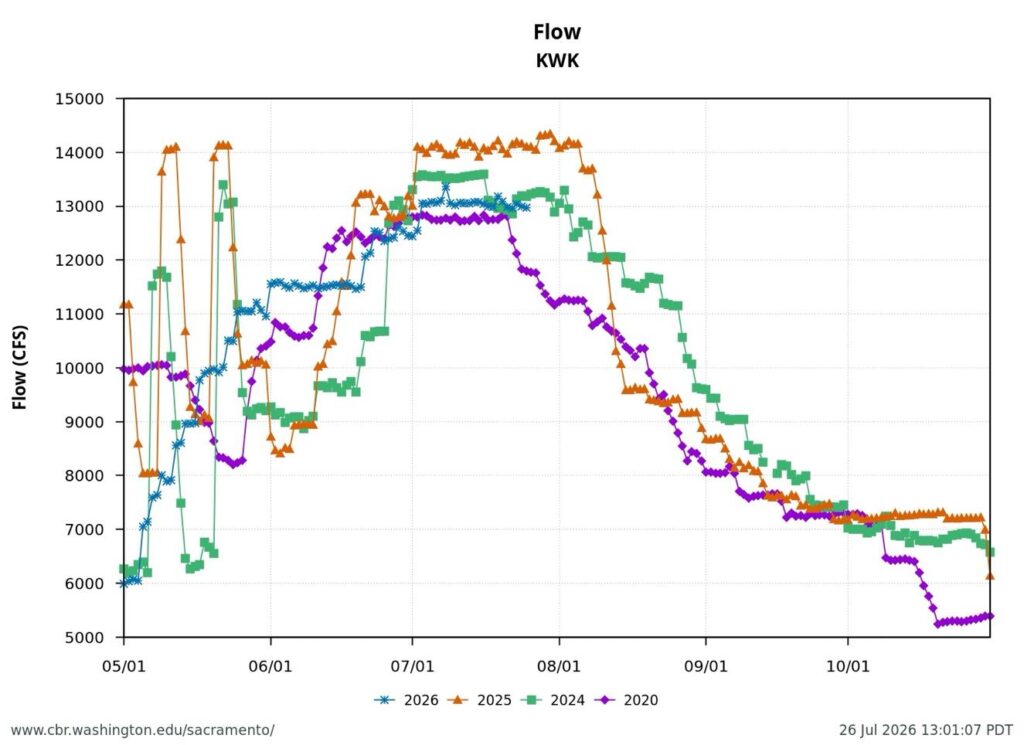
Figure 4. Keswick Dam releases (cfs) May-Oct 2020 and 2024-2026.
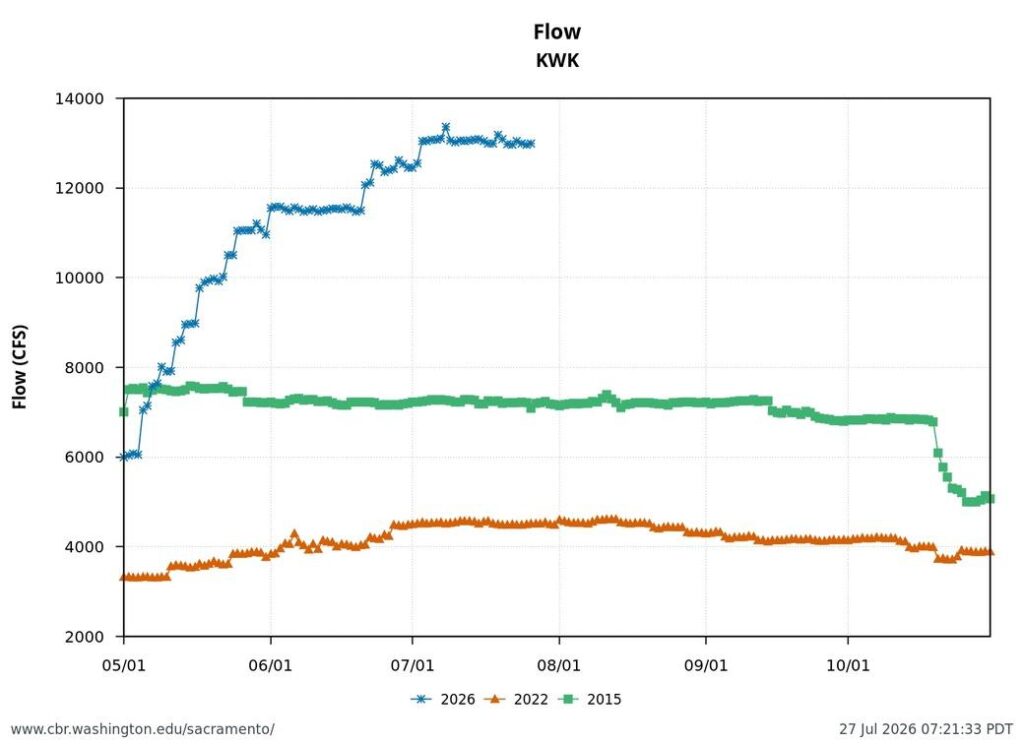
Figure 5. Daily average flow release (cfs) from Keswick Dam May-Oct 2015, 2022, and 2026.