May 2026 Blue Moon contributes to Poor Bay-Delta Habitat Conditions

This post is a follow-up to a prior post on early spring conditions in the Bay-Delta in 2026.

May 2026 featured five primary lunar phases, including two full moons. The first full moon (Flower Moon) peaked on May 1, followed by the third quarter on May 9, a super new moon on May 16, and the first quarter on May 23. The month closed with a second full moon (a micro blue moon) on May 31.

These phases of the moon worsened the consequences, for fish and water quality, of water operations by the Bureau of Reclamation.

First, the poor May Delta habitat conditions resulted from low Delta inflow – unusually low Sacramento River inflows to the Delta at Freeport (Figure 1). The low inflow, in conjunction with a late spring heatwave, led to high north Delta water temperatures (Figure 2).

Second, low Sacramento River flows and high water temperatures upstream of the Delta (Figure 3) also contributed to the poor Delta conditions.  Water temperature at Wilkins Slough reached daily-average 74oF mid-month, six degrees above the water quality standard, under flows less than 5000 cfs.

Third, the mid-month super new moon and end-of-month blue moon contributed to the higher river channel stages (Figures 4 and 5) in the north Delta that pooled the warm freshwater inflows and contributed to further warming during the late May “heatwave”.

Fourth, a consequence of the warming in the north Delta was warming in the west Delta (Emmaton, Figure 6) and eastern Suisun Bay (Collinsville, Figure 7).

The poor habitat conditions caused significant stress on late immigrating winter-run and spring-run adult salmon and late emigrating salmon smolts. The poor conditions also reduced the likelihood of successful reproduction for sturgeon and smelt..

The suboptimal habitat conditions observed in the lower Sacramento River, Delta, and Bay were preventable. The Bureau of Reclamation could have mitigated these conditions by maintaining Sacramento River flows within a 7,000–10,000 cfs range, north Delta Freeport flows between 15,000–20,000 cfs, and Rio Vista daily-average flow and Delta outflow at approximately 10,000 cfs (Figure 8).

An added 3,000–5,000 cfs (6,000–10,000 acre-feet per day) flow was needed in late May 2026 to avoid the poor conditions. That amount is approximately 2 to 3 percent of Sacramento Valley water project reservoir end-of-April storage, or about a quarter to a third of May water contractor deliveries.

On paper, Reclamation must manage the flows necessary to comply with water quality standards, water right permit requirements, and endangered species take permits. However, Reclamation’s adherence to these regulations has diminished significantly over the past twenty years.

More recently, Reclamation’s operations have become substantively worse for fish under its “Action 5” interpretation of the Biological Opinion for the Central Valley Project. Reclamation adopted Action 5 in December 2025, in response to the Presidential  Executive Order 14181 that requires federal agencies to “override existing activities that unduly burden efforts to maximize water deliveries.”
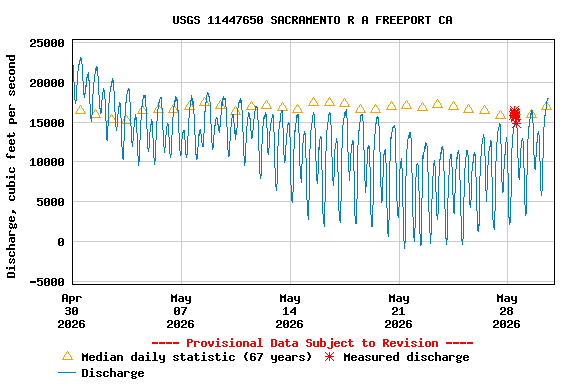
Figure 1. May 2026 Sacramento River hourly Delta inflow at Freeport gage. Also shown in daily average for prior 67 years. Data source: USGS.
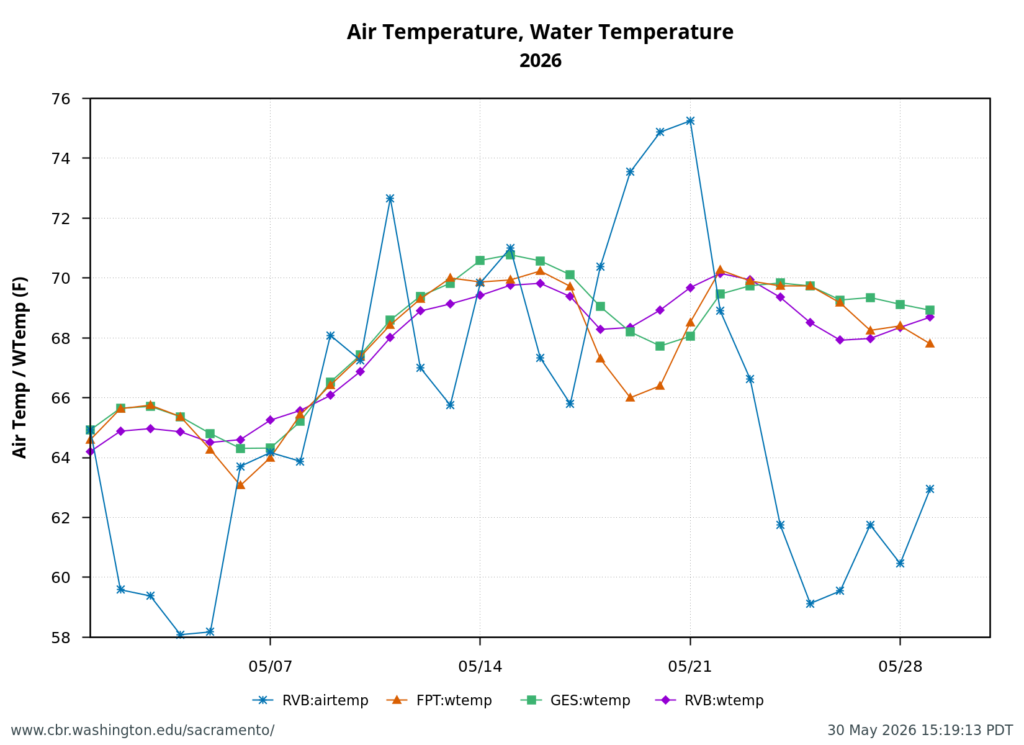
Figure 2. May 2026 air and water temperatures in the Sacramento River channel of the north Delta at Freeport (FPT), below the entrance to Georgianna Slough (GES), and the Rio Vista Bridge (RVB). Data source: CDEC. See map for locations.
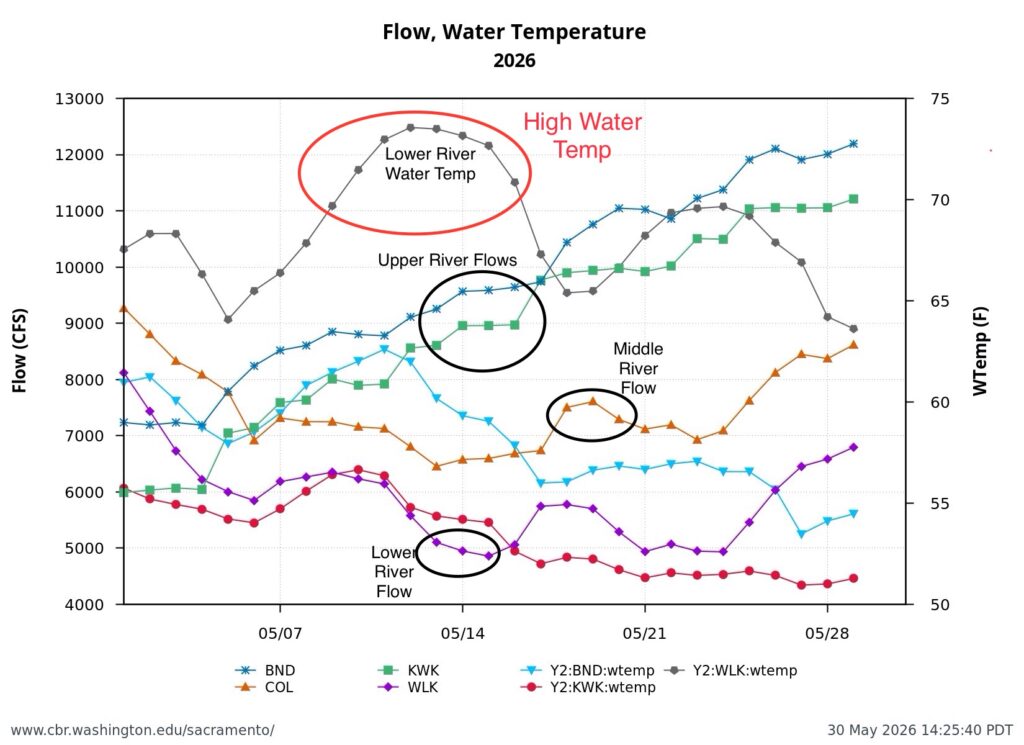
Figure 3. Sacramento River flow and water temperatures in May 2026 at Keswick (KWK), Bend (BND), Colusa (COL), and Wilkins Slough (WLK). Note the difference between upper and lower river flow is from 4000-5000 cfs, due to water contractor deliveries.
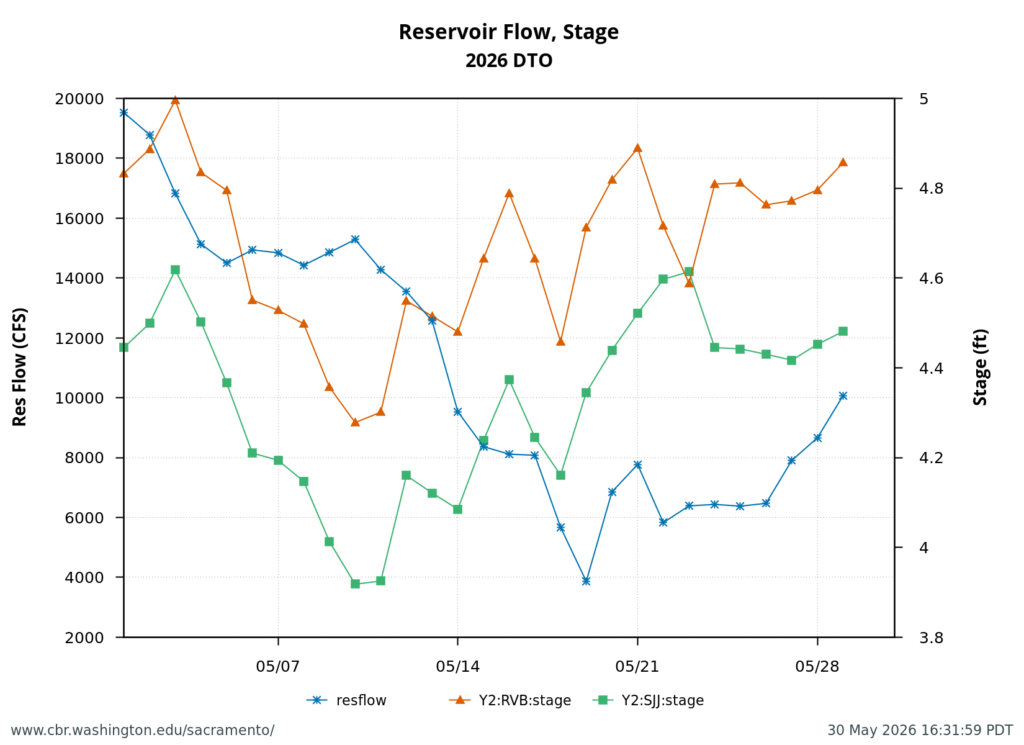
Figure 4. May 2026 Delta outflow (DTO) and average-daily river stage (water surface elevation) at the Rio Vista Bridge (RVB) and Jersey Point (SJJ). See map below for stage locations. Note mid-May decline in outflow and increase in stage occurred as a result seasonal tide changes – the result of the mid-May super new moon and the end-of-May blue moon.
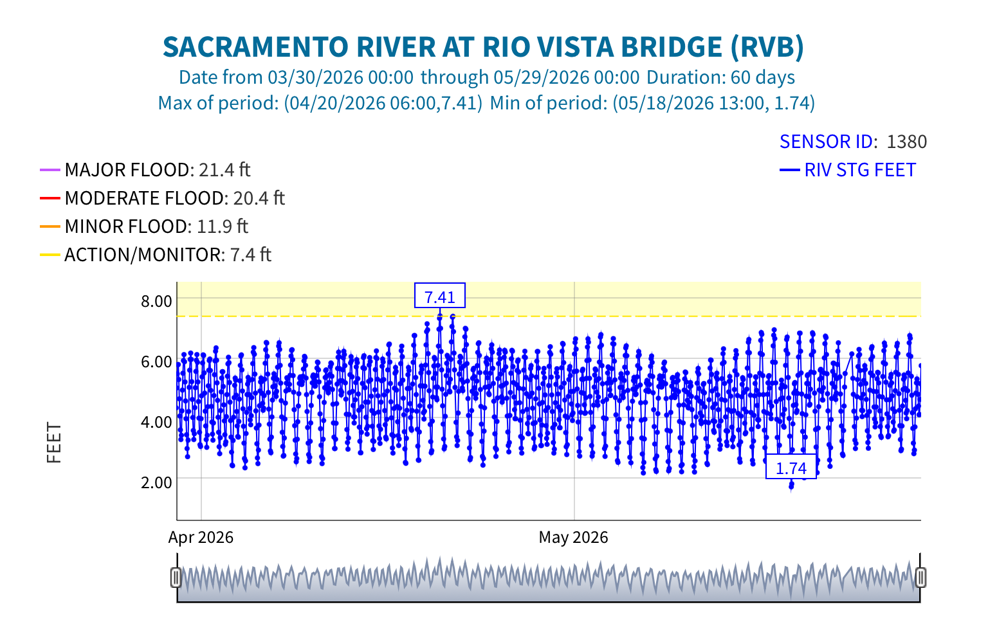
Figure 5. Hourly tide stage at Rio Vista Bridge gage in April-May 2026. Note peak stage (water surface elevations) were about ten days before the two May full moons (1st and 30th).
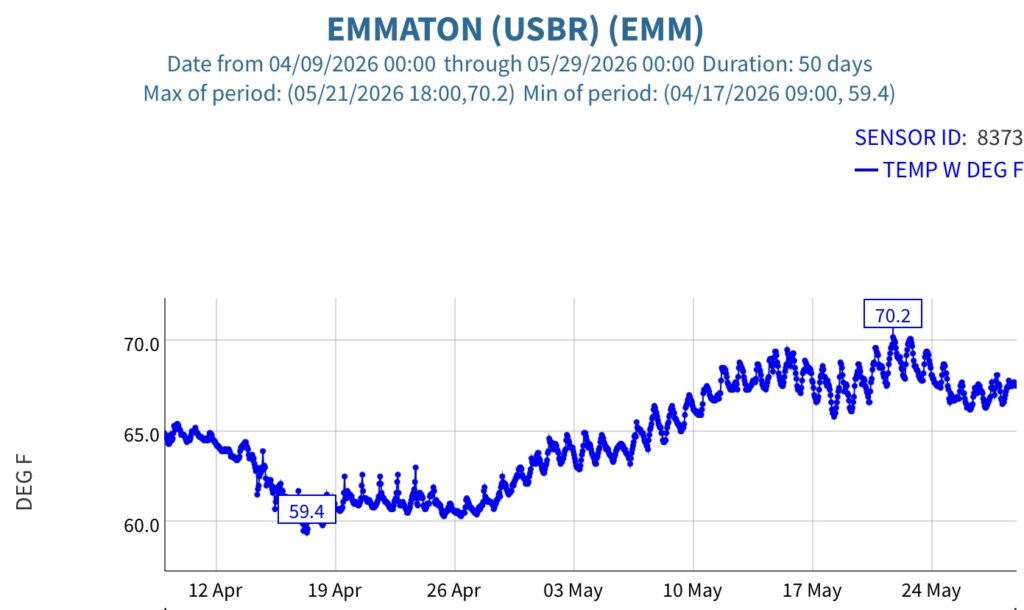
Figure 6. Sacramento River channel hourly water temperature at the Emmaton gage in May 2026.
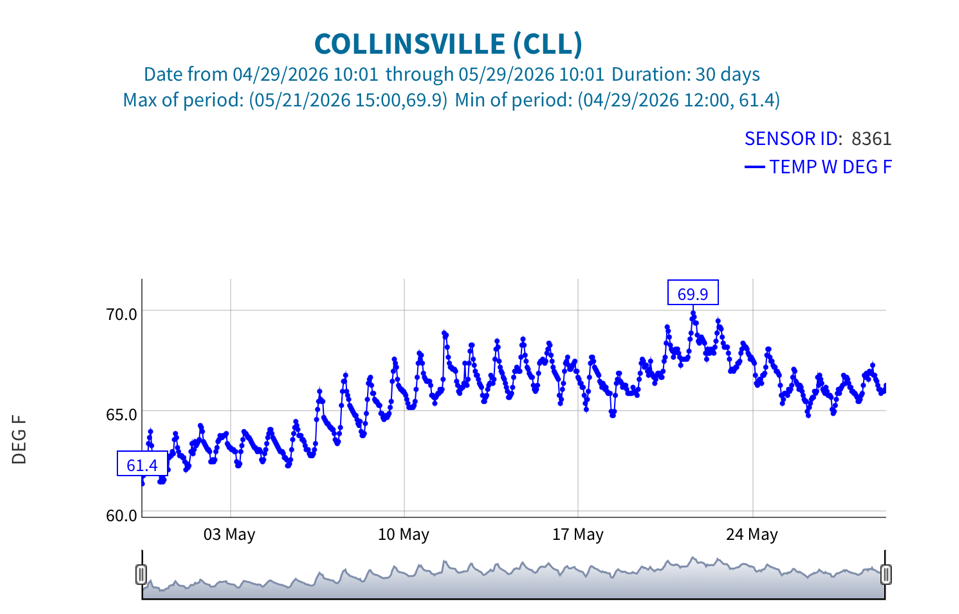
Figure 7. Sacramento River channel hourly water temperature at the Collinsville gage in eastern Suisun Bay in May 2026.
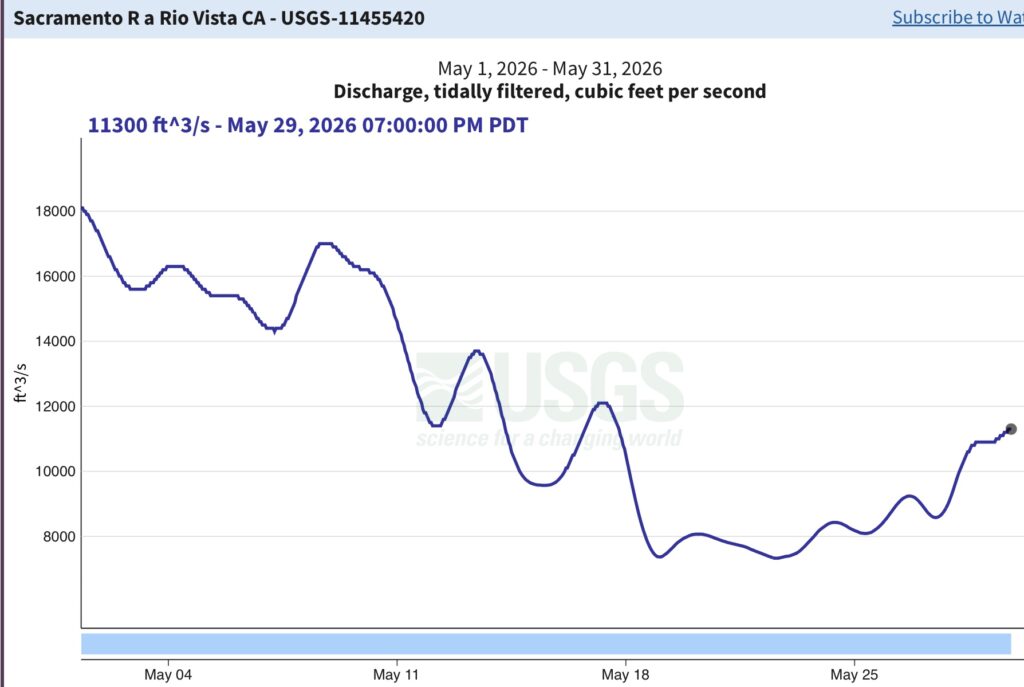
Figure 8. Daily average (tidally filtered) streamflow at the Rio Vista Bridge in May 2026.
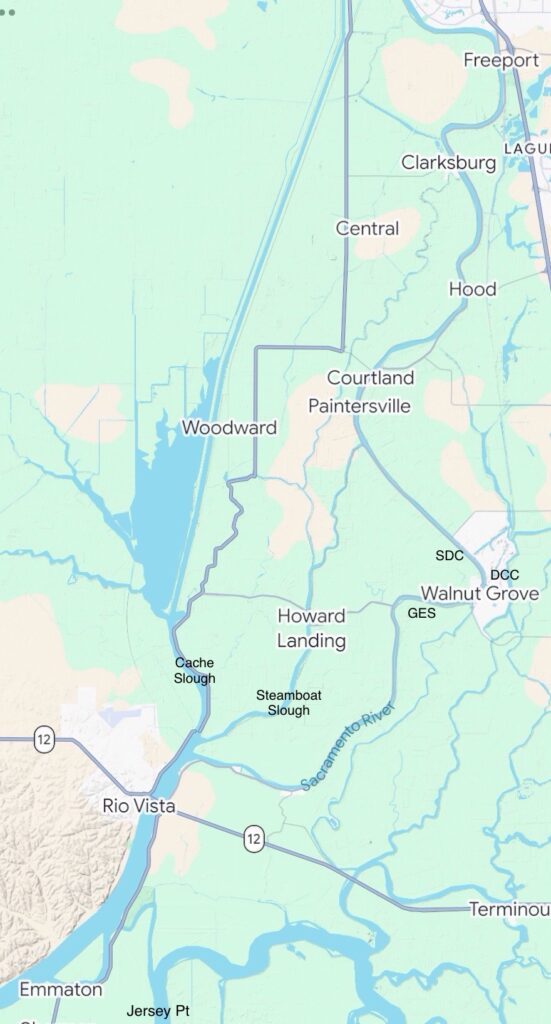
Map of North Delta and Sacramento River Channel
Flood Bypasses are Key to the Future of Wild Salmon in Sacramento River Valley Initial success of the Fremont Weir Big Notch

The Big-Notch Project at the Fremont Weir came online in late 2025. In this post, I describe events in December 2025 that provided improved access for juvenile salmon to floodplain habitat in the Yolo Bypass through that new Big Notch.

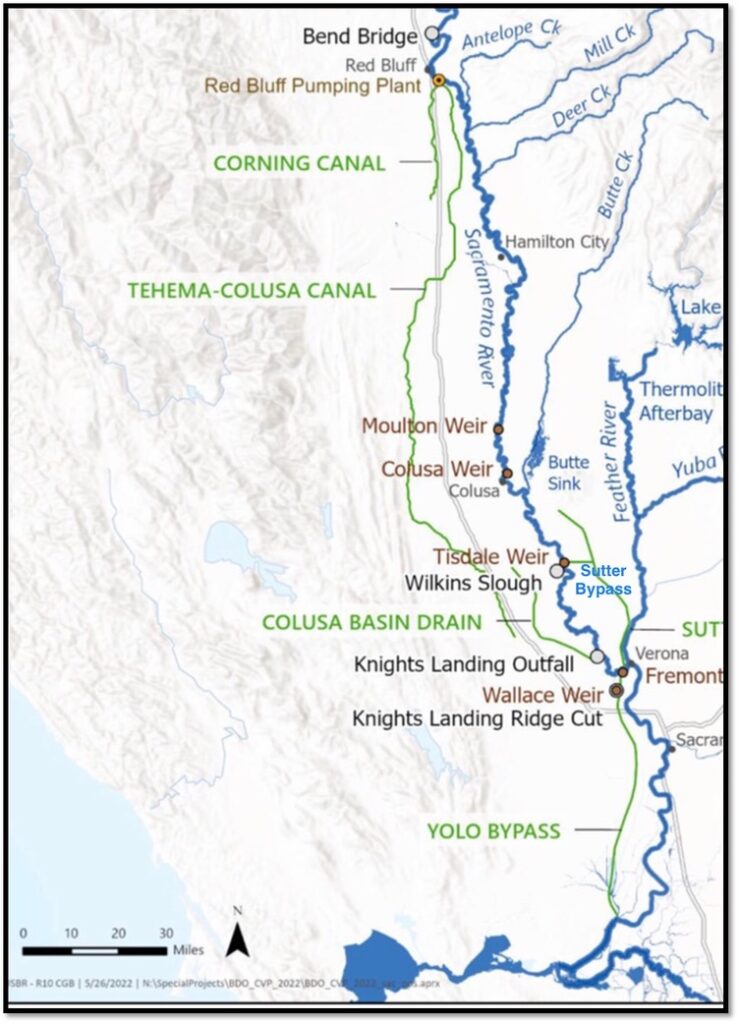
The goal of notch projects at the Fremont and Tisdale weirs in the Sacramento Valley is to create greater access to floodplain habitats for juvenile winter-run Chinook salmon, as well as fall-run and spring-run, in the upper Sacramento River Valley. The Fremont Weir project, completed in 2025, now improves access for salmon into the Yolo Bypass. The Tisdale Weir notch project, when completed, will improve access of upper Valley salmon populations into the Butte Basin and the Sutter Bypass floodplains.

Background on Floodplains and Butte Creek

The recovery and success of Sacramento River winter-run Chinook salmon is tied to floodplain rearing and smolt production in the wettest years. There is great potential improvement for the survival of endangered winter-run salmon by providing improved rearing access to the Sutter and Yolo flood bypasses.

The remarkable recovery of Butte Creek’s wild spring-run Chinook salmon at the turn of the 21st Century provides an excellent example.

The turnaround in Butte Creek followed a decade of restoration activity in the creek and its floodplain by the US Fish & Wildlife Service, the California Waterfowl Association, the Nature Conservancy, CalTrout, Friends of Butte Creek, duck clubs, rice farmers, and many other collaborators.1 The secret to the success was opening the Butte Basin and Sutter Bypass so that juvenile salmon could rear in the floodplain habitat in early winter. This led to accelerated growth and high survival, which in turn allowed early entry of smolts into the ocean by late winter and early spring.

How the Fremont Weir Big-Notch Project Worked in its First Year

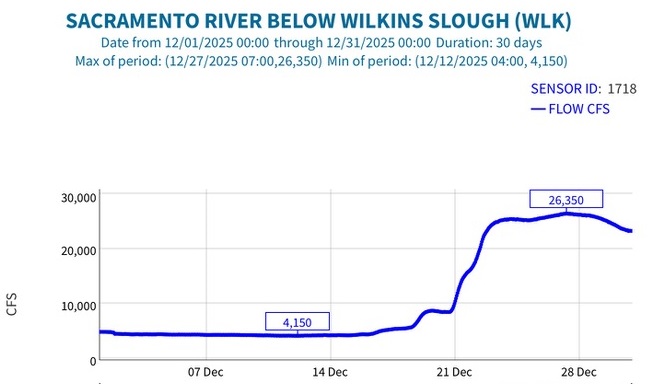
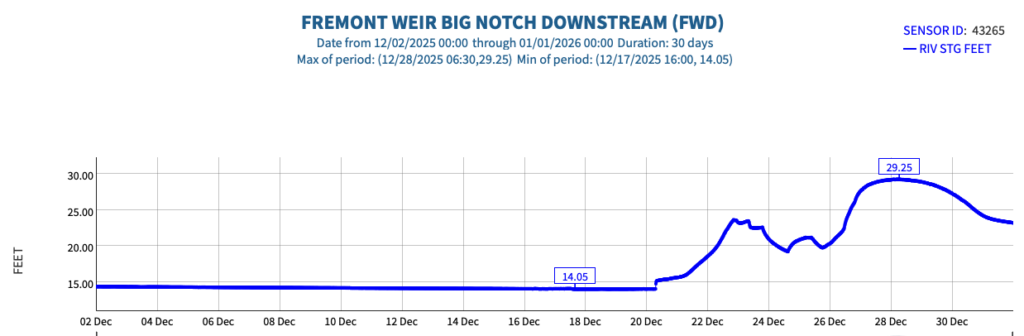
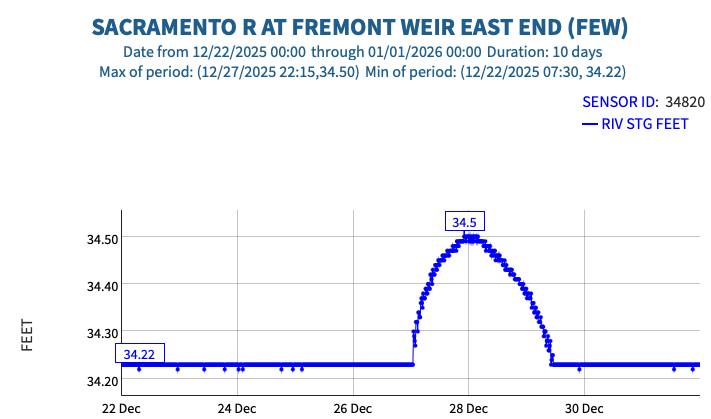
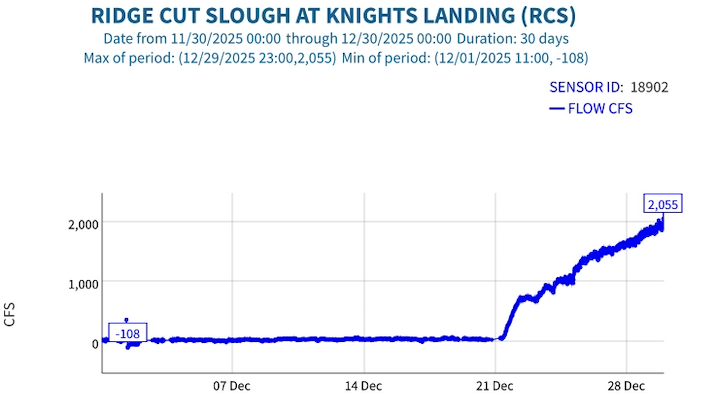
The first significant winter rains of 2025 brought a strong pulse of flow to the lower Sacramento River in late December (Figure 1). That pulse began entering the Big Notch at the Fremont Weir on December 21st (Figure 2). River flow (and flow exiting the Sutter Bypass) passed through the Big Notch through the end of December. River flow was only high enough to overflow the entire Fremont Weir on Dec 27 and 28 (Figure 3). Thus, most of the water flowing into the Bypass at the Fremont Weir passed through the Big Notch. Lesser but substantial amounts of warmer water also flowed into the north Yolo Bypass via the Knights Landing Ridge Cut (Figure 4).

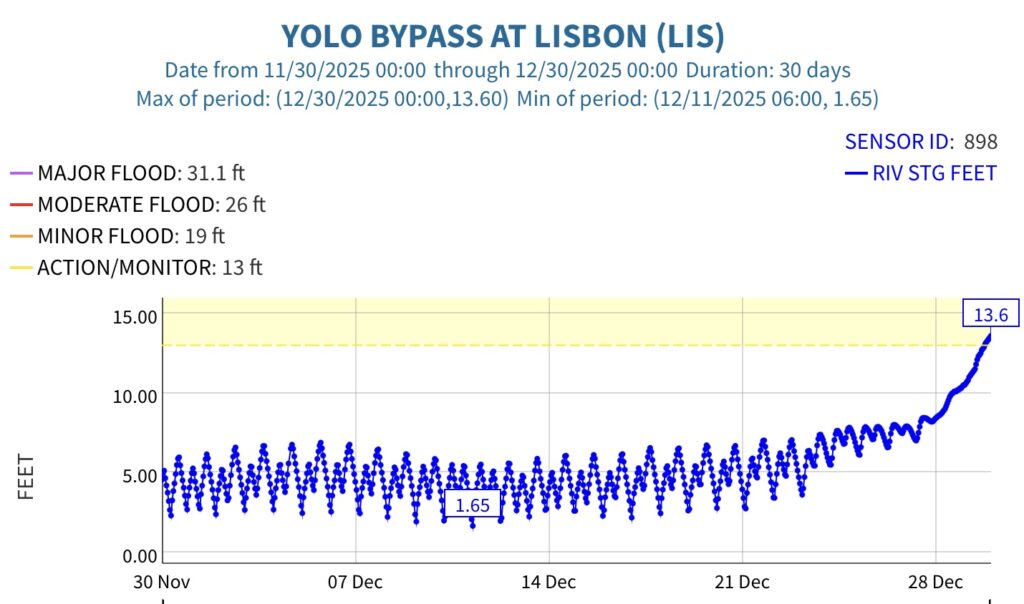
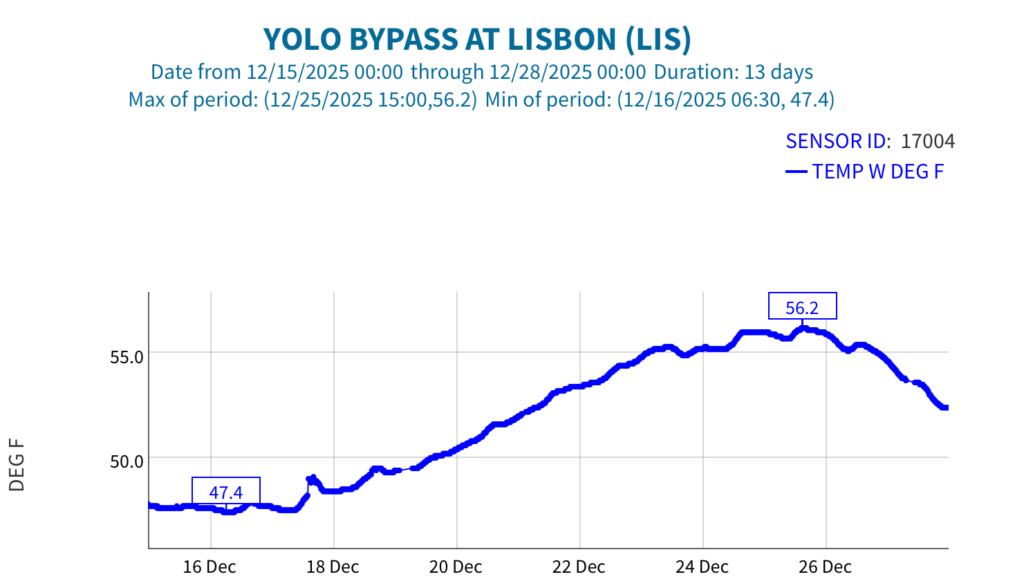
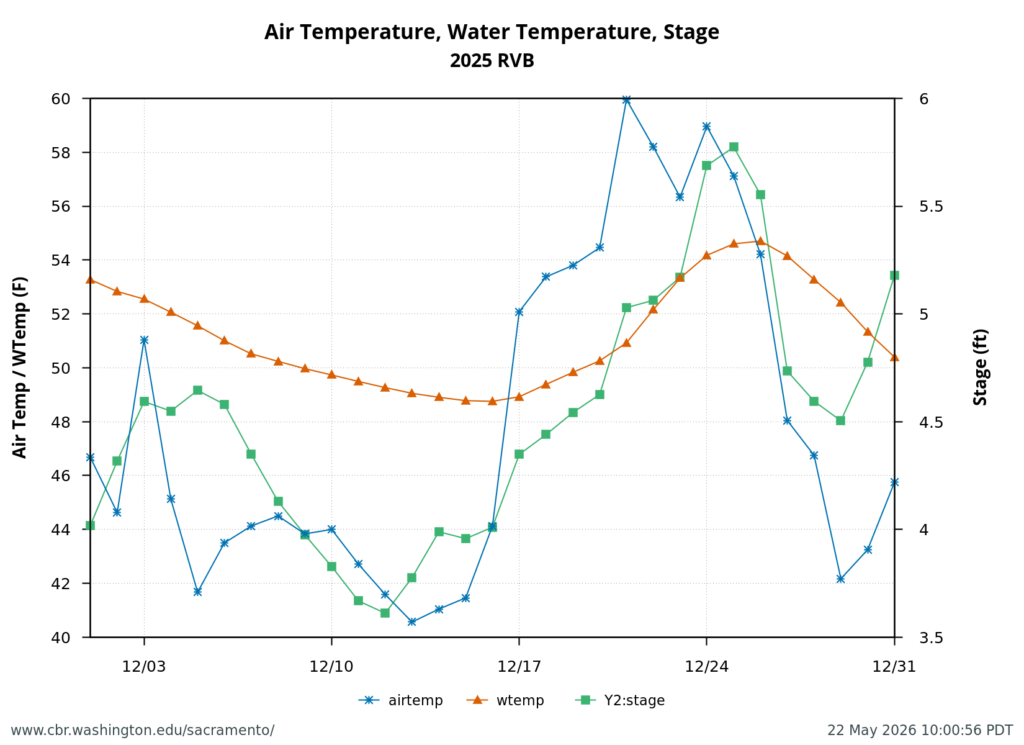
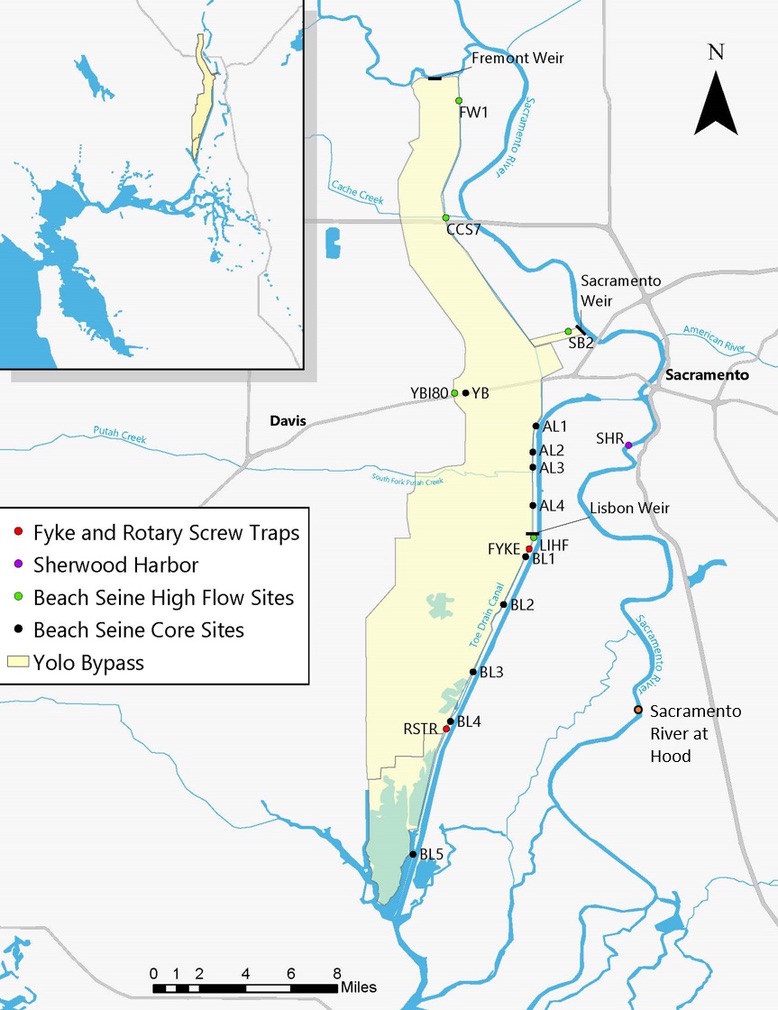
Overflows into the Yolo Bypass (also including the Sacramento Weir) rapidly fill the Bypass (see maps). The Bypass floods to depths of 8-10 feet (Figure 5). The slowing of flows and spread of shallow water leads to rapid warming (of the colder river water) in the flooded Bypass (Figure 6). The warming extends to the lower Sacramento River channel in the north Delta at the Rio Vista Bridge (Figure 7), downstream of the Yolo Bypass’s outlet.

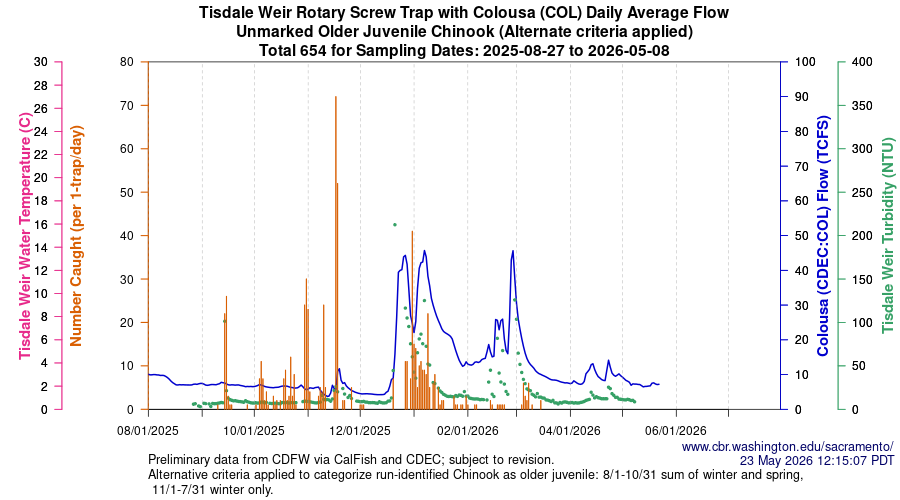
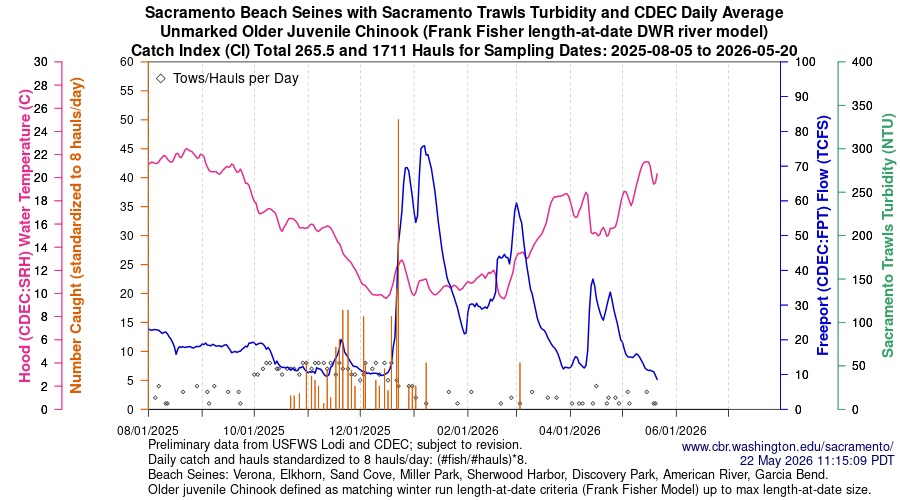
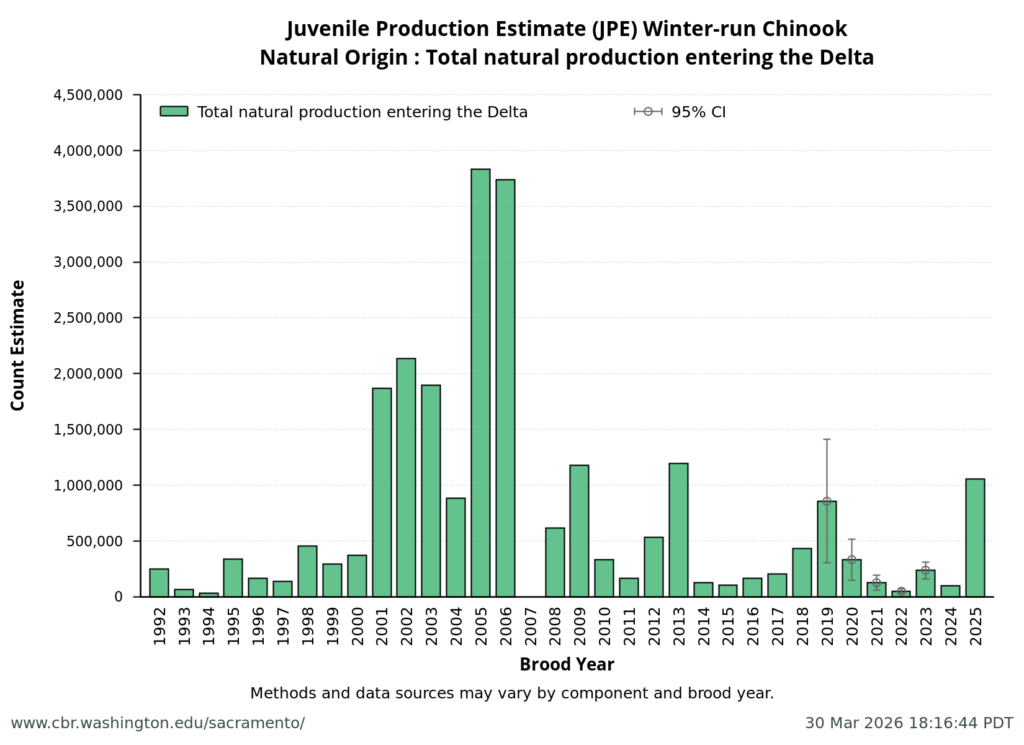
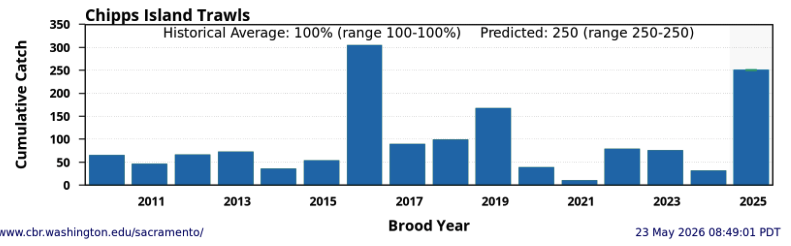
The warmer shallow Bypass habitats (optimal growth 52-56ºF) have high food production that supports increased growth and survival of juvenile winter-run emigrating to the ocean. Substantial numbers of juvenile winter-run salmon likely entered the Yolo Bypass during the December event through the new Big Notch (Figures 8 and 9).  The access to the floodplain habitat likely contributed to the higher winter-run smolt 2025 index of the winter-run Juvenile Production Estimate (JPE, Figure 10) and the annual Chipps Island Trawl Survey index (Figure 11). Winter overflows into the other flood bypasses and the relatively wet water year 2025 also contributed.

The Benefits of Notches in Flood Bypass Weirs

The principal benefits of weir notches are that they allow water to enter flood bypasses (overflows) at lower river stages (at stages up to 10 feet or lower), and thus earlier in the late fall or winter. These systems can also enable overflow events during dry winter seasons that would not typically experience overflows. They also allow overflows later in the winter season to enhance adult and juvenile migrations of all the salmon runs through the bypasses (Figures 12 and 13).

The notches can also sustain overflows between periods of normal weir overflows. This not only sustains the access, but also reduces potential for stranding of adult and juvenile salmon. It also maintains good habitat conditions, minimizing overheating or disconnection of bypass habitats.

The broader overall benefits of weir notches are improved smolt production to the ocean, greater sustainable ocean harvest, and improved spawner numbers (escapement).

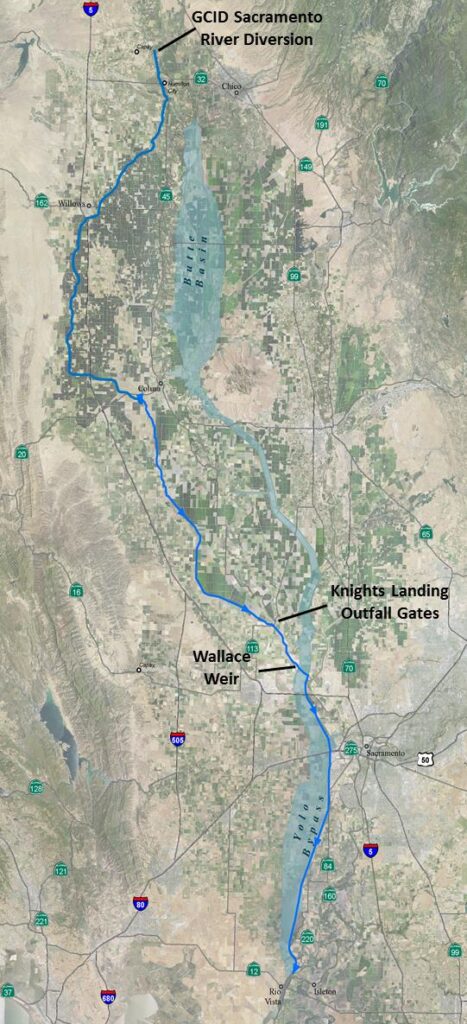
Map of Sacramento River Valley with Flood Weirs and Bypasses.

Map of Yolo Bypass – (Note fishery monitoring program sites.)

Map of Colusa Basin Drain and Yolo Bypass Tule Canal flow pathway to Rio Vista Bridge.

Figure 1. Streamflow in the lower Sacramento River below Wilkins Slough in December 2025. Source: CDEC.

Figure 2, Streamflow in the Yolo Bypass downstream of the Big Notch in the Fremont Weir.in December 2025. Source: CDEC.

Figure 3. Overflow into the Yolo Bypass at the historical Fremont Weir in December 2025. Source: CDEC.


Figure 4. Streamflow in the Ridge Cut Slough (Colusa Basin Drain connection to the upper Yolo Bypass below the Fremont Weir in December 2025.

Figure 5. Stage in the Tule Canal of the Yolo Bypass at Lisbon gage in December 2025.

Figure 6. Water temperature at the Lisbon gage in the Yolo Bypass in December 2025.

Figure 7. Daily average air and water temperature and river stage at the Rio Vista Bridge of the Sacramento River channel of the north Delta in December 2025. Source: CDEC.

Figure 8. Daily catch of older salmon (non-fry, predominantly winter-run) in Tisdale Screw Trap and environmental conditions September 2025 to May 2026.

Figure 9. Daily catch of older salmon (non-fry, predominantly winter-run) in Sacramento River near Sacramento beach seines and environmental conditions September 2025 to May 2026.

Figure 10. Juvenile Production Estimate (JPE) of winter-run salmon entering the Delta by brood year.

Figure 11. Cumulative catch index of winter-run salmon in Chipp Island Trawl Survey In the east Bay by brood year.

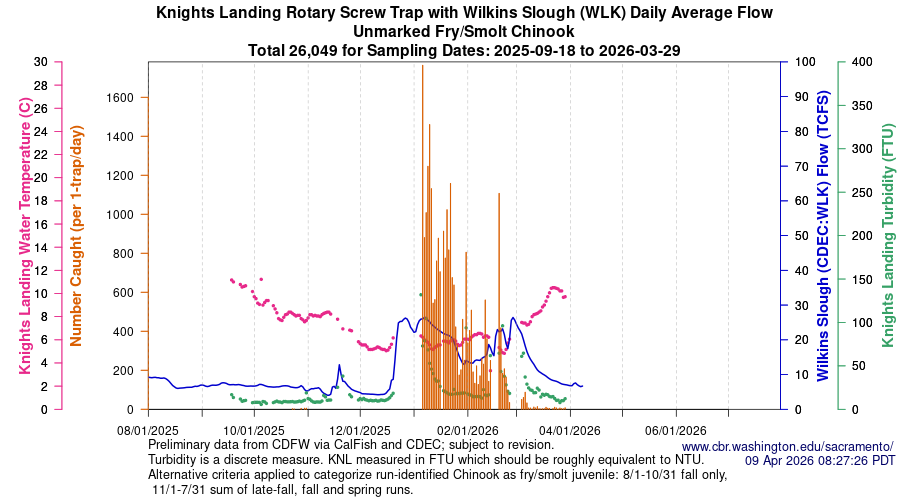
Figure 12. Fry of spring-run and fall-run salmon would enter the Big Notch of the Fremont Weir under these conditions in January-February 2026. The Wilkins Slough flow of the Sacramento River of <30,000cfs indicates most of the flow that would enter the Bypass would be via the Big Notch. Note: Some flow at the Big Notch entrance would also come from the exit of the Sutter Bypass.

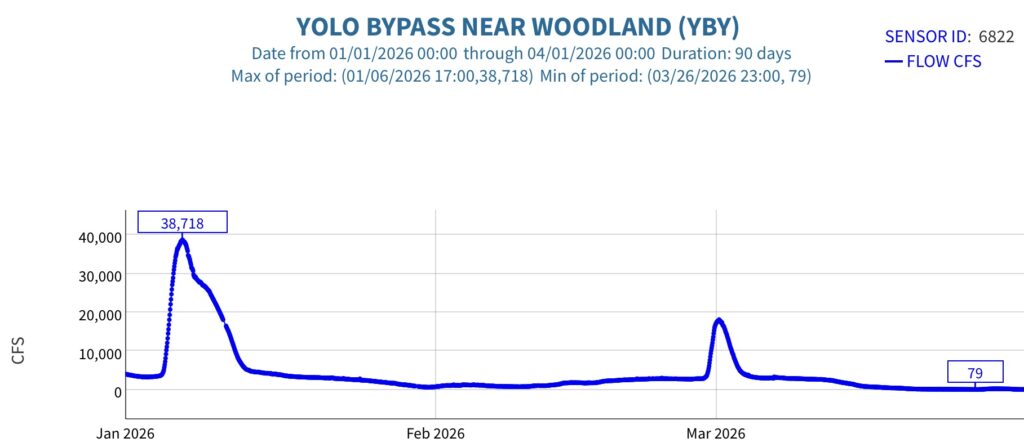
Figure 13. Flow (cfs) in the northern Yolo Bypass in winter 2026. Most of the flow came from the Big Notch. Bypass water temperatures (not shown) were best for salmon fry at 50-55ºF in the January period but reached stressful levels >65ºF in the March period.