In a September 26, 2026 post, I speculated on whether the 9/26 Harvest Moon tides might bring in a long-awaited late-summer salmon run to San Francisco Bay from the ocean. The late summer fishery catch was still going strong outside the Golden Gate in coastal waters, but numbers in the Bay, Delta, and rivers remained modest at best. My hunch was that the spring tides at the end of September would bring cooler water into the Bay, and the rivers would cool the Delta.
The late September spring tides and cooler air temperatures did provide a cooldown in the Delta (Figure 1), the west Bay (Figures 2 and 3), and the east Bay (Figure 4). However, the cooling period was short lived, as an early October heat wave brought back the warm water and stressful salmon migration conditions. Water temperatures remained above the optimal level for migration (at or below 18oC/65oF), and reached into the 68-70oF stressful range in the east Bay and Delta (72oF is the avoidance level). Ocean temperatures entering the Gate in early October were about 60-61oF (above normal due to El Niño conditions); water exiting the Gate on the ebb was about 63-64oF.
In the rivers upstream of the Delta, water temperatures also increased in early October. Shasta Dam releases lost access to the lake’s deep cold-water pool (Figure 5). The lower Sacramento River at the Wilkins Slough gage upstream of the Delta, at Freeport entering the north Delta, and at Rio Vista Bridge exiting the Delta warmed to 68-69oF with the heat wave and dropping streamflows (Figure 6).
In 2026, there were changes in the biological opinions and incidental take permits for the Central Valley Project and State Water Project. These changes meant there were no Fall-X2 Delta outflows (greater than 10,000 cfs) that had been required in previous wet and above normal water years. Without Fall-X2 flows (Figure 7) Bay, Delta, and river water temperatures increased.
A week or more of cool weather beginning October 11 may yet open the window for the fall salmon run. It may also be a godsend for the million or more wild juvenile winter-run salmon produced this year on their late-fall downstream journey from the upper Sacramento River to the Delta.
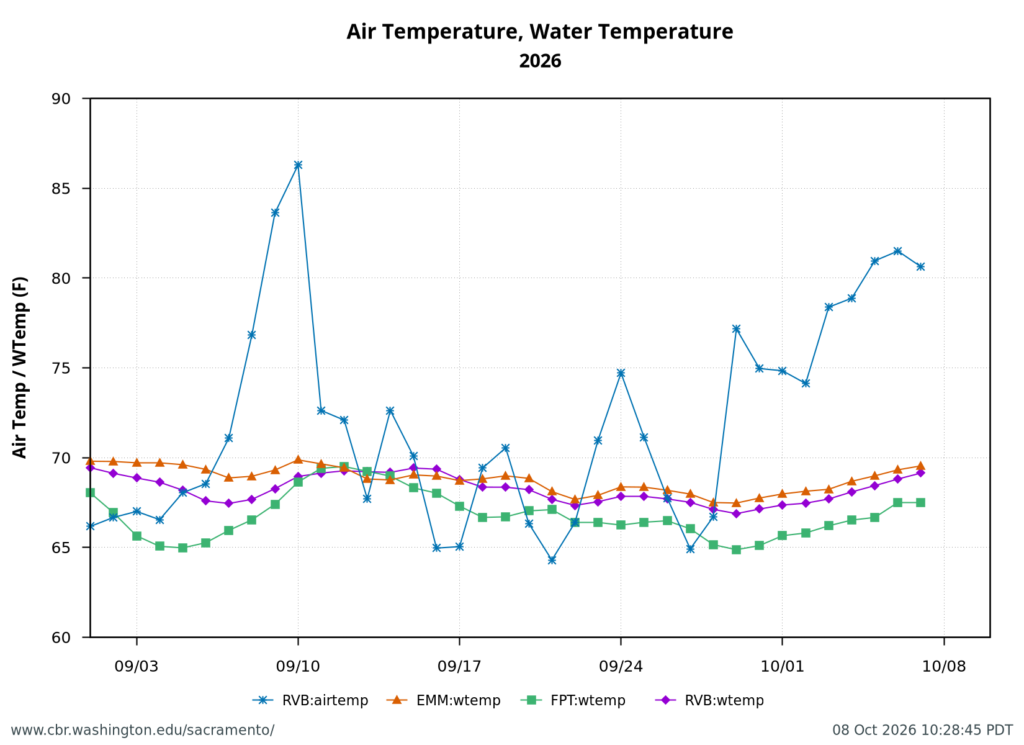
Figure 1. Water and air temperatures September1 to October 7, 2026 in the lower Sacramento River channel of the Delta. FPT=Freeport, RVB=Rio Vista, EMM=Emmaton.
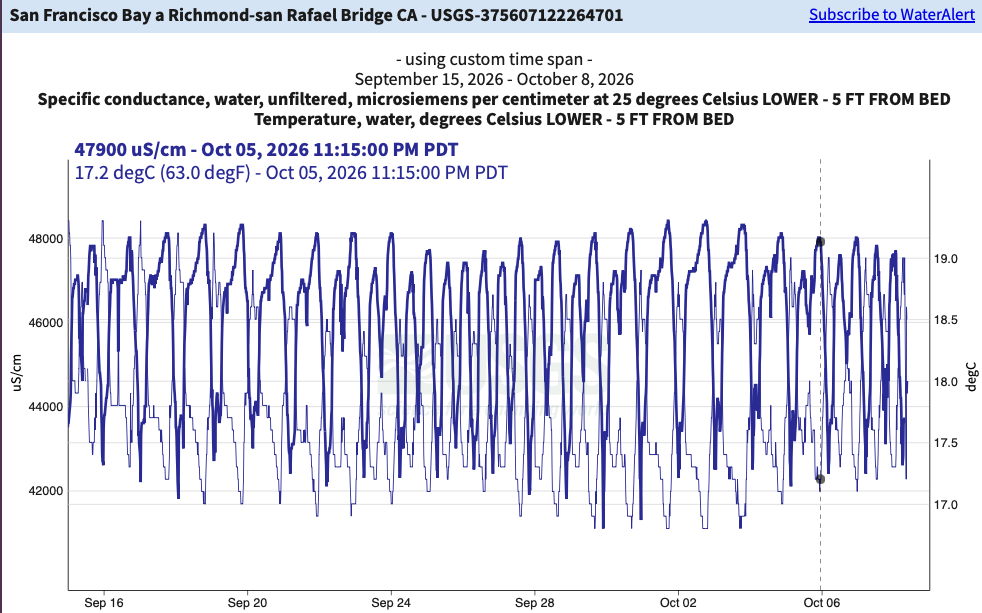
Figure 2. Near bottom salinity (EC) and water temperature (C) in western San Francisco Bay at the Richmond Bridge September 15 – October 8, 2026.
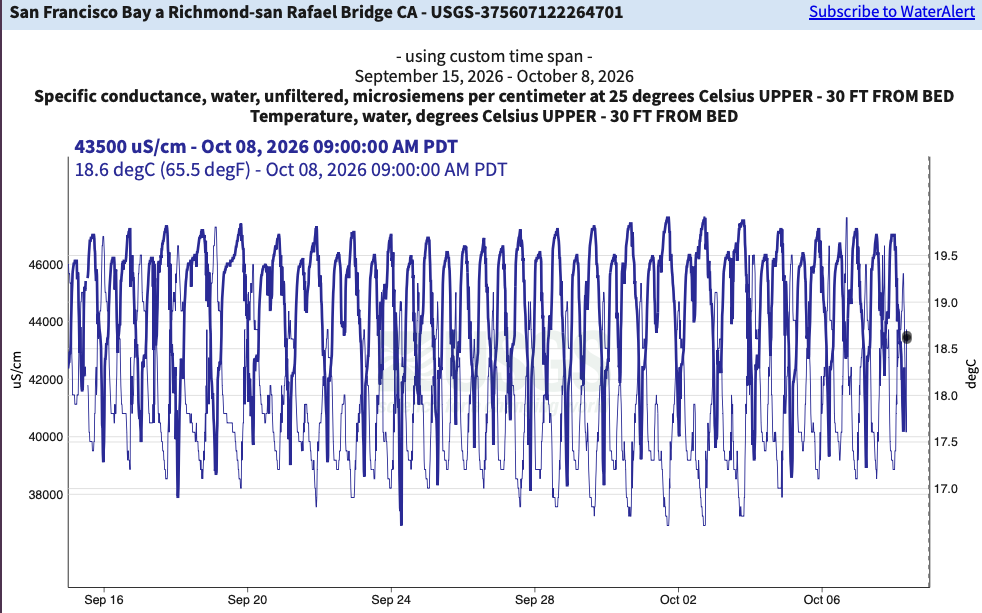
Figure 3. Near surface salinity (EC) and water temperature (C) in western San Francisco Bay at the Richmond Bridge September 15 – October 8, 2026.
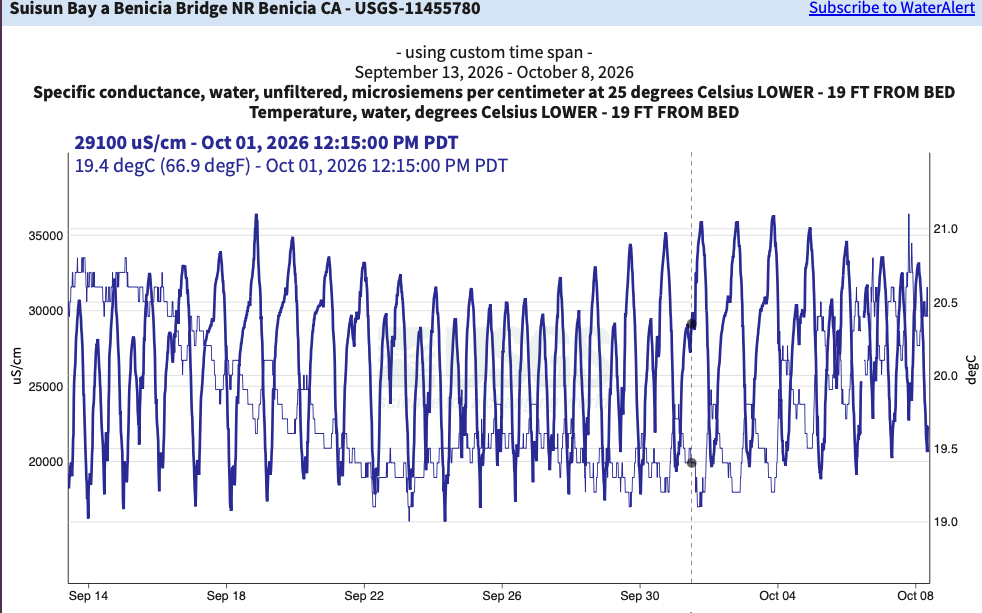
Figure 4. Salinity (EC) and water temperature (C) in eastern San Francisco Bay at the Benicia Bridge September 14 – October 8, 2026.
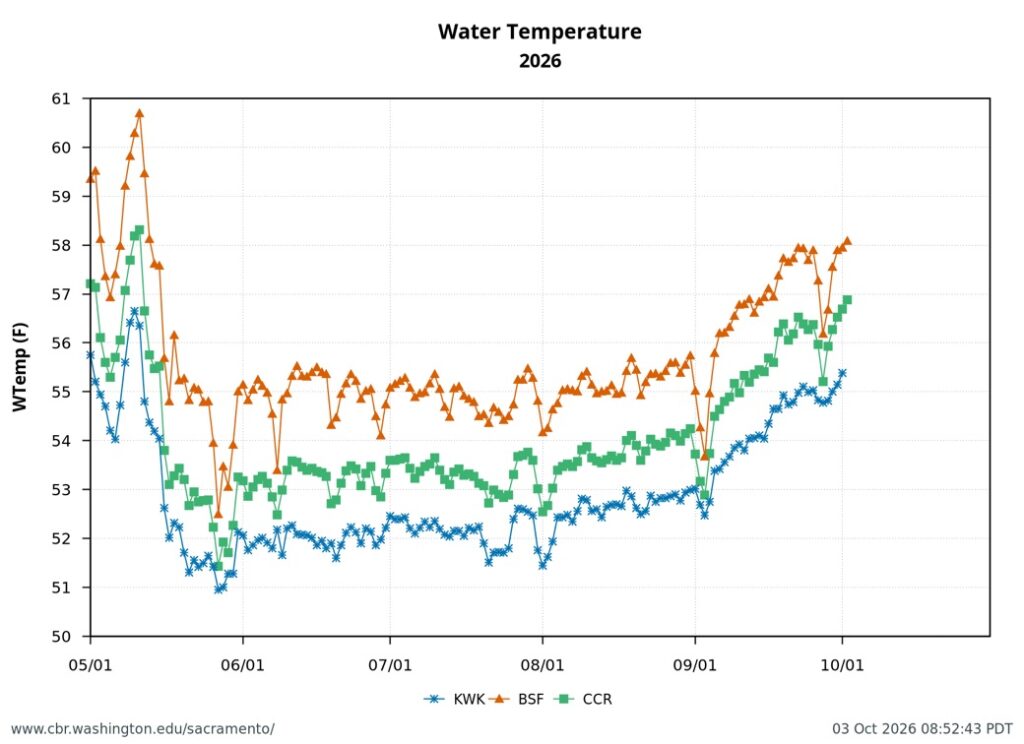
Figure 5. Water temperature in the 30-mile salmon spawning reach below Shasta Lake in the upper Sacramento River below Keswick (rm 300), above the mouth of Clear Creek (rm 290), and at Balls Ferry (rm 276) May-September 2026. The water quality standard for the upper 60 miles below Keswick Dam is 56°F year round to protect spawning salmon.
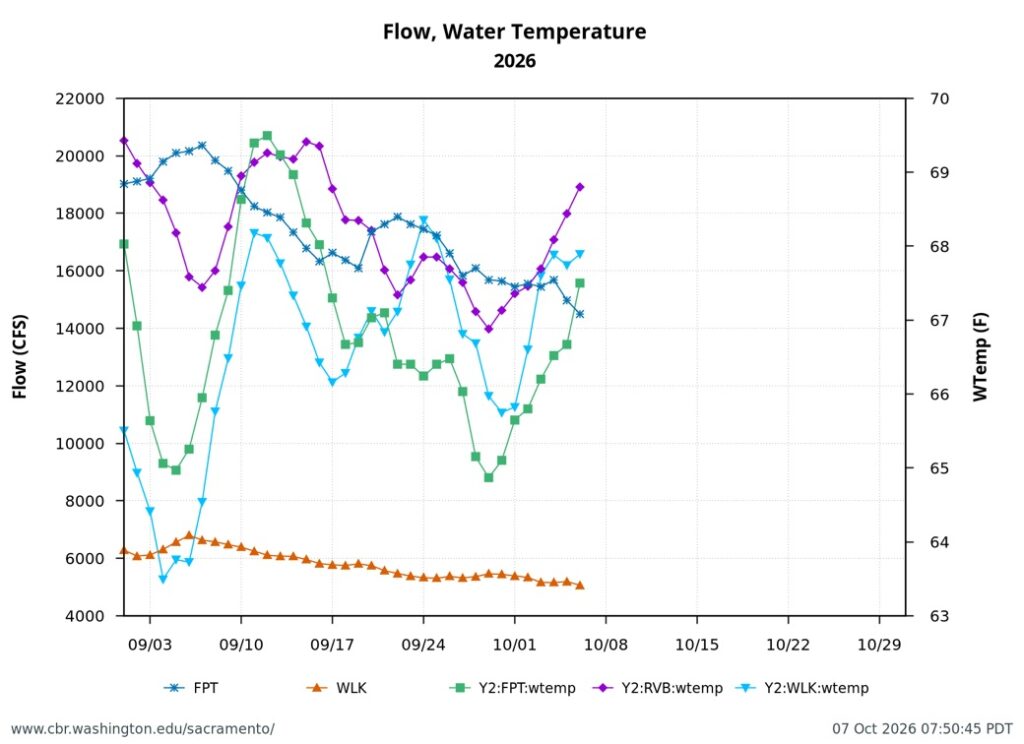
Figure 6. Lower Sacramento River streamflow and water temperature at Wilkins Slough (rm 120) and Freeport (rm 46), and water temperature at Rio Vista Bridge (approx. rm 20) September 1 to October 6, 2026.
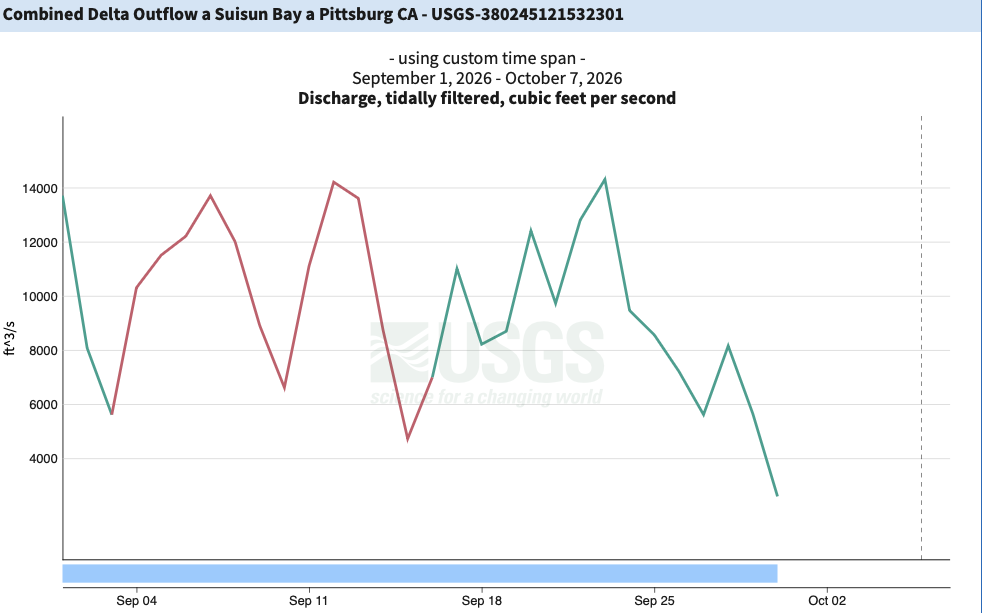
Figure 7. Estimated daily-average streamflow at Pittsburg in eastern San Francisco Bay in September 2026.