In a September 28, 2025 post, I was optimistic about the 2026 salmon season following wetter years 2023-2025. I expected strong recruitment from the tens of millions of hatchery smolts released in 2023 and 2024, in combination with the almost complete closure of salmon fishing in 2023-2025. What I failed to sufficiently account for was the 2023- El Niño and the companion Blob, though I did recognize some concerns.1 Now we are facing a projected “Super El Niño” in 2026 and 2027. I should have anticipated potential adverse effects on the salmon ready to make their runs in 2026.
NOAA had been issuing warnings about a strong El Niño and the potential for adverse ocean effects, for example in June 2026 (see excerpt below).
Tough Times for SalmonWarming can be harmful to salmon, whether in the freshwater or saltwater chapters of their life cycle. Low snowpack that preceded the Blob combined with atmospheric patterns that blocked cooling winds. A severe California drought also left little cold water in Shasta and other reservoirs. As western rivers warmed to lethal temperatures for salmon, managers had no way to offset the heat. About 95 percent of the eggs spawned by endangered winter-run Chinook salmon in the Sacramento River died in 2015. Current conditions are similar, with record-low snowpack across most of the Western United States, although reservoir storage is much better than it was in 2015. Young salmon also faced difficulties in the ocean during the Blob and El Niño years, since warmer ocean waters typically lack the high-energy prey juvenile salmon depend on for rapid growth during their first months after entering saltwater. That lack of quality prey reduces their odds of survival, which in turn reduces the chances they will return to rivers and support coastal fisheries as adults 1 to 3 years later. The years following the Blob brought weak salmon returns to many rivers along the West Coast, leading to 2017 closures of salmon fishing along parts of the California and Oregon Coasts. Some salmon stocks, such as Oregon Coast coho, fared better, though, as different stocks rely on different parts of the ocean affected differently by the warming influences. |
Six strong El Niños have occurred in the last five decades (Figure 1), including the ongoing El Niño in 2026. Salmon escapement to spawning rivers in the Central Valley was depressed during or following El Niño years (Figures 2 and 3). It now appears that the 2026 forecasted escapement may be depressed because of the Super El Niño. Salmon returns to date are less than expected.
Warm water and lack of upwelling, along with the influx of warm southern waters along the California coast, characterize El Niño conditions. Southern predatory fish such as tuna species (bonito, albacore, and bluefin) move north with the warmer waters, which creates another concern. Changes in the salmon prey, such as more anchovy and less herring and krill, reduce overall forage and have led to thiamine deficiency in the adult salmon spawning stocks.
Escapement numbers plummeted during past El Niño periods. Droughts were also often associated with El Niños. Droughts reduce the number of salmon smolts that reach the ocean. El Niño conditions generally lead to lower survival of juvenile and adult salmon in the ocean.
We will have to wait to see the effect of the ongoing El Niño phenomenon on salmon escapement to Central Valley rivers. Lingering effects of low escapement in 2023 and 2024 from the 2020-2022 drought and from the 2023 El Niño may result in low in-river (non-hatchery) spawning escapement. Both in-river and hatchery escapement in 2026 may well be depressed. Escapement in 2027 and 2028 may also be affected from lower survival from broodyears 2025 and 2026 in the ocean during the 2026 Super El Niño.
It is important to remember that the effects of El Niño conditions on salmon do not take place in isolation. Depressed escapement of salmon adults and depressed survival of juvenile salmon to the ocean today occurs in the context of long-term declines. Much as a major health crisis has a particularly severe effect on an already unhealthy patient, the effects of El Niño conditions on salmon in 2026 are likely to have outsized effects on California salmon populations that have struggled over the last two decades, even in relatively good years.
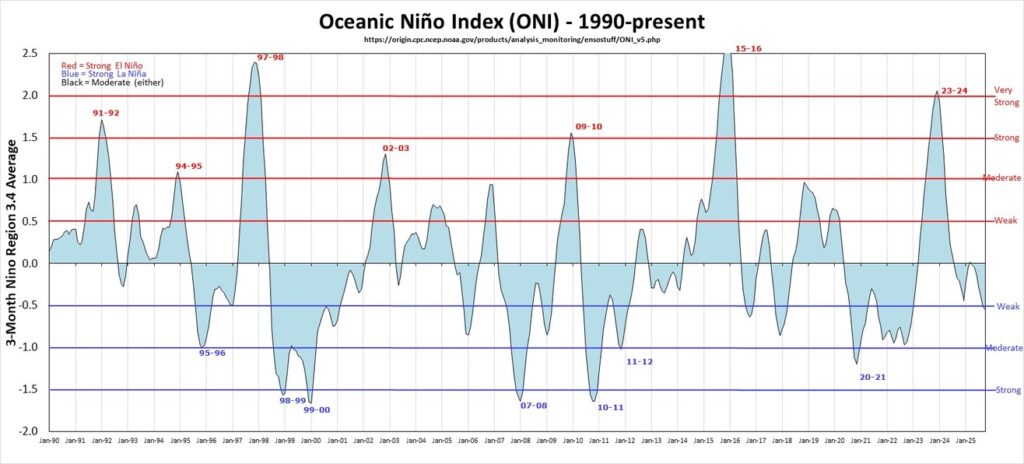
Figure 1. El Niño Index 1990-2025 along Central California coast. Source: NOAA.
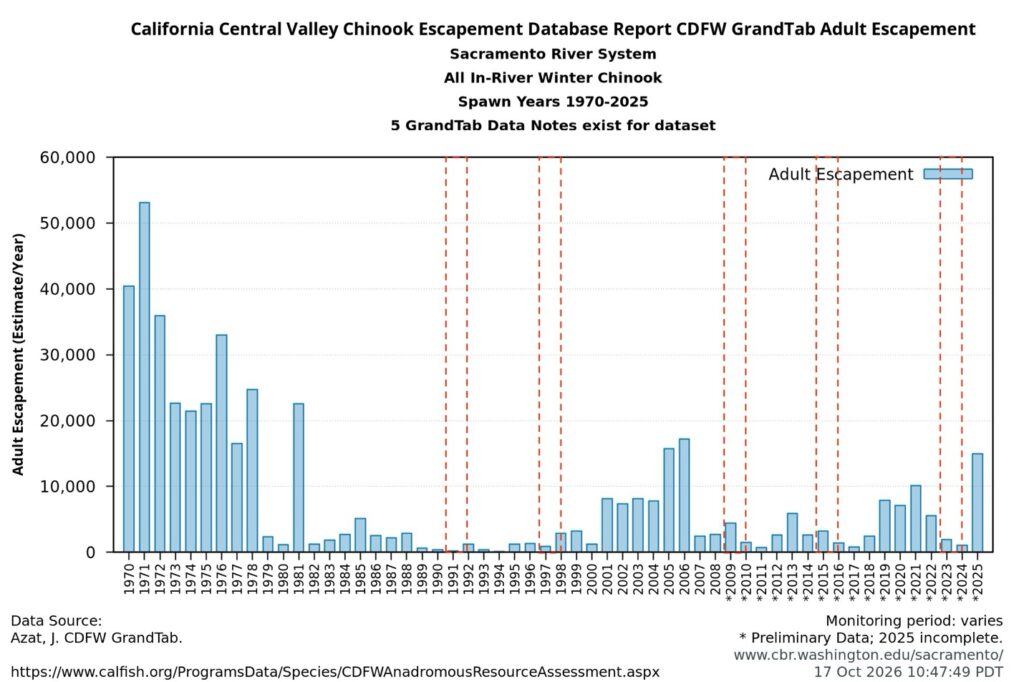
Figure 2. Escapement estimates of winter-run salmon from spawning ground (in-river) surveys 1970-2025. Red outlines indicate El Niño years (from Figure 1). Source: CDFW.
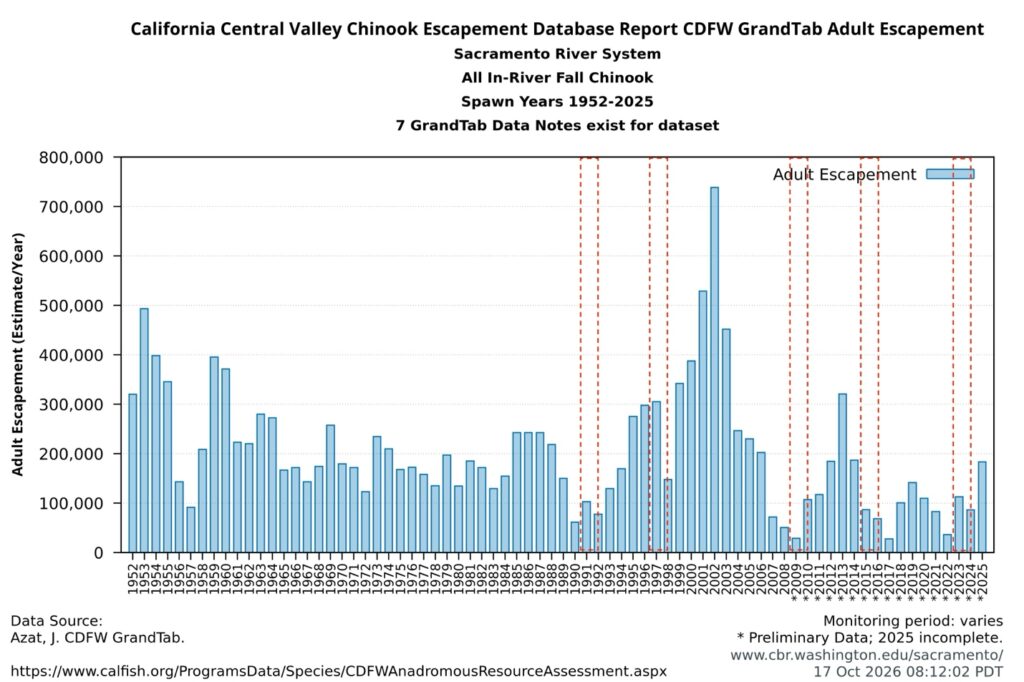
Figure 3. Escapement estimates of fall-run salmon from spawning ground (in-river) surveys 1952-2025. Red outlines indicate El Niño years (from Figure 1). Source: CDFW.