
Conditions in the Central Valley and Bay-Delta have been tough this fall for brood year 2026 winter-run and fall-run Chinook salmon. 1
Warm late-spring water temperatures and warm releases from Shasta Dam forced winter-run to spawn later in summer (Figure 1). That led to late emergence of fry in October into water with lethal water temperatures after Shasta’s cold-water pool was exhausted. High volume releases from Shasta Reservoir in summer 2026 led to an earlier depletion of Shasta’s cold-water pool than in 2020, a drier year (Figure 2). This further stressed the winter-run spawn.
Late emergence of fry has not only reduced their numbers, but has also delayed their downstream movement toward the Bay-Delta compared to 2025 (Figures 3 and 4). Water temperatures in October 2026 have been higher and streamflows lower in the lower Sacramento River than in 2025, more like drought year 2022 (Figure 5). The 2026 juvenile production will likely be less when compared to the strong juvenile production estimate (JPE) in 2025 (Figure 6).
Ensuring minimal loss of the remaining production potential for juvenile BY-2026 winter-run would require the following actions:
- Increasing the daily average lower Sacramento River streamflow through the fall to at least 7000 cfs at Wilkins Slough and 12,000 cfs at Freeport.
- Providing a late fall pulse flow from Shasta Reservoir to the upper Sacramento River.
- Minimizing fall Delta exports (no higher than 5000 cfs or 35% of Delta Inflow).
- Maintaining fall and winter Delta outflow at 10,000 cfs.
- Closing the Delta Cross Channel for the remainder of fall.
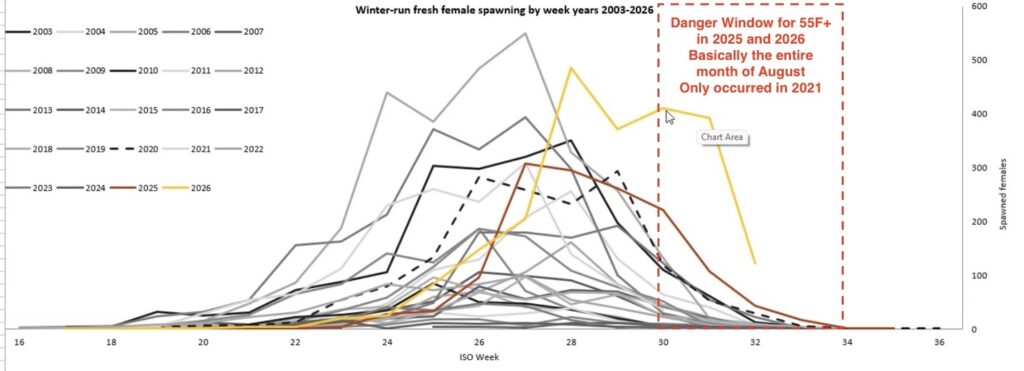
Figure 1. Winter-run salmon weekly spawning 2003-2026 in upper Sacramento River. Source: Reclamation.
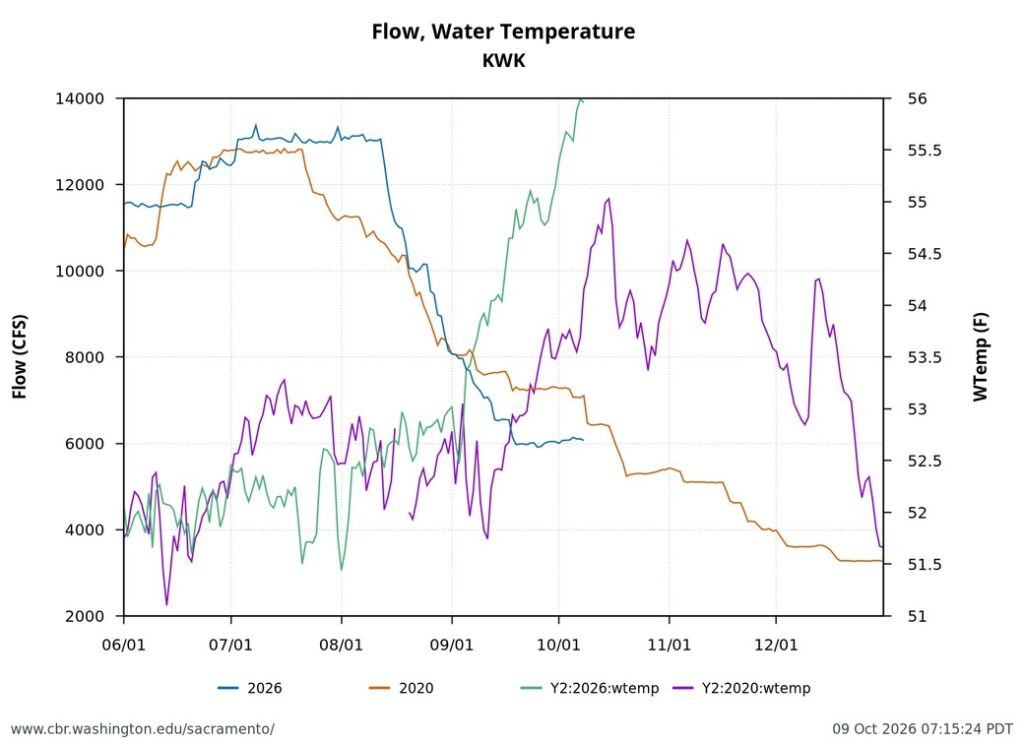
Figure 2. Comparison of streamflow and water temperature in upper Sacramento River below Keswick Dam June-December 2020 and 2026.
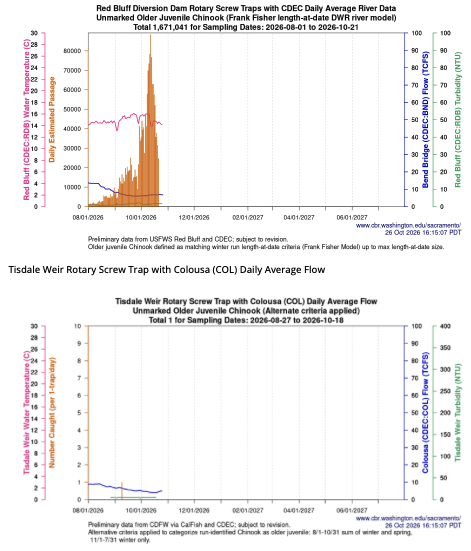
Figure 3. Screw trap catch of juvenile winter-run salmon at Red Bluff (RM 240) and Tisdale Weir (RM 120) 8/27-10/18, 2026.
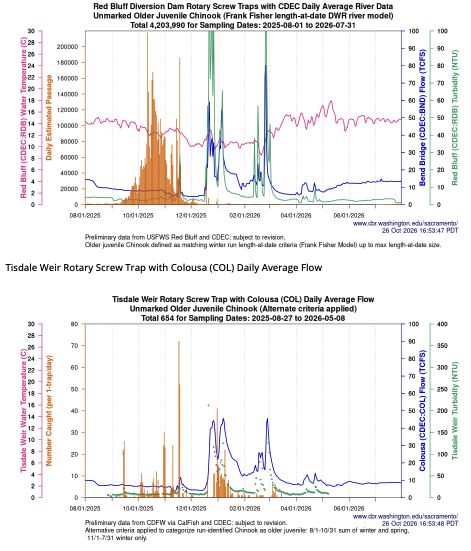
Figure 4. Screw trap catch of juvenile winter-run salmon at Red Bluff (RM 240) and Tisdale Weir (RM 120) 8/27/2025-5/8, 2026.
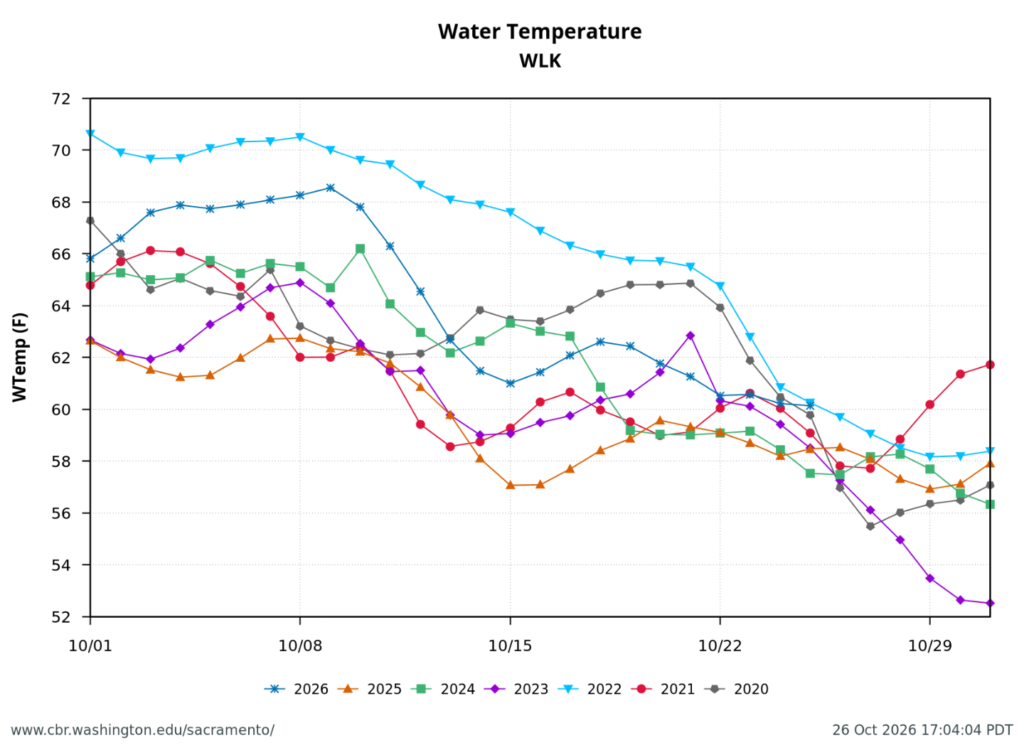
Figure 5. October daily-average water temperatures at Wilkins Slough (RM 120) on lower Sacramento River 2020-2026.
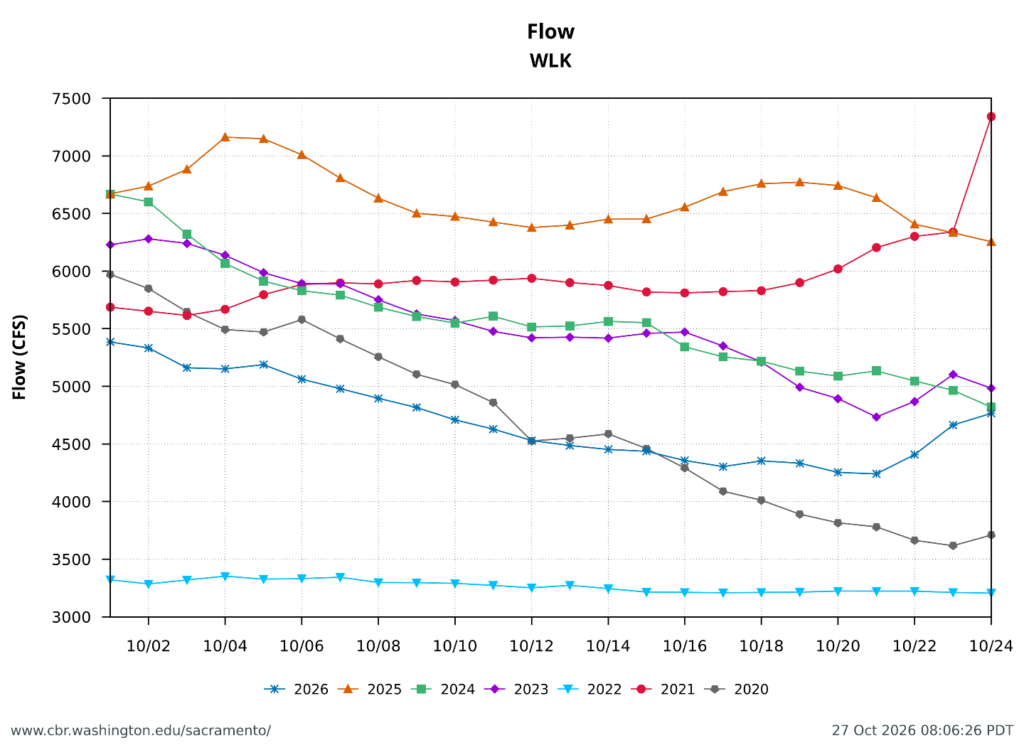
Figure 6. October daily-average streamflow at Wilkins Slough (RM 120) on lower Sacramento River 2020-2026.
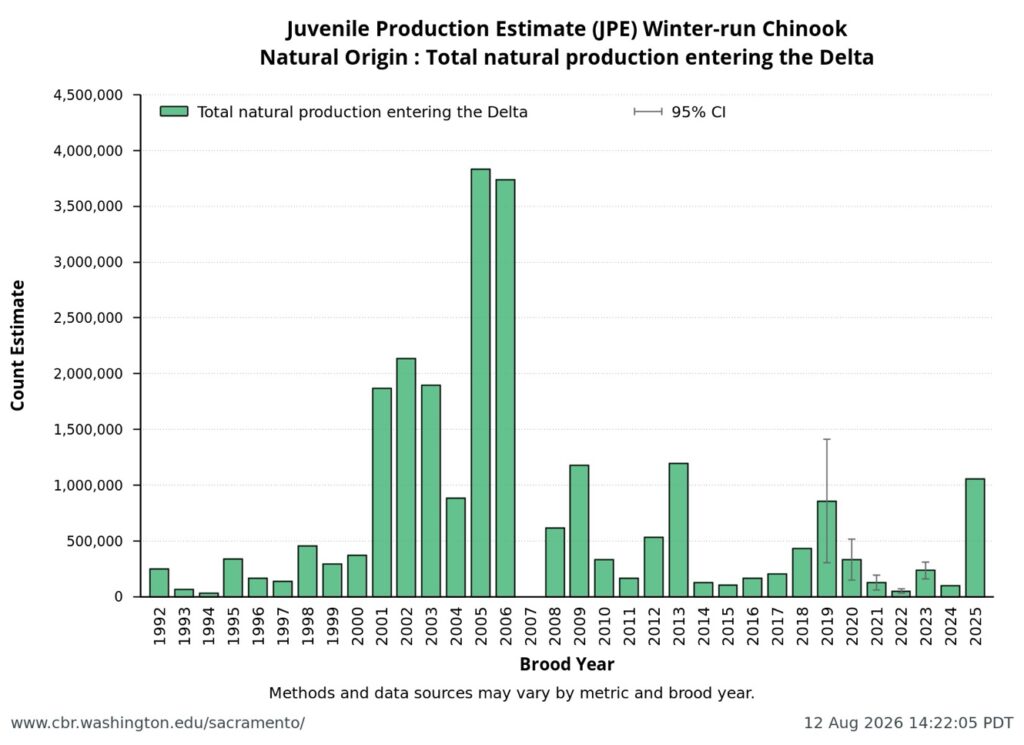
Figure 7. Juvenile Production Estimate for winter-run salmon 1992-2025. Source: Reclamation.