More on the Delta Threat to Winter-Run Salmon – Fall 2021

During early November, juvenile winter-run salmon were moving into the Delta after two short fall rainfall pulses (Figure 1). The allowed export of 65% of Delta inflow is not protective of these wild young winter-run salmon, which are in short supply this year. My October 30 post, in which I warned about the threat of rising Delta exports on this year’s production of juvenile winter-run salmon entering the Delta, is being borne out.

From November 9-12, south Delta exports exceeded 70% of Delta inflow,1 with about 2000 cfs of calculated Delta outflow. The USGS measurement of Delta outflow on November 8-9 was as low as -3000 cfs. Delta exports were simply drawing from the Delta’s freshwater reservoir supplied by the recent rains. The cries of San Joaquin Valley farmers for the capture of the runoff before it was “wasted” into the Bay and Ocean were indeed being answered. The Delta export pumps were shipping 15,000-20,000 acre-feet of water south each day.

Up at the Delta Cross Channel (open) and Georgianna Slough, over half the daily flow was being diverted into the central Delta. With the False River Barrier installed, most of the diverted water (and young salmon) flowed south toward the export pumps. Since no young salmon were showing up in the export fish salvage collections, it is likely that few successfully made the 50-mile journey from the northern Delta through the predator-laden central Delta corridor.

Hopefully, the several hundred thousand winter-run hatchery smolts will have better circumstances when they are released this winter near Redding for their 300-mile migration to the ocean.
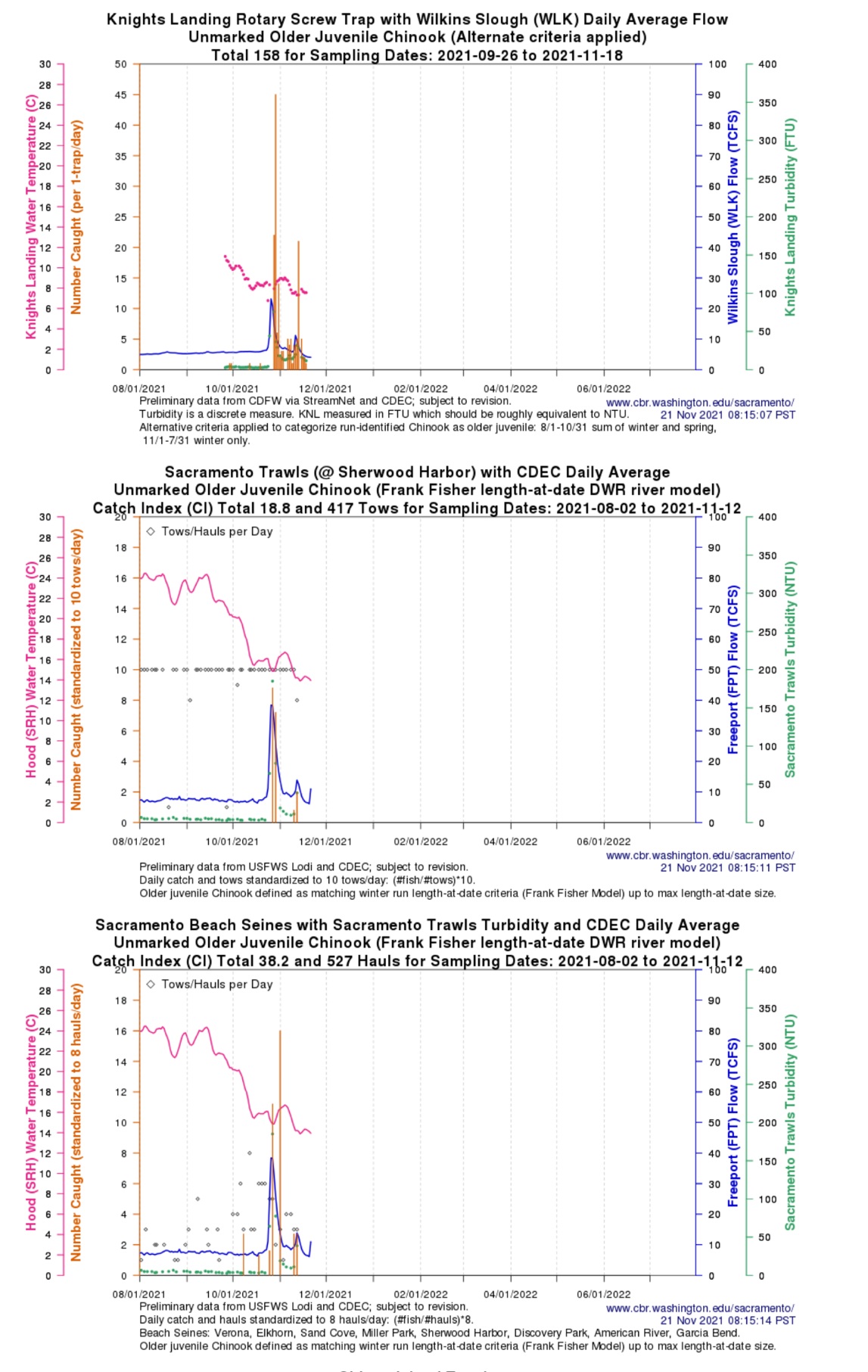
Figure 1. Capture of juvenile winter run salmon in the lower Sacramento River in 2021.
Another Threat to Winter-Run Salmon in 2021 – Fall Sacramento River Bypass Overflows

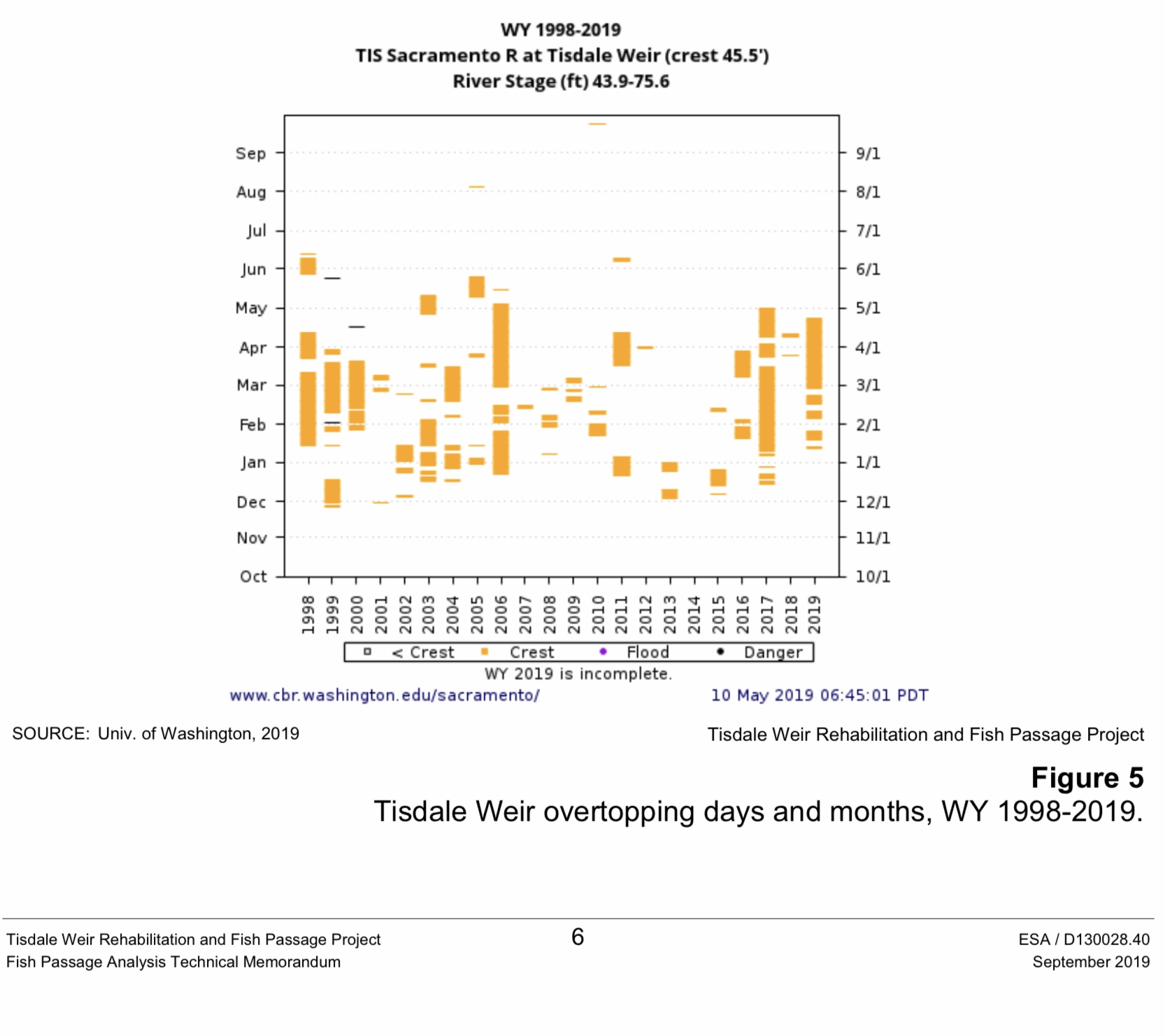
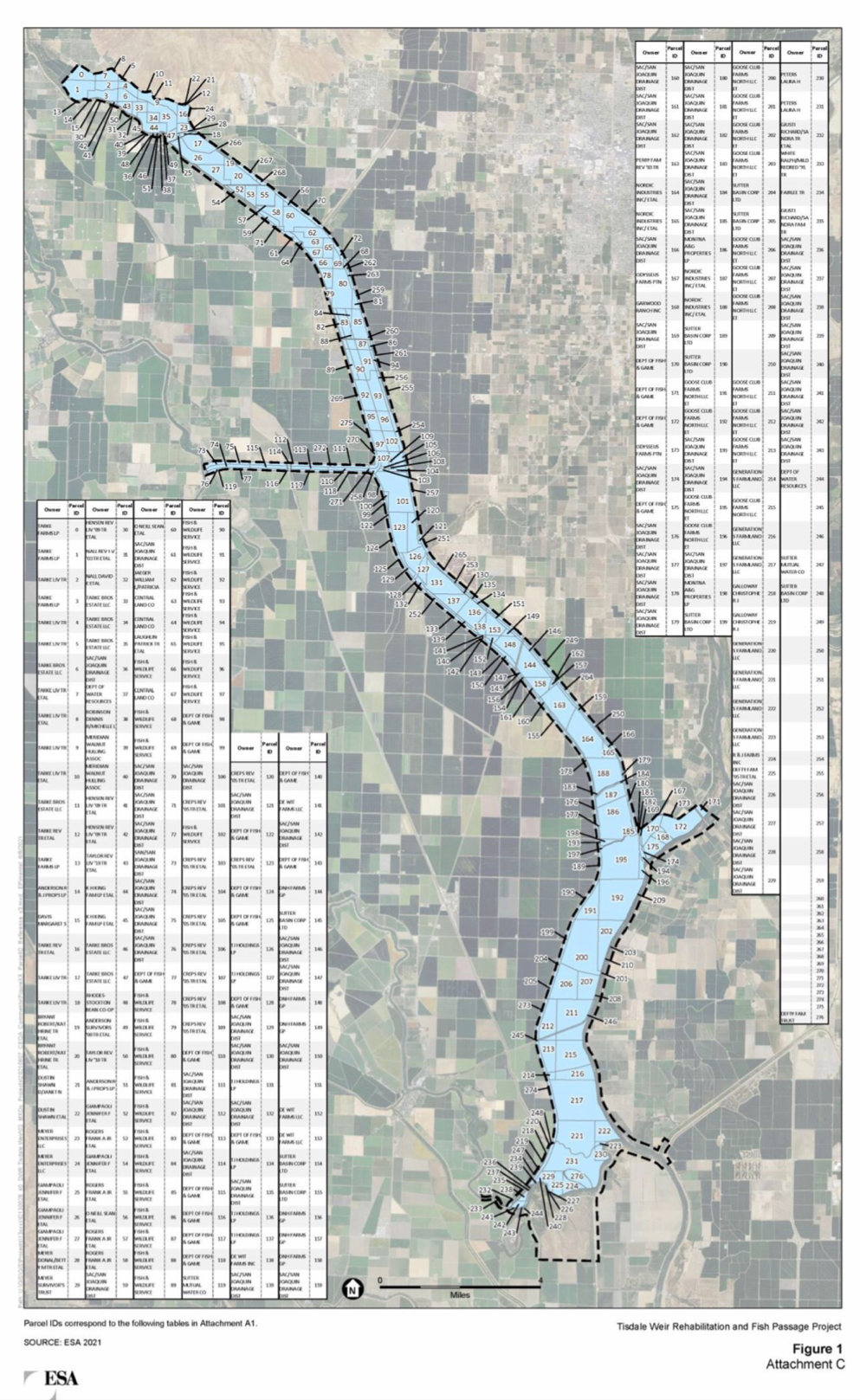
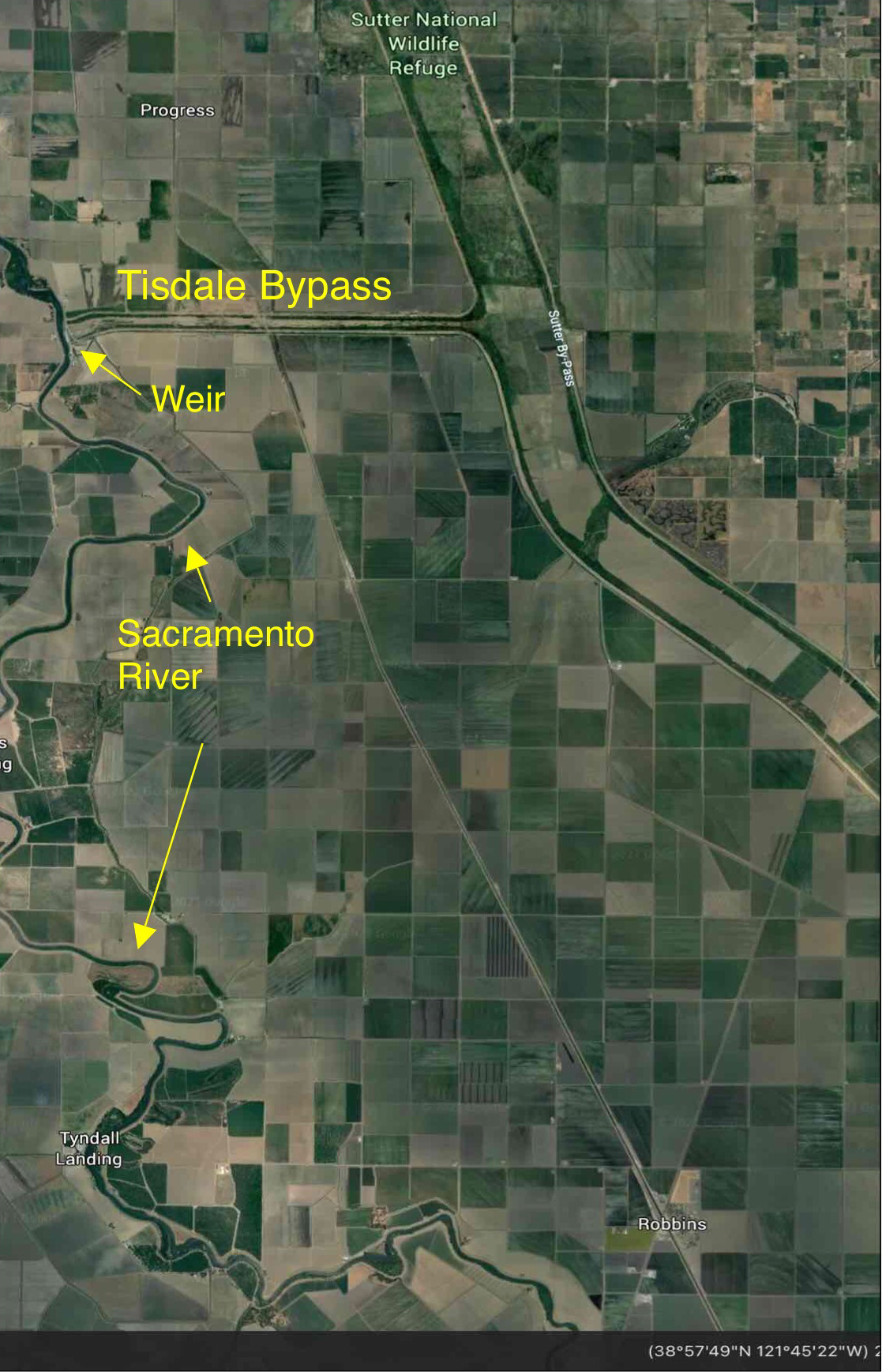
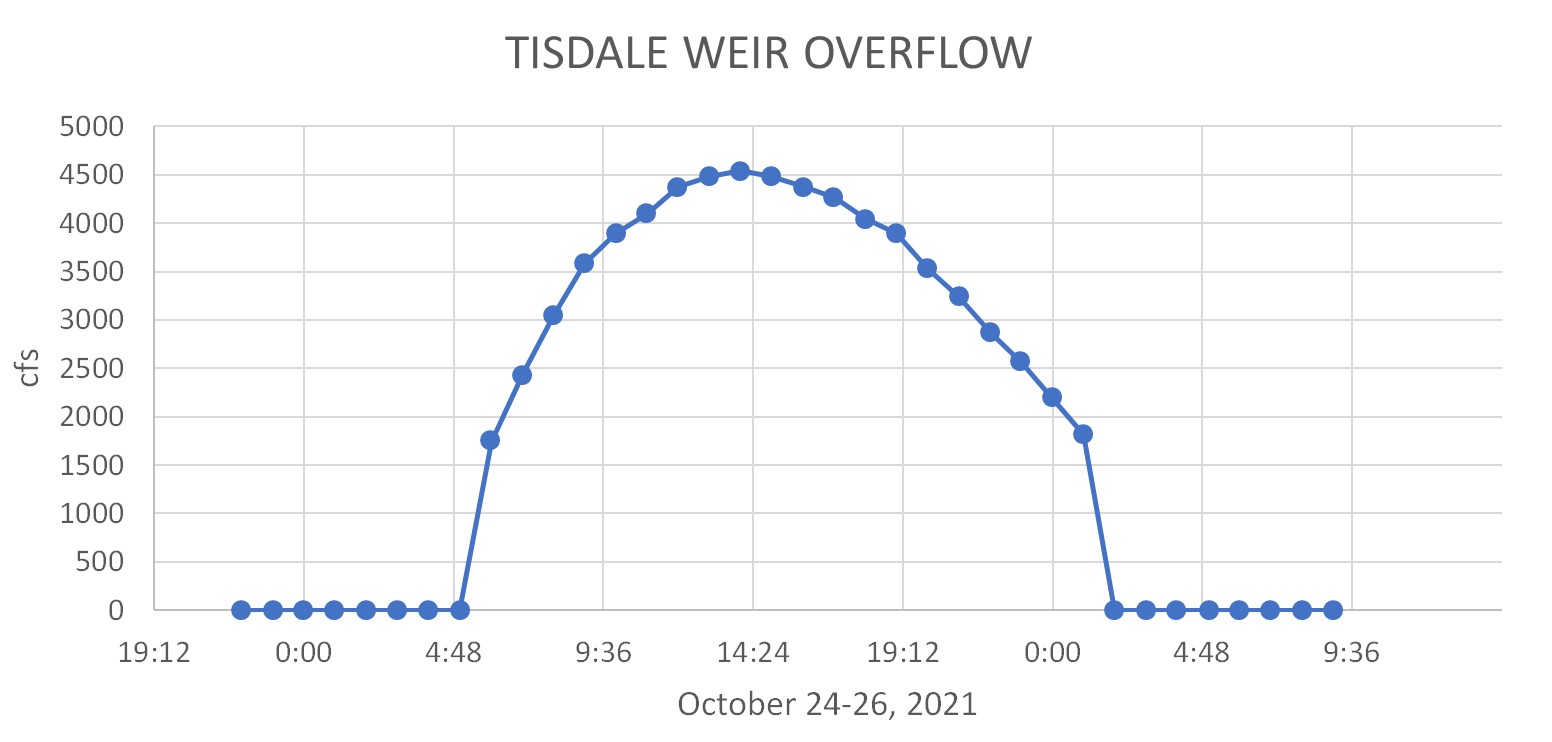
Record late-October Valley rainfall brought Sacramento River flows high enough to overflow into the Tisdale Bypass (Figures 1 and 2).  Such early-fall overflows are highly unusual (Figure 3). The sudden surge filled nearly 30 square miles of the Sutter Bypass before exiting to the south, back to the Sacramento River (Figure 4).  Bypass channels rose 6-10 feet during the storm, with the help of tributary inflows (CDEC gage data not shown), flooding much of the agricultural fields, levee borrow pits, duck club ponds, and natural wetlands and ponds of the Sutter Bypass.

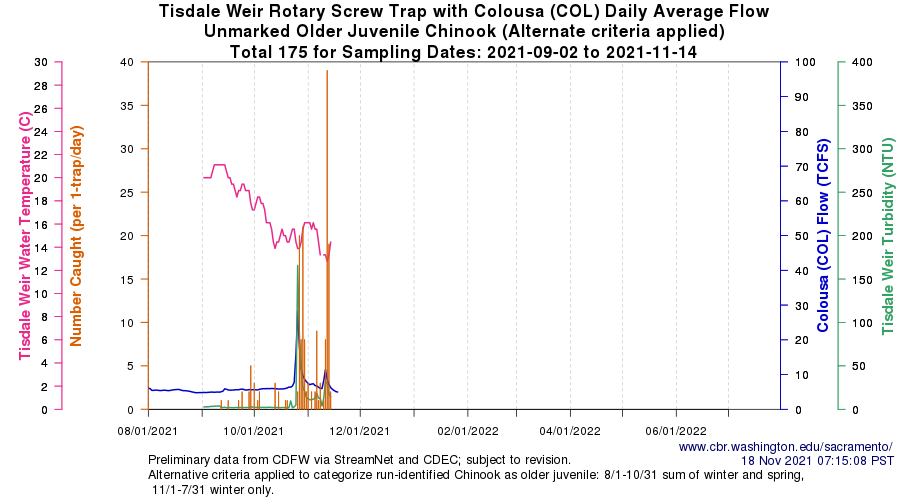
Riding the wave of river flow were juvenile winter-run salmon moving down the Sacramento River (Figure 5).  Many spilled over the weir into the Bypass and into flooded habitats.

After the storms, a sudden drop in flow quickly drained the Sutter Bypass, and many juvenile salmon became stranded in ponds and fields of the Bypass floodplain.  The problem with the short-lived early fall flooding is that stranded habitats dry up or become too warm too sustain the young salmon through the fall, winter, or even spring (if the Bypass does not flood again).  Predation by abundant non-native predatory fish in the Bypass is another problem, especially as the high flows of muddy water retreat.

Also at issue is the attraction of upstream migrant adult fall run-salmon into the Bypass.  Such salmon get trapped downstream of the Tisdale Weir.  The Tisdale Weir Rehabilitation and Fish Passage Project is supposed to mitigate this situation.  But it is only in the planning and design stages, and until that project is complete, adult salmon will continue to be trapped below Tisdale Weir.  In addition, the Tisdale Weir project “does not analyze the impacts to additional special status fish (juvenile salmonids) being attracted into bypass from extended days of inundation and subsequently being stranded without adequate drainage or a plan to mitigate for that.” (Project EIR).  The Tisdale Weir project also needs to plan for and mitigate the juvenile stranding in the Sutter Bypass.

Until the Tisdale Weir Project addresses these issues, fall spills into the Sutter Bypass from flood control weirs on the Sacramento River will reduce survival of winter-run salmon and other anadromous salmonids of the Sacramento River and its tributaries.

Figure 1. The Tisdale Weir and Bypass from the Sacramento River to the Sutter flood bypass.

Figure 2. Overflow (cfs) into the Tisdale Bypass from the Sacramento River 10/24-26/2021. Data Source: CDEC.

Figure 3. Tisdale Weir overflows 1998-2019.

Figure 4. Sutter Bypass properties subject to flooding from Tisdale Weir overflow.

Figure 5. Juvenile salmon collection in screw traps in Sacramento River near Tisdale Weir Aug-Nov 2021.


American River Hatchery Salmon Releases – 2020/2021

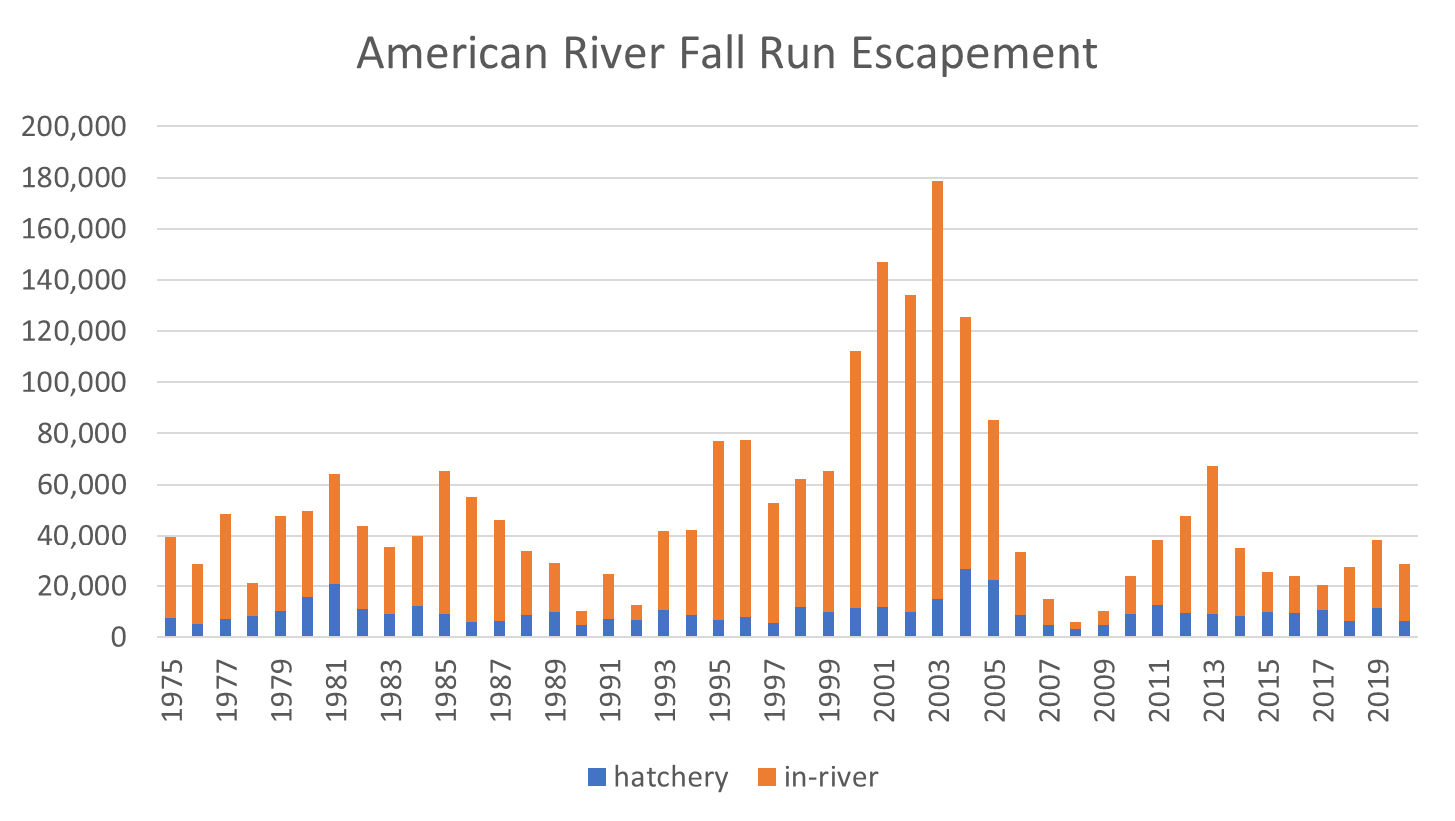
Escapement of American River fall-run salmon dropped after recent drought years (2013-2015, Figure 1).  It is reasonable to expect it would fall again in 2022 and 2023 as a consequence of the 2020-2021 drought period.

In a November 2, 2021 post, the California Department of Fish and Wildlife (CDFW) announced a plan to increase releases of hatchery smolts from its Nimbus Fish Hatchery on the American River in 2022, from the normal 4 million to 4.5 million.  CDFW’s post stated in part:

“Chinook salmon returns to the American River declined significantly during California’s last drought,” said Jason Julienne, supervisor for CDFW’s North Central Region fish hatcheries. “We’re using those observations and that experience to get ahead of any population declines this time around by increasing production to help sustain this important salmon run.”

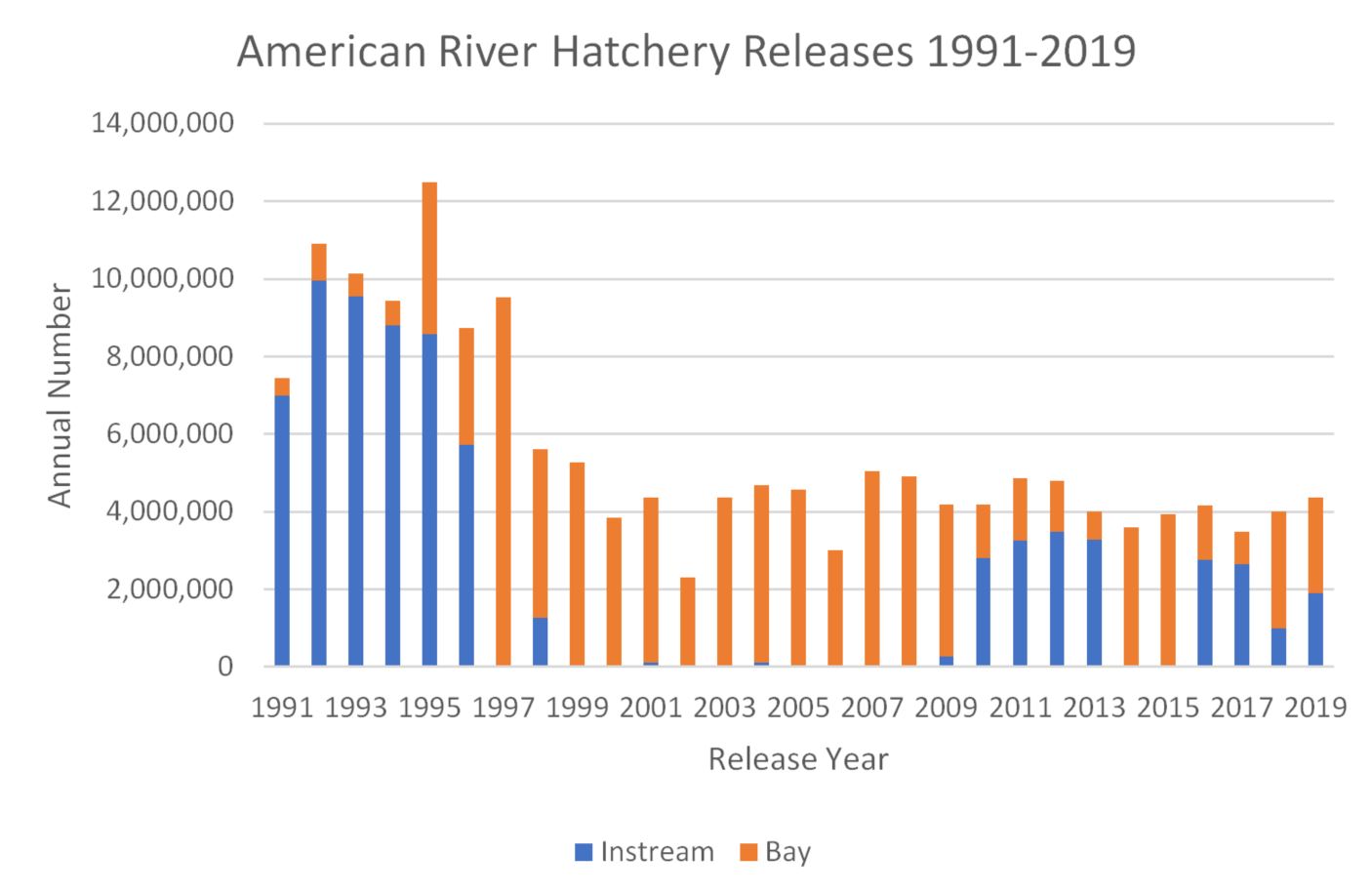
In a June 2020 post, I summarized annual hatchery releases of American River fall-run salmon smolts for years 1991-2019.  I suggested that the long-term declines in escapement were also due to reductions in overall smolt releases and to an increasing proportion of river releases as opposed to Bay releases in drier years (Figure 2).

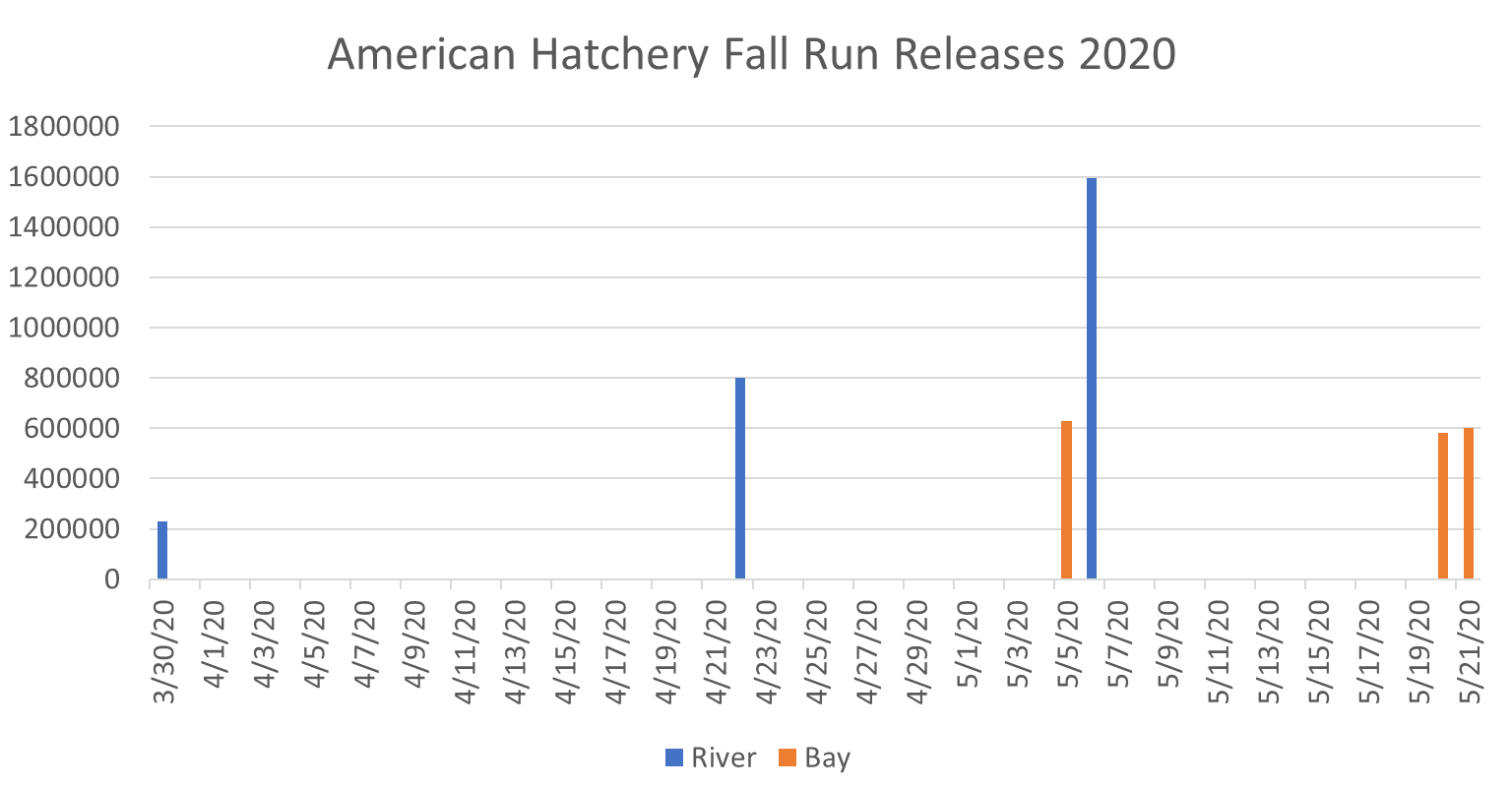
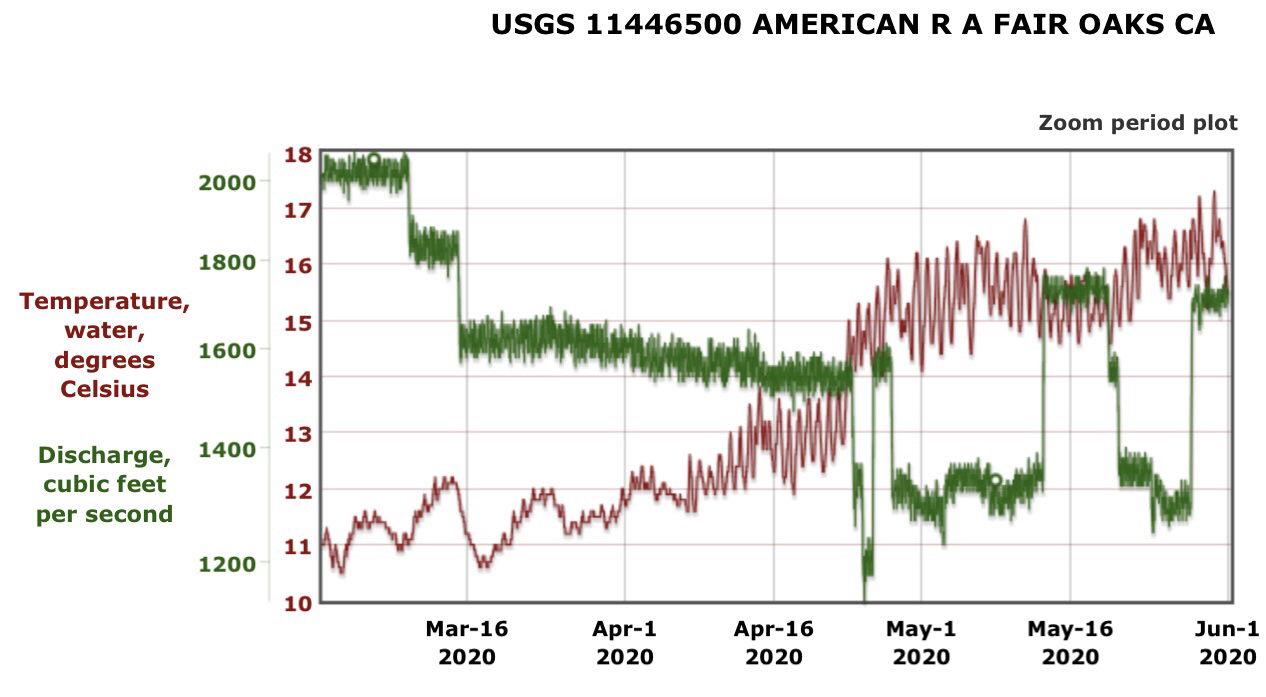
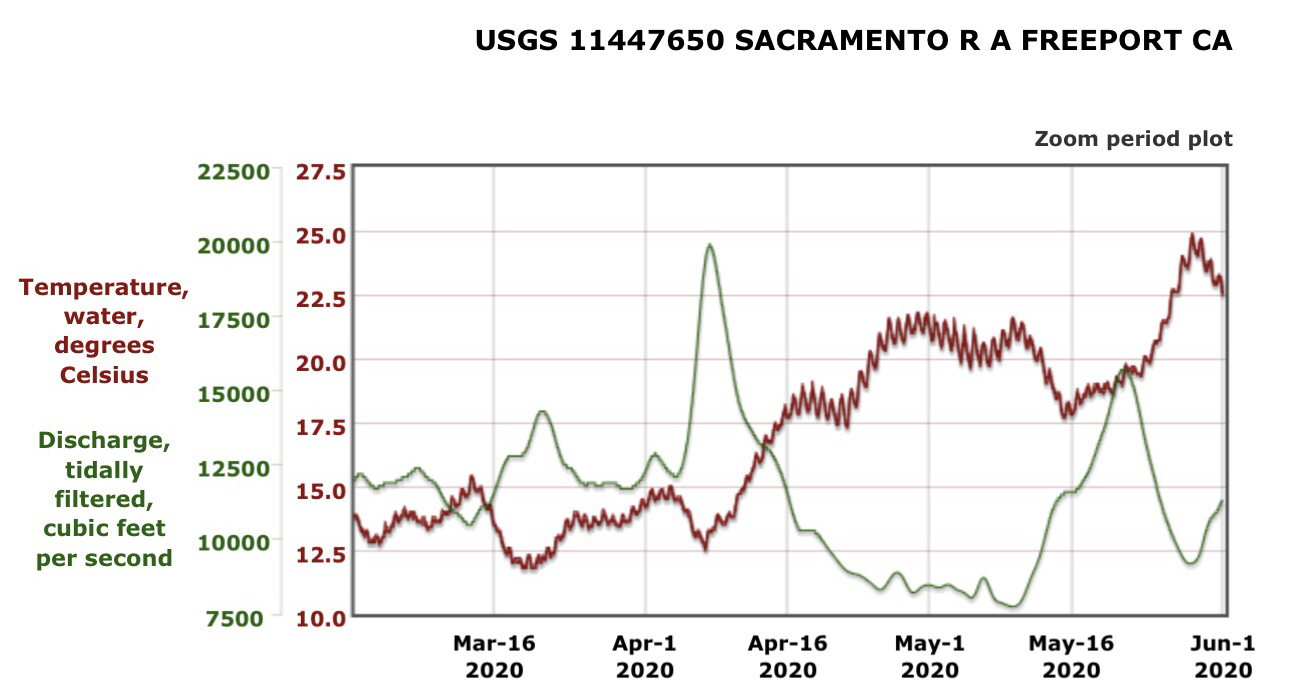
In 2020, a total of 4.44 million smolts were released, with 2.63 million released to the river and 1.81 million to the Bay (Figure 3).  The 1.6-million smolts released in-river in May 2020 were subject to low flows in the river and the Delta and to high water temperatures (Figures 4 and 5).  As a consequence, I would expect 2022 escapement to follow the general downward trend.

In drought year 2021, all 4 million smolts were trucked and released to the Bay.  However, I still expect 2023 escapement to be reduced as a consequence of the generally poor survival of smolts released to the Bay in drier years with low Delta outflow.1

Until flow conditions in the river and Bay in dry years improve, a 12.5% increase in hatchery smolt releases is unlikely to improve escapement to recent historical levels.

Figure 1. American River fall-run escapement to river and hatchery 1975-2020.

Figure 2. American River hatchery smolt releases to Bay and river 1991-2019.

Figure 3. American River hatchery smolt releases to Bay and river in 2020.

Figure 4. American River streamflow and water temperature in spring 2020.

Figure 5. Sacramento River water temperature below the mouth of the American River near Freeport in spring 2020.

Scott and Shasta River Update – October 2021 Saved by the Bell

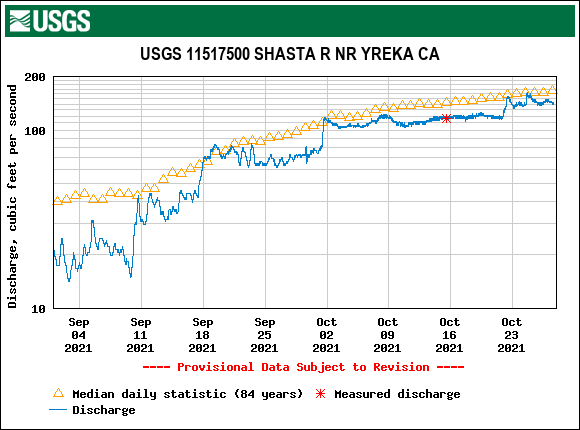
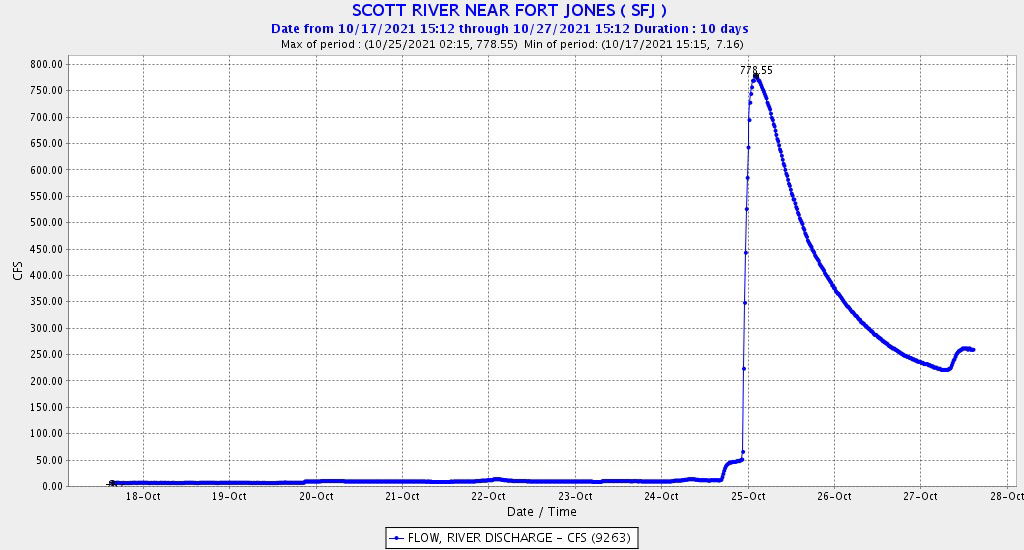
The Scott and Shasta rivers, California tributaries to the Klamath River, received irrigation curtailment orders from the State Water Resources Control Board  September 10 of this drought year.  The Shasta River responded well to the curtailment orders, and flows subsequently improved even more when  the irrigation season ended on 10/1 (Figure 1).  In contrast, the Scott River showed little response to curtailment (Figure 2).  The Shasta River salmon counts reported by the California Department of Fish and Wildlife as of October 18th were 6,659, whereas the Scott River count was only 23.

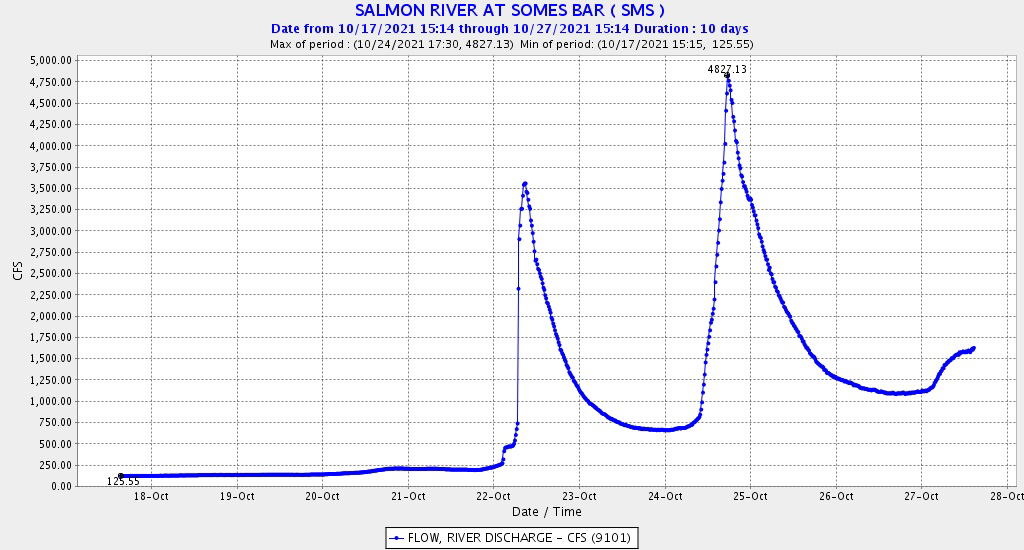
Heavy rains in late October improved river flows, reduced the need to irrigate pastures and hayfields, and have allowed Chinook and Coho salmon to freely ascend both rivers to spawn. The Salmon River, a third large tributary that enters the Klamath downstream of the Scott, responded similarly to the storms (Figure 3).

Figure 1. Streamflow in the Shasta River Sep-Oct, 2021.

Figure 2. Streamflow in the Scott River Sep-Oct, 2021.

Figure 3. Streamflow in the Salmon River Sep-Oct, 2021.


The Next Threat to Winter-Run Salmon – Rising Delta Exports

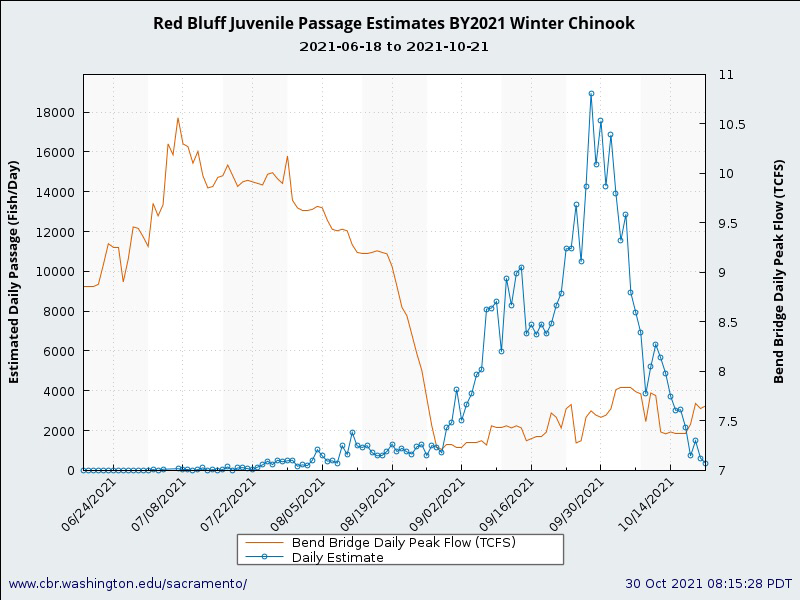
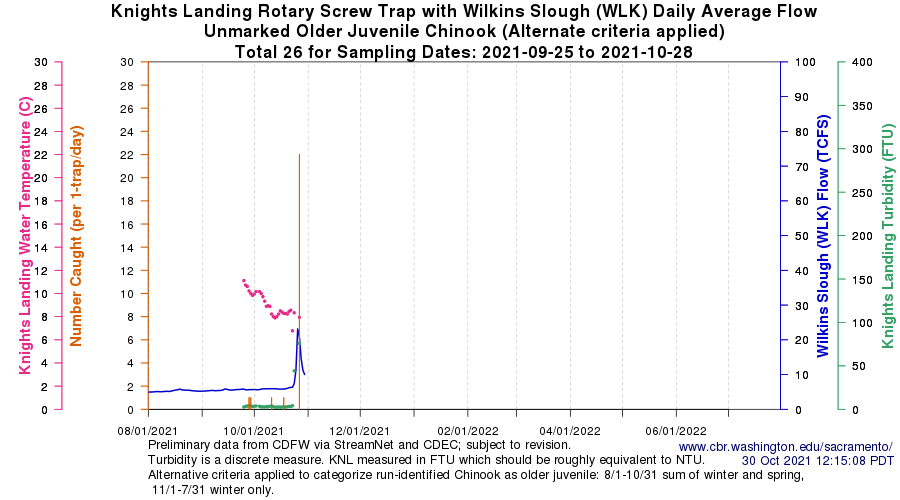
A modest production of winter-run salmon fry was achieved in the Sacramento River near Redding this summer (Figure 1).1 With the recent storm that peaked on October 24, these young salmon are now moving down the river toward the Delta (Figure 2).

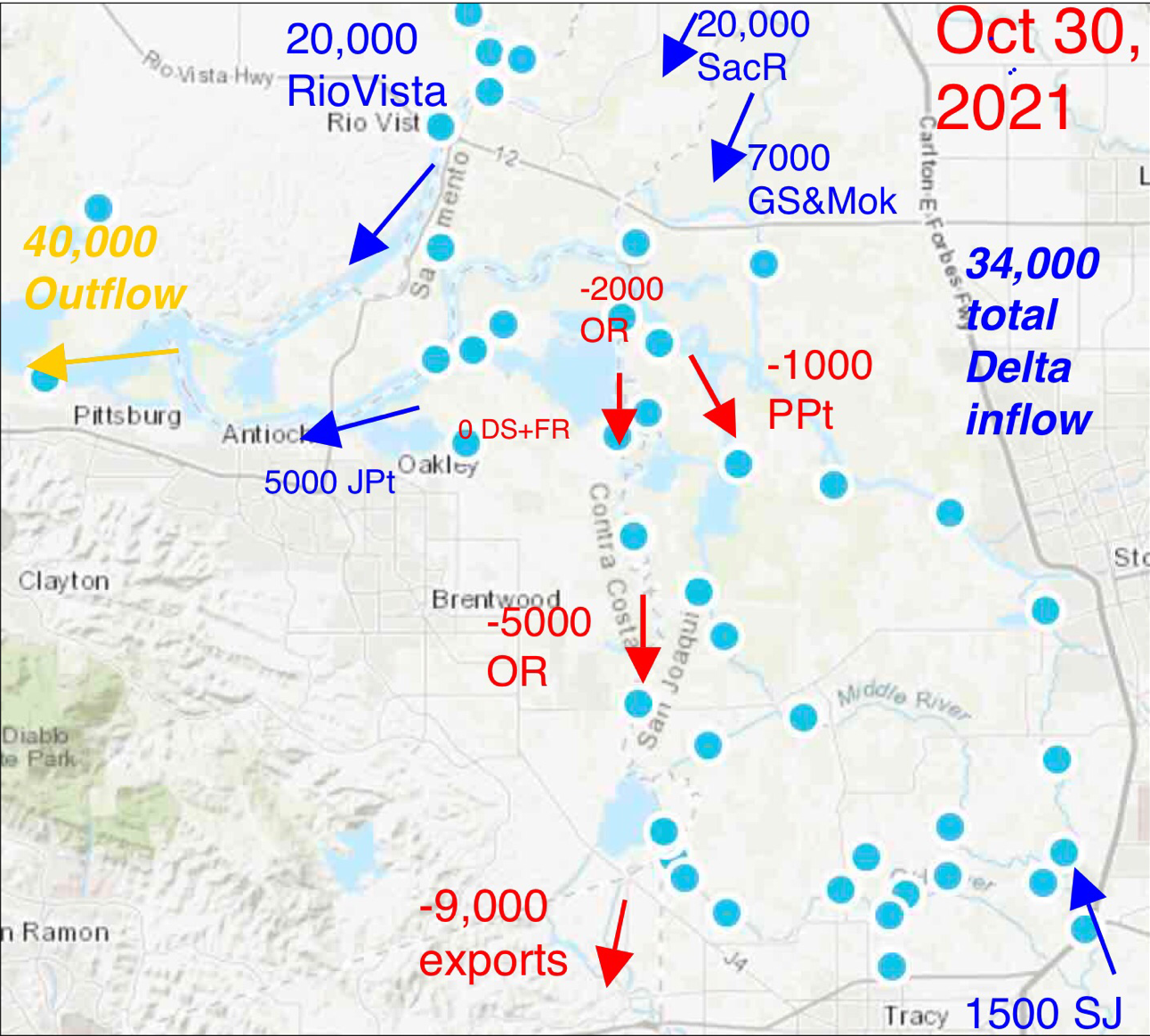
Upon entering the Delta, these young salmon face the grim fate of passing through the Delta Cross Channel (DCC)/and Georgiana Slough into the central and south Delta, where they are drawn to Delta pumps by sharply increased exports (Figure 3).

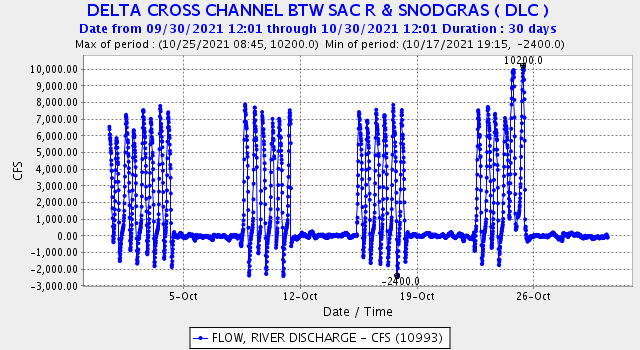
The diversion of Sacramento flows increases with the periodic opening of the Delta Cross Channel (Figure 4). On an outgoing tide, the diversion via the DCC and GS can be higher than 50% under these circumstances.

Once they enter the interior Delta, it is difficult for young salmon to navigate out to the Bay. Many are drawn with reverse net flows to the south Delta, especially in periods when the DCC is closed. The risks to salmon fry in Clifton Court Forebay (predation) and at fish facility screens are severe.

Closing the DCC during the flow pulse only increases flow through Georgiana Slough and traps any diverted salmon in the interior Delta. Keeping the DCC open minimizes the reverse flows in the interior Delta, but draws more salmon in. It is a tough call either way. So the best option for this first fall pulse of winter-run fry is to minimize exports. This type of protection has been considered many times in the past. It is currently required in the Incidental Take Permit (p. 80) for the operation of the State Water Project, but not until after December 1.

Figure 1. Passage of juvenile winter-run salmon past Red Bluff, September-October 2021.

Figure 2. Catch of winter-run fry in lower Sacramento River near Wilkins Slough (RM 120) in fall 2021.

Figure 3. Graphic depiction of Delta net flow (cfs) conditions in late October 2021.

Figure 4. Hourly flows through Delta Cross Channel in October, 2021.